




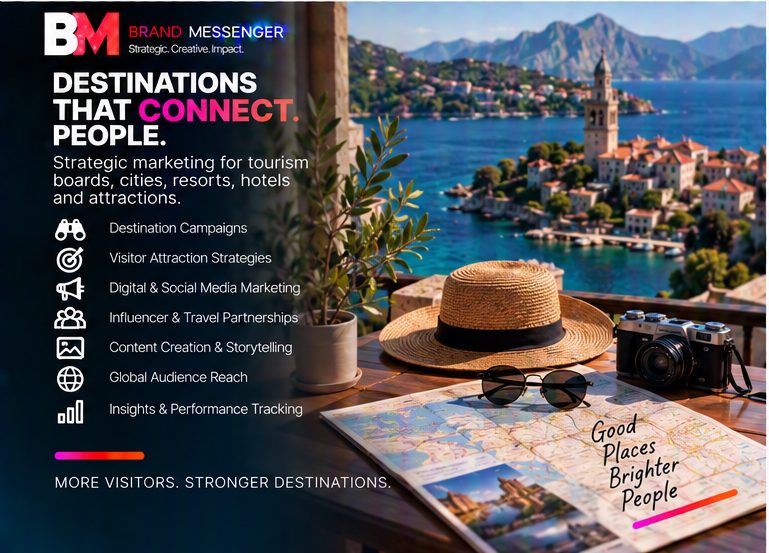
Tourism & Destination Marketing
Inspire the Journey. Build the Destination Brand. Attract the Right Visitors. Turn Places, Experiences and Hospitality into Sustainable Tourism Growth.
Tourism marketing is not simply about advertising a beautiful location.
A destination is experienced through many interconnected elements: culture, hospitality, attractions, food, events, transportation, accommodation, entertainment, nature, shopping, local communities and the stories visitors take home with them.
A tourism board may need to position an entire country or region. A city may want to increase domestic and international visitation. A resort may need to build year-round demand. A hotel may need to increase direct bookings. An attraction may need to turn awareness into visits.
These organizations have different objectives, but they share one fundamental challenge:
How Do We Turn a Place into a Destination People Want to Discover, Visit, Experience, Recommend and Return To?
At Brand Messenger, our Tourism & Destination Marketing service combines destination branding, tourism campaigns, visitor acquisition, hotel and resort marketing, attraction marketing, travel content, experience marketing, international campaigns, multilingual communication, search, social media, creator marketing, events, AdTech, MarTech, CRM, analytics and AI-assisted tourism intelligence.
Our core markets include:
⦁ Tourism Boards
⦁ Cities
⦁ Resorts
⦁ Hotels
⦁ Attractions
Our wider capabilities can support countries, regions, destinations, destination management organizations, convention and visitor bureaus, tourism authorities, heritage destinations, cultural attractions, theme parks, museums, entertainment destinations, eco-tourism operators, luxury travel properties, hospitality groups and tourism-related businesses.
The architecture becomes:
Destination → Story → Audience → Inspiration → Discovery → Planning → Booking → Arrival → Experience → Memory → Recommendation → Return
The objective is not simply:
Bring More Visitors.
It is:
Build a Destination and Visitor Marketing Ecosystem That Creates Demand, Converts Interest into Travel and Strengthens the Relationship Between Visitors, Places and Tourism Businesses.
What Is Tourism & Destination Marketing?
Tourism & Destination Marketing is the strategic promotion of places and visitor experiences to appropriate domestic and international audiences.
It can connect:
⦁ Destination Brand
⦁ Tourism Products
⦁ Visitor Experiences
⦁ Hospitality
⦁ Attractions
⦁ Culture
⦁ Events
⦁ Content
⦁ Media
⦁ Distribution
⦁ Booking
⦁ Visitor Relationships
⦁ Tourism Intelligence
into one coordinated marketing architecture.
The visitor journey can become:
Dream → Discover → Research → Plan → Book → Travel → Experience → Share → Remember → Return
Brand Messenger can develop marketing around every stage.
Tourism Marketing Is Different from Destination Marketing
The two disciplines overlap but are not identical.
Tourism Marketing
Can promote individual tourism-related businesses, services and experiences such as:
⦁ Hotels
⦁ Resorts
⦁ Attractions
⦁ Tours
⦁ Events
⦁ Experiences
Destination Marketing
Positions an entire place—such as:
⦁ Country
⦁ Region
⦁ Province / State
⦁ City
⦁ Island
⦁ Tourism District
as a visitor destination.
The architecture becomes:
Destination Marketing Builds Demand for the Place. Tourism Marketing Converts That Demand Across the Experiences Within It.
Brand Messenger can connect both.
Brand Messenger Tourism & Destination Marketing Services
Our capabilities can include:
⦁ Tourism Marketing Strategy
⦁ Destination Marketing Strategy
⦁ Destination Brand Strategy
⦁ Country Tourism Marketing
⦁ Regional Tourism Marketing
⦁ City Marketing
⦁ Place Branding
⦁ Tourism Board Marketing
⦁ Destination Management Organization Marketing
⦁ Convention & Visitor Marketing
⦁ Resort Marketing
⦁ Hotel Marketing
⦁ Hospitality Marketing
⦁ Attraction Marketing
⦁ Theme Park Marketing
⦁ Museum Marketing
⦁ Heritage Tourism Marketing
⦁ Cultural Tourism Marketing
⦁ Luxury Tourism Marketing
⦁ Adventure Tourism Marketing
⦁ Eco-Tourism Marketing
⦁ Wellness Tourism Marketing
⦁ Family Tourism Marketing
⦁ Business Tourism Marketing
⦁ MICE Marketing
⦁ Sports Tourism Marketing
⦁ Event Tourism Marketing
⦁ Entertainment Tourism Marketing
⦁ Food & Culinary Tourism Marketing
⦁ Shopping Tourism Marketing
⦁ Domestic Tourism Campaigns
⦁ International Tourism Campaigns
⦁ Market Entry Campaigns
⦁ Seasonal Tourism Campaigns
⦁ Destination Content Marketing
⦁ Travel Storytelling
⦁ Tourism Photography
⦁ Tourism Video Production
⦁ Destination Films
⦁ Short-Form Travel Content
⦁ Virtual Destination Experiences
⦁ Social Media Marketing
⦁ Creator & Influencer Marketing
⦁ Travel Community Marketing
⦁ User-Generated Content Campaigns
⦁ Tourism SEO
⦁ International SEO
⦁ Local SEO
⦁ Paid Search
⦁ Paid Social
⦁ Display Advertising
⦁ Native Advertising
⦁ Programmatic Advertising
⦁ Video Advertising
⦁ CTV & OTT Advertising
⦁ Digital Audio
⦁ DOOH
⦁ Remarketing
⦁ Dynamic Creative
⦁ Tourism Website Strategy
⦁ Landing Pages
⦁ Booking Journey Optimization
⦁ Conversion Rate Optimization
⦁ CRM
⦁ Marketing Automation
⦁ Visitor Journey Orchestration
⦁ Loyalty & Retention
⦁ First-Party Visitor Data Strategy
⦁ Multicultural Tourism Marketing
⦁ Multilingual Campaigns
⦁ Tourism Partnerships
⦁ Airline & Transport Partnership Campaigns
⦁ Travel Trade Marketing
⦁ Tourism Event Marketing
⦁ Destination Analytics
⦁ Hotel & Resort Marketing Analytics
⦁ Visitor Intelligence
⦁ Campaign Attribution
⦁ Tourism Marketing Dashboards
⦁ AI-Assisted Tourism Marketing Intelligence
The Destination Marketing Architecture
A connected destination ecosystem can include:
Destination
↓
Brand
↓
Markets
↓
Visitor Segments
↓
Stories & Experiences
↓
Content
↓
Search / Social / Media
↓
Travel Inspiration
↓
Planning
↓
Accommodation / Attractions / Experiences
↓
Booking
↓
Arrival
↓
Destination Experience
↓
Visitor Engagement
↓
Sharing & Advocacy
↓
Return Visitation
↓
Tourism Intelligence
The objective is:
Market the Entire Visitor Journey not Simply the Destination Image.
Destination Brand Strategy
Turn Geography into a Recognizable Visitor Proposition
A destination already has a name.
That does not automatically mean it has a clear tourism brand.
Brand Messenger can help identify and communicate:
⦁ Destination Identity
⦁ Culture
⦁ Heritage
⦁ Experiences
⦁ Landscape
⦁ Food
⦁ Entertainment
⦁ Hospitality
⦁ Events
⦁ Lifestyle
⦁ Local Character
The objective is:
Identify What Makes the Destination Worth Experiencing and Build a Brand Around That Reality.
Place Branding
Place branding can connect:
⦁ Place
⦁ People
⦁ Culture
⦁ Experiences
Reputation
↓
Destination Identity
The objective should not be to manufacture an artificial identity for a city or region.
It is to identify authentic characteristics and communicate them consistently.
Destination Positioning
A destination may compete for visitor attention against many alternatives.
Brand Messenger can help answer:
Why Visit This Destination?
What Experiences Define It?
Who Is It Most Relevant To?
What Makes It Different?
When Should People Visit?
How Should the Destination Be Remembered?
The architecture becomes:
Destination → Distinctive Experience → Audience → Reason to Visit
Tourism Board Marketing
Build Coordinated Demand for the Destination
Tourism boards and destination organizations may need to market an ecosystem rather than one individual business.
That ecosystem can include:
⦁ Accommodation
⦁ Attractions
⦁ Restaurants
⦁ Events
⦁ Culture
⦁ Entertainment
⦁ Transport
⦁ Shopping
⦁ Nature
⦁ Communities
Brand Messenger can create:
Destination Brand → Tourism Ecosystem → Visitor Markets → Integrated Campaigns
Country Tourism Marketing
National tourism campaigns can require communication across multiple:
⦁ Countries
⦁ Languages
⦁ Cultures
⦁ Travel Segments
⦁ Media Markets
Brand Messenger can connect:
⦁ Destination Branding
⦁ International Campaigns
⦁ Multicultural Marketing
⦁ Multilingual Content
⦁ International SEO
⦁ Programmatic Media
⦁ Video
⦁ Creator Marketing
⦁ Tourism Analytics
within a connected national tourism marketing architecture.
Regional Tourism Marketing
A region can contain several complementary destinations.
Marketing can connect:
Region → Cities → Attractions → Experiences → Routes → Visitor Journey
This can encourage visitors to discover more than one location during the trip.
City Marketing
Turn the City into an Experience
Cities can market combinations of:
⦁ Culture
⦁ Architecture
⦁ Food
⦁ Shopping
⦁ Entertainment
⦁ Nightlife
⦁ Business
⦁ Sports
⦁ Events
⦁ Heritage
⦁ Neighborhoods
⦁ Attractions
Brand Messenger can develop city marketing around:
See the City. Experience the City. Participate in the City. Remember the City.
City Destination Campaigns
Campaigns can position cities for different visitor opportunities such as:
⦁ Weekend Breaks
⦁ Family Travel
⦁ Business Travel
⦁ Luxury Travel
⦁ Cultural Tourism
⦁ Sports Tourism
⦁ Event Tourism
⦁ Culinary Tourism
⦁ Shopping Tourism
without forcing every visitor into the same travel proposition.
Resort Marketing
Turn the Property into a Destination Experience
A resort may offer much more than accommodation.
The experience can include:
⦁ Rooms
⦁ Villas
⦁ Dining
⦁ Spa
⦁ Wellness
⦁ Beaches
⦁ Pools
⦁ Activities
⦁ Entertainment
⦁ Events
⦁ Weddings
⦁ Family Experiences
Brand Messenger can build:
Resort Brand → Experience → Guest → Booking → Stay → Loyalty
Resort Brand Positioning
Resorts can be positioned around genuine strengths such as:
⦁ Luxury
⦁ Wellness
⦁ Family
⦁ Adventure
⦁ Nature
⦁ Romance
⦁ Entertainment
⦁ Privacy
The positioning should reflect the actual guest experience.
Market the Experience the Property Can Deliver.
Hotel Marketing
Build Demand. Increase Direct Relationships. Strengthen Guest Loyalty.
Brand Messenger can support hotels across:
⦁ Brand Positioning
⦁ Website Strategy
⦁ Search
⦁ Local SEO
⦁ Paid Media
⦁ Social Media
⦁ Content
⦁ Photography
⦁ Video
⦁ CRM
⦁ Remarketing
⦁ Booking Conversion
⦁ Loyalty
⦁ Analytics
The hotel journey becomes:
Discover → Compare → Consider → Book → Stay → Review → Return
Direct Booking Marketing
Hotels can develop direct booking demand through:
⦁ Search
⦁ Brand Campaigns
⦁ Website
⦁ Content
⦁ CRM
⦁ Remarketing
⦁ Loyalty
⦁ Appropriate Offers
The objective is not necessarily to eliminate third-party distribution.
It is:
Build a Stronger Direct Relationship with Guests Where Direct Booking Makes Strategic Sense.
Hotel Booking Conversion Optimization
Brand Messenger can analyze:
⦁ Booking Landing Pages
⦁ Room Presentation
⦁ Mobile Experience
⦁ Calls to Action
⦁ Offer Communication
⦁ Booking Journey
to identify unnecessary friction between interest and reservation.
Hotel & Resort Content
Content can communicate:
⦁ Rooms
⦁ Dining
⦁ Facilities
⦁ Experiences
⦁ Location
⦁ Events
⦁ Weddings
⦁ Wellness
⦁ Seasonal Offers
through:
⦁ Photography
⦁ Video
⦁ Short-Form Content
⦁ Virtual Experiences
⦁ Social Media
⦁ Editorial Content
The objective is:
Help the Guest Imagine the Experience Before the Journey Begins.
Attraction Marketing
Turn Awareness into Visits
Brand Messenger can support:
⦁ Theme Parks
⦁ Museums
⦁ Cultural Attractions
⦁ Heritage Sites
⦁ Entertainment Attractions
⦁ Family Attractions
⦁ Nature Attractions
⦁ Visitor Experiences
The journey becomes:
Discovery → Interest → Planning → Ticket / Visit → Experience → Sharing → Return
Attraction Launch Marketing
New attractions can require:
⦁ Teaser Campaigns
⦁ Reveal
⦁ Launch Events
⦁ Creator Content
⦁ Paid Media
⦁ PR-Supporting Content
⦁ Ticket Campaigns
⦁ Community Marketing
The objective is to turn novelty into sustainable visitor demand beyond opening day.
Theme Park & Entertainment Destination Marketing
Entertainment destinations can combine:
⦁ Attractions
⦁ Characters / Intellectual Property where rights permit
⦁ Events
⦁ Food
⦁ Merchandise
⦁ Hotels
⦁ Experiences
Brand Messenger can connect these elements into a broader visitor journey.
Cultural Tourism Marketing
Turn Heritage and Culture into Respectful Visitor Discovery
Cultural tourism can involve:
⦁ Heritage
⦁ Architecture
⦁ Museums
⦁ Art
⦁ Music
⦁ Food
⦁ Traditions
⦁ Historic Districts
Marketing should communicate culture without reducing communities to stereotypes or decorative imagery.
The principle is:
Invite Visitors to Experience Culture Do Not Turn Culture into a Marketing Costume.
Heritage Tourism Marketing
Brand Messenger can support heritage destinations through:
⦁ Storytelling
⦁ Documentary Content
⦁ Photography
⦁ Digital Experiences
⦁ Search
⦁ Educational Content
⦁ Events
Historical claims should remain grounded in reliable information.
Culinary Tourism Marketing
Food can become a major part of destination identity.
Brand Messenger can connect:
⦁ Restaurants
⦁ Markets
⦁ Food Festivals
⦁ Local Cuisine
⦁ Culinary Experiences
⦁ Chefs
⦁ Food Creators
into destination storytelling.
The journey becomes:
Taste → Place → Culture → Experience → Memory
Luxury Tourism Marketing
Luxury travel can require marketing around:
⦁ Exclusivity
⦁ Service
⦁ Privacy
⦁ Design
⦁ Experiences
⦁ Hospitality
⦁ Personalization
The objective should be to communicate genuine premium value rather than relying on the word Luxury alone.
Adventure Tourism Marketing
Adventure destinations can promote appropriate:
⦁ Hiking
⦁ Cycling
⦁ Water Activities
⦁ Mountain Experiences
⦁ Outdoor Sports
⦁ Exploration
while ensuring marketing does not misrepresent safety, difficulty or accessibility.
Eco-Tourism Marketing
Eco-tourism marketing can connect:
Nature + Visitor Experience + Conservation + Local Community
where these relationships genuinely exist.
Environmental claims should be specific and supportable.
Nature Imagery Alone Does Not Make a Tourism Product Sustainable.
Wellness Tourism Marketing
Brand Messenger can support appropriate:
⦁ Wellness Resorts
⦁ Retreats
⦁ Spa Destinations
⦁ Fitness Travel
⦁ Relaxation Experiences
through our wider Lifestyle Marketing capabilities.
Wellness communication should avoid unsupported medical or health-outcome claims.
Family Tourism Marketing
Family tourism campaigns can promote:
⦁ Accommodation
⦁ Attractions
⦁ Activities
⦁ Events
⦁ Family Experiences
while ensuring communication involving children remains appropriate and privacy-conscious.
Business Tourism
Cities and destinations can also compete for:
⦁ Conferences
⦁ Exhibitions
⦁ Corporate Meetings
⦁ Business Events
⦁ Incentive Travel
Brand Messenger can connect destination marketing with our event and B2B marketing capabilities.
MICE Marketing
Meetings. Incentives. Conferences. Exhibitions.
MICE marketing can position:
⦁ Cities
⦁ Convention Centers
⦁ Hotels
⦁ Resorts
⦁ Event Venues
for business-event demand.
The architecture becomes:
Destination → Venue → Business Event → Organizer → Delegate → Experience
Sports Tourism Marketing
Sport can create travel around:
⦁ Matches
⦁ Tournaments
⦁ Championships
⦁ Races
⦁ Training
⦁ Fan Experiences
Brand Messenger can connect Tourism & Destination Marketing with our Sports Marketing capabilities.
The journey becomes:
Sporting Event → Destination → Travel → Attendance → Hospitality → Experience
Event Tourism Marketing
Major events can create destination demand around:
⦁ Festivals
⦁ Concerts
⦁ Exhibitions
⦁ Cultural Events
⦁ Sporting Events
⦁ Conferences
⦁ Entertainment Events
The architecture becomes:
Event → Visitor Interest → Travel → Destination Experience → Extended Stay
Entertainment Tourism Marketing
Film, television, music, gaming and entertainment can influence destination discovery.
Where appropriate, Brand Messenger can develop campaigns connecting:
Entertainment → Location → Story → Travel Interest → Destination Experience
subject to appropriate intellectual-property and promotional rights.
Seasonal Tourism Marketing
Build Demand Across the Tourism Calendar
Destinations often experience seasonal fluctuations.
Brand Messenger can create campaigns around:
⦁ Summer
⦁ Winter
⦁ Festivals
⦁ Holidays
⦁ Events
⦁ Shoulder Seasons
⦁ Weekend Travel
⦁ Special Experiences
The objective can be:
Match the Right Experience with the Right Visitor at the Right Time.
Shoulder-Season Marketing
Destinations may have opportunities outside peak periods.
Marketing can highlight experiences particularly relevant during quieter seasons.
This can potentially help distribute demand more effectively where destination capacity and tourism strategy support it.
Domestic Tourism Marketing
International visitors are only one tourism market.
Brand Messenger can develop campaigns encouraging residents to:
⦁ Rediscover Their Country
⦁ Explore New Cities
⦁ Take Weekend Trips
⦁ Attend Events
⦁ Visit Attractions
The communication can differ significantly from international tourism campaigns.
International Tourism Marketing
Build Demand Across Borders
International visitor acquisition can require:
⦁ Market Selection
⦁ Multilingual Campaigns
⦁ Cultural Adaptation
⦁ International SEO
⦁ Paid Media
⦁ Creator Marketing
⦁ Travel Partnerships
⦁ Destination Content
The architecture becomes:
Destination → Origin Market → Audience → Inspiration → Planning → Travel
Multicultural Tourism Marketing
Brand Messenger's Multicultural Marketing capabilities can support tourism campaigns across:
⦁ Languages
⦁ Regions
⦁ Cultures
⦁ International Visitor Markets
The principle is:
Keep the Destination Authentic. Adapt the Invitation.
Different markets may respond to different aspects of the same destination.
Multilingual Destination Marketing
Brand Messenger can develop:
⦁ Multilingual Websites
⦁ Landing Pages
⦁ Campaigns
⦁ Social Content
⦁ Advertising
⦁ Video Subtitles
⦁ Voiceovers
⦁ Visitor Information
The process can become:
Master Destination Story → Localization → Cultural Review → Market Activation
Tourism Content Marketing
Inspire Before Asking for the Booking
Travel decisions can begin long before a transaction.
Brand Messenger can create:
⦁ Destination Guides
⦁ Travel Stories
⦁ Itineraries
⦁ Articles
⦁ Local Guides
⦁ Attraction Content
⦁ Food Content
⦁ Event Content
⦁ Seasonal Guides
⦁ Video
The objective is:
Move the Audience from “Where Should I Go?” to “I Want to Experience This Place.”
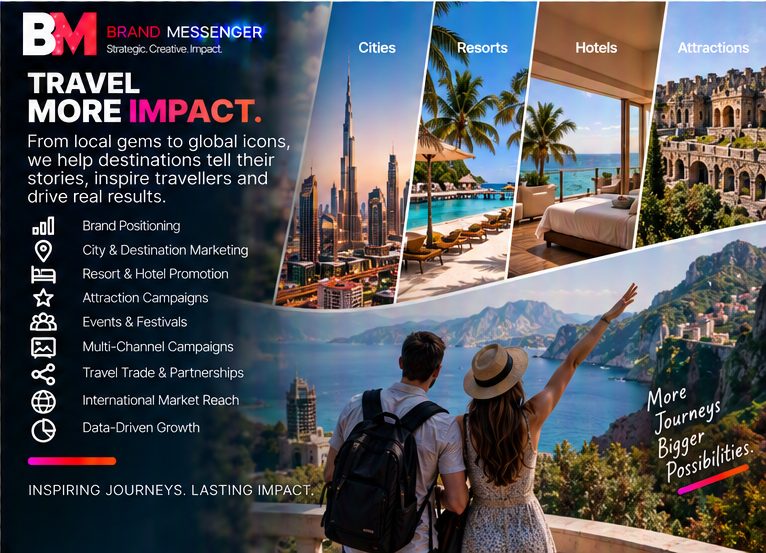
Destination Storytelling
Strong tourism storytelling can connect:
Place + People + Culture + Experience + Emotion
rather than simply listing attractions.
The destination becomes a story the visitor can imagine entering.
Destination Films
Brand Messenger can produce:
⦁ Tourism Campaign Films
⦁ City Films
⦁ Resort Films
⦁ Hotel Films
⦁ Attraction Videos
⦁ Cultural Films
⦁ Event Promos
⦁ Short-Form Travel Video
⦁ Drone-Based Visual Content where appropriate and authorized
⦁ Animation
The objective is:
Show the Experience not Simply Describe the Destination.
Short-Form Travel Content
Short-form video can support:
⦁ Discovery
⦁ Inspiration
⦁ Food
⦁ Hotels
⦁ Attractions
⦁ Events
⦁ Hidden Experiences
⦁ Travel Tips
Content should still accurately represent the destination rather than create unrealistic expectations through excessive editing or misleading presentation.
Tourism Creator & Influencer Marketing
Let Travelers Experience the Destination Through Relevant Voices
Travel creators can help audiences discover:
⦁ Destinations
⦁ Hotels
⦁ Food
⦁ Attractions
⦁ Experiences
Brand Messenger can evaluate partnerships around:
Destination Fit + Creator Fit + Audience Fit + Content Quality + Campaign Objective
rather than follower count alone.
Creator Familiarization Trips
Destinations and hospitality organizations may work with creators through hosted experiences.
Brand Messenger can support:
⦁ Creator Selection
⦁ Campaign Briefing
⦁ Content Planning
⦁ Experience Coordination
⦁ Measurement
Commercial or hosted relationships should be disclosed appropriately.
User-Generated Tourism Content
Visitors naturally create:
⦁ Photos
⦁ Videos
⦁ Reviews
⦁ Travel Stories
Brand Messenger can build appropriate campaigns encouraging visitor-generated content.
Permission and rights should be considered before commercial reuse.
Social Media Tourism Marketing
Travel is highly visual and conversational.
Brand Messenger can develop social strategies around:
⦁ Inspiration
⦁ Destination Stories
⦁ Events
⦁ Experiences
⦁ Travel Tips
⦁ Visitor Content
⦁ Creators
⦁ Seasonal Campaigns
The objective is not simply:
Post Beautiful Pictures.
It is:
Create a Continuous Journey from Inspiration to Destination Discovery.
Tourism Community Marketing
Travel communities can form around:
⦁ Destinations
⦁ Adventure
⦁ Food
⦁ Luxury
⦁ Backpacking
⦁ Photography
⦁ Culture
⦁ Sports
⦁ Events
Brand Messenger's Community Marketing capabilities can connect destinations with relevant travel communities.
Tourism SEO
Be Discoverable When Travelers Begin Planning
Brand Messenger can support SEO around:
⦁ Destination Searches
⦁ Things to Do
⦁ Where to Stay
⦁ Attractions
⦁ Events
⦁ Restaurants
⦁ Travel Guides
⦁ Itineraries
⦁ Seasonal Travel
The architecture becomes:
Search Intent → Destination Content → Discovery → Planning → Travel Action
International Tourism SEO
International SEO can support:
⦁ Country-Specific Search Behavior
⦁ Multilingual Keywords
⦁ Localized Destination Pages
⦁ Language Architecture
⦁ International Content
Literal keyword translation is not always sufficient.
Brand Messenger can research:
How Travelers Actually Search in Their Market and Language.
Local SEO for Hotels, Resorts & Attractions
Local discovery can be particularly important for:
⦁ Hotels
⦁ Attractions
⦁ Restaurants
⦁ Tourism Experiences
Brand Messenger can support:
⦁ Location Pages
⦁ Local Content
⦁ Search Optimization
⦁ Accurate Business Information
⦁ Review Strategy
Tourism Paid Media
Brand Messenger's AdTech capabilities can support appropriate tourism campaigns across:
⦁ Paid Search
⦁ Paid Social
⦁ Display
⦁ Native
⦁ Programmatic
⦁ Video
⦁ CTV / OTT
⦁ Digital Audio
⦁ DOOH
Different channels can serve different stages of the travel journey.
Tourism Programmatic Advertising
Programmatic advertising can support media buying across eligible inventory based on appropriate:
⦁ Market
⦁ Geography
⦁ Context
⦁ Audience Strategy
⦁ Campaign Timing
The architecture becomes:
Origin Market → Audience Strategy → Media → Destination Creative → Engagement → Travel Action
Dynamic Creative for Tourism
Destination campaigns can contain many combinations of:
⦁ Markets
⦁ Languages
⦁ Seasons
⦁ Experiences
⦁ Hotels
⦁ Attractions
⦁ Events
Dynamic creative systems can help manage approved variations.
For example:
Market + Season + Experience + Language → Relevant Creative
The objective is scalable relevance without fragmenting the destination brand.
Tourism Remarketing
Where appropriate, remarketing can reconnect with people who have previously:
⦁ Visited a Tourism Website
⦁ Viewed a Hotel
⦁ Explored an Attraction
⦁ Engaged with a Campaign
The objective should be:
Continue the Travel Journey with Relevance not Follow the Traveler Everywhere.
CTV & OTT Tourism Advertising
Video can be particularly effective for destination inspiration.
Brand Messenger can connect tourism films with eligible:
⦁ Connected TV
⦁ Streaming
⦁ Online Video
campaign environments depending on market and platform availability.
Digital Out-of-Home Tourism Marketing
DOOH can support tourism campaigns across appropriate:
⦁ Airports
⦁ Transport Hubs
⦁ City Centers
⦁ Shopping Districts
⦁ Business Districts
Campaigns can connect:
Location + Context + Destination Creative
Tourism Marketing + AdTech
Brand Messenger's AdTech ecosystem can support:
⦁ Programmatic Advertising
⦁ Audience Strategy
⦁ Ad Serving
⦁ Paid Media
⦁ Dynamic Creative
⦁ Remarketing
⦁ Bid Optimization
⦁ Advertising Measurement
⦁ Advertising Infrastructure
This allows tourism campaigns to move from broad destination awareness toward measurable digital activation.
Tourism Marketing + MarTech
Brand Messenger's MarTech ecosystem can support:
⦁ CRM
⦁ Marketing Automation
⦁ Omnichannel Marketing
⦁ Customer Journey Orchestration
⦁ Campaign Management
⦁ Customer Intelligence
⦁ Content Technology
⦁ Analytics
for tourism and hospitality organizations.
Visitor CRM
Build a Relationship Beyond the First Visit
Hotels, resorts, attractions and other tourism organizations can use appropriate first-party relationships to support:
⦁ Pre-Arrival Communication
⦁ Guest Information
⦁ Experience Promotion
⦁ Post-Visit Communication
⦁ Loyalty
⦁ Re-Engagement
The lifecycle becomes:
Discover → Book → Prepare → Visit → Experience → Follow-Up → Return
Pre-Arrival Marketing
After booking, communication can support:
⦁ Arrival Information
⦁ Experiences
⦁ Dining
⦁ Attractions
⦁ Events
⦁ Appropriate Upgrades
The objective is:
Improve the Upcoming Experience not Simply Sell More Before Arrival.
In-Destination Marketing
Once visitors arrive, marketing can connect them with relevant:
⦁ Attractions
⦁ Events
⦁ Dining
⦁ Shopping
⦁ Experiences
⦁ Transportation Information
This can help destinations distribute visitor activity across the wider tourism ecosystem.
Post-Visit Marketing
The visitor journey can continue through:
⦁ Thank-You Communication
⦁ Reviews
⦁ Visitor Content
⦁ Loyalty
⦁ Future Offers
⦁ Destination Updates
The architecture becomes:
Experience → Memory → Sharing → Relationship → Return
Tourism Loyalty & Retention
Hotels, resorts and attractions can develop:
⦁ Loyalty Programs
⦁ Memberships
⦁ Repeat-Visit Campaigns
⦁ Guest Recognition
⦁ Exclusive Experiences
The objective is:
Turn a Successful Visit into a Reason to Return.
Tourism Partnerships
Market the Destination as an Ecosystem
Destination growth often involves collaboration among:
⦁ Tourism Boards
⦁ Hotels
⦁ Resorts
⦁ Airlines
⦁ Transport Providers
⦁ Attractions
⦁ Restaurants
⦁ Retail
⦁ Event Organizers
⦁ Tour Operators
Brand Messenger can help structure collaborative marketing campaigns.
The architecture becomes:
Destination + Transport + Accommodation + Experience + Attraction → Connected Visitor Proposition
Airline & Transport Partnerships
Appropriate campaigns can connect destinations with:
⦁ Airlines
⦁ Rail
⦁ Transport Operators
⦁ Travel Platforms
to support visitor access and market development.
Marketing should accurately reflect routes, availability and partnership terms.
Tourism Trade Marketing
Tourism organizations may also need to communicate with:
⦁ Travel Agencies
⦁ Tour Operators
⦁ Corporate Travel Buyers
⦁ Event Organizers
⦁ Distribution Partners
Brand Messenger can develop:
⦁ B2B Content
⦁ Trade Campaigns
⦁ Presentations
⦁ Events
⦁ Partner Communication
alongside consumer tourism marketing.
Tourism Event Marketing
Brand Messenger can connect tourism campaigns with our wider event capabilities for:
⦁ Destination Launches
⦁ Tourism Exhibitions
⦁ Travel Trade Events
⦁ Festivals
⦁ Cultural Events
⦁ Conferences
⦁ Roadshows
⦁ Promotional Events
Visitor Experience Marketing
The Marketing Promise Continues After Arrival
A successful advertising campaign can attract visitors.
But the actual destination experience determines whether the promise was credible.
The relationship becomes:
Marketing Promise → Visitor Experience → Satisfaction → Review → Reputation → Future Demand
Marketing and visitor experience therefore cannot be completely separated.
Destination Reputation
Visitor perception can be influenced by:
⦁ Reviews
⦁ Social Media
⦁ Travel Content
⦁ News
⦁ Creator Experiences
⦁ Word of Mouth
⦁ Destination Experience
Brand Messenger can monitor appropriate signals to understand recurring themes.
An individual review should not automatically be treated as representative of every visitor.
Review & Reputation Marketing
Hotels, resorts and attractions can develop appropriate workflows around:
⦁ Review Monitoring
⦁ Feedback
⦁ Response
⦁ Customer Experience Insights
The objective should not be to suppress criticism.
It is:
Listen, Respond Appropriately and Learn from Recurring Experience Signals.
Responsible Destination Marketing
Tourism marketing can influence physical places and communities.
Brand Messenger's approach should consider:
Authenticity
Represent destinations accurately.
Cultural Respect
Avoid reducing communities to stereotypes.
Environmental Responsibility
Avoid unsupported sustainability claims.
Community Respect
Recognize that destinations are also places where people live.
Accessibility
Communicate relevant accessibility information clearly where available.
Privacy
Use visitor data responsibly.
Transparency
Keep commercial partnerships appropriately clear.
Human Oversight
Use AI and automation as decision support.
Overtourism & Demand Distribution
More Visitors Is Not Always the Only Objective
Some destinations may need to manage concentrated visitor demand rather than simply maximize it.
Marketing can potentially help distribute interest across:
⦁ Different Seasons
⦁ Different Districts
⦁ Lesser-Known Attractions
⦁ Alternative Experiences
⦁ Longer Stays
where this aligns with destination strategy and capacity.
The objective can evolve from:
Maximum Visitors
to:
Better-Matched Visitors, Better Timing, Better Distribution and Stronger Destination Value.
Sustainable Tourism Communication
Destinations and hospitality organizations may communicate genuine initiatives around:
⦁ Environment
⦁ Communities
⦁ Local Economy
⦁ Conservation
⦁ Resource Use
Brand Messenger can connect Tourism Marketing with our Purpose-Driven & ESG Marketing capabilities.
The principle remains:
Communicate Sustainability with Evidence not Green Imagery Alone.
AI-Assisted Tourism Marketing Intelligence
Turn Visitor, Campaign and Market Data into Better Tourism Decisions
AI can assist with appropriate analysis across:
⦁ Visitor Segments
⦁ Origin Markets
⦁ Campaign Performance
⦁ Content Engagement
⦁ Booking Patterns
⦁ Seasonal Demand
⦁ Customer Journeys
⦁ Visitor Feedback
The architecture becomes:
Tourism Data → AI Analysis → Patterns → Insights → Human Review → Marketing Decision
Predictive Tourism Intelligence
Where sufficient historical data exists, analytics can support estimates around:
⦁ Seasonal Demand
⦁ Booking Patterns
⦁ Campaign Response
⦁ Visitor Interest
⦁ Market Demand
These are forecasts—not guarantees of future visitor behavior.
AI-Assisted Visitor Segmentation
AI can help identify patterns among appropriate:
⦁ Markets
⦁ Booking Behaviors
⦁ Content Engagement
⦁ Customer Journeys
to support marketing segmentation.
The segments remain analytical models rather than fixed definitions of individual travelers.
AI-Assisted Tourism Content Intelligence
Brand Messenger can analyze:
⦁ Destination Content
⦁ Video
⦁ Social Media
⦁ Search
⦁ Campaign Creative
to identify patterns in audience engagement.
The objective is:
Understand What Inspires Different Audiences Without Assuming One Content Pattern Explains Every Traveler.
Tourism Trend Intelligence
Brand Messenger can monitor appropriate signals around:
⦁ Travel Interests
⦁ Search
⦁ Content
⦁ Experiences
⦁ Events
⦁ Markets
to identify emerging opportunities.
A temporary online trend should be treated as a signal for investigation—not automatic proof of sustained tourism demand.
Physical Visitor Experience Intelligence
For appropriate hotels, resorts, attractions and tourism events, carefully governed technologies may support aggregated analysis of:
⦁ Visitor Flow
⦁ Zone Activity
⦁ Dwell Patterns
⦁ Attraction Engagement
⦁ Event Activity
where lawful, necessary and appropriately deployed.
The principle is:
Use Aggregated Visitor Intelligence When Individual Identification Is Not Necessary.
Tourism Marketing Analytics
Brand Messenger can measure performance across:
Destination Awareness
Reach
Search Demand
Content Discovery
Market Performance
Country
Region
City / Origin Market
Digital Engagement
Website
Video
Social
Content
Visitor Intent
Destination Searches
Itinerary Interest
Booking Referrals where measurable
Hospitality
Bookings
Occupancy-related marketing signals where connected
Direct Conversion
Attractions
Ticket Interest
Ticket Conversion
Visits where connected
Campaigns
Media Performance
Conversion
Cost
Visitor Relationships
CRM Growth
Repeat Engagement
Loyalty where available
Tourism Marketing Attribution
A traveler may interact with:
Creator Video → Social → Destination Website → Search → Hotel → Booking
Attribution can assign marketing contribution according to the selected model.
However:
Attribution Can Help Explain the Digital Journey. It Cannot Fully Explain Why Someone Chose a Destination.
Travel decisions can involve many offline and emotional influences.
Destination Marketing Dashboards
A Brand Messenger dashboard can potentially combine:
⦁ Origin Markets
⦁ Search
⦁ Website
⦁ Content
⦁ Advertising
⦁ Social
⦁ Hospitality / Booking Data where integrated
⦁ Attractions
Events
↓
Tourism Marketing Intelligence
This can help tourism organizations understand the destination beyond isolated campaign reports.
Tourism Board Executive Dashboard
Leadership can receive a connected view:
Market Demand
↓
Destination Awareness
↓
Digital Engagement
↓
Visitor Intent
↓
Campaign Performance
↓
Visitor Activity where available
↓
Tourism Marketing Intelligence
Different data sources should remain clearly distinguished where direct causation cannot be established.
Tourism Marketing Maturity Model
Level 01 — Destination Promotion
Beautiful Creative + Website + Social Media
Level 02 — Digital Tourism Marketing
Search + Content + Social + Paid Media + Campaigns
Level 03 — Visitor Journey Marketing
Inspiration + Planning + Booking + Experience + CRM
Level 04 — Connected Destination Marketing
Tourism Ecosystem + AdTech + MarTech + First-Party Data + Omnichannel
Level 05 — Destination & Visitor Intelligence
Origin Market → Campaign → Visitor Journey → Booking / Visit → Experience → Return
Level 06 — AI-Assisted Tourism Intelligence
Connected Tourism Data + Market Analysis + Predictive Demand + Visitor Intelligence + Executive Dashboards + Human Oversight
The objective is not:
Advertise the Destination Everywhere.
It is:
Build a Connected Tourism Marketing System That Understands Markets, Inspires Travel, Supports Visitor Experiences and Learns from Tourism Performance.
Complete Brand Messenger Tourism & Destination Marketing Process
A comprehensive engagement can follow:
Destination / Property / Attraction
↓
Tourism Objective
↓
Market Research
↓
Destination Positioning
↓
Brand
↓
Visitor Segments
↓
Origin Markets
↓
Content & Storytelling
↓
Search & Social
↓
Paid Media
↓
Creators & Communities
↓
Travel Inspiration
↓
Planning
↓
Booking / Ticket / Visit
↓
Arrival
↓
Visitor Experience
↓
CRM
↓
Loyalty & Advocacy
↓
Analytics
↓
AI-Assisted Tourism Intelligence
↓
Continuous Destination Growth
The lifecycle becomes:
Inspire → Discover → Explore → Plan → Book → Travel → Experience → Share → Return → Learn → Grow
Across the Brand Messenger Tourism & Destination Marketing Ecosystem
Destination Strategy
Understand the Place and Tourism Opportunity
↓
Destination Branding
Create a Recognizable Visitor Proposition
↓
Visitor & Market Intelligence
Identify Relevant Origin Markets and Audiences
↓
Content & Storytelling
Turn Places into Experiences People Can Imagine
↓
Tourism & Destination Marketing
Tourism Boards • Cities • Resorts • Hotels • Attractions
↓
International & Multicultural Marketing
Reach Visitors Across Countries, Languages and Cultures
↓
Search, Social & Creator Marketing
Build Travel Discovery and Inspiration
↓
AdTech
Scale Tourism Media and Visitor Acquisition
↓
Hotels, Resorts & Attractions
Convert Destination Demand into Experiences
↓
Events, Sports & Entertainment
Create Additional Reasons to Travel
↓
MarTech & CRM
Coordinate Visitor Communication
↓
Loyalty & Retention
Build Reasons to Return
↓
Analytics & Business Intelligence
Measure Destination and Campaign Performance
↓
AI-Assisted Tourism Marketing Intelligence
Turn Visitor, Market and campaign data into decision support
The complete architecture becomes:
Place → Story → Audience → Inspiration → Journey → Experience → Memory → Advocacy → Return → Intelligence → Growth
Tourism Organizations & Markets We Can Support
Brand Messenger Tourism & Destination Marketing can support appropriate applications across:
⦁ National Tourism Boards
⦁ Regional Tourism Authorities
⦁ Destination Marketing Organizations
⦁ Convention & Visitor Bureaus
⦁ Cities
⦁ Tourism Districts
⦁ Islands
⦁ Resorts
⦁ Hotels
⦁ Hotel Groups
⦁ Luxury Properties
⦁ Boutique Hotels
⦁ Theme Parks
⦁ Museums
⦁ Heritage Sites
⦁ Cultural Attractions
⦁ Entertainment Attractions
⦁ Family Attractions
⦁ Adventure Destinations
⦁ Eco-Tourism Destinations
⦁ Wellness Resorts
⦁ Sports Destinations
⦁ Event Destinations
⦁ Convention Centers
⦁ Tourism Events
⦁ Festivals
⦁ Tour Operators
⦁ Travel Experience Providers
⦁ Hospitality Groups
⦁ Tourism Developments
⦁ Destination Developers
⦁ Tourism Partnerships
Benefits of Tourism & Destination Marketing
Brand Messenger can help tourism and hospitality organizations:
⦁ Build stronger destination brands
⦁ Position cities and regions
⦁ Increase destination awareness
⦁ Reach domestic travelers
⦁ Reach international travelers
⦁ Develop multilingual campaigns
⦁ Adapt tourism campaigns across cultures
⦁ Build travel inspiration
⦁ Develop tourism content
⦁ Produce destination films
⦁ Create short-form travel content
⦁ Build creator campaigns
⦁ Improve tourism SEO
⦁ Strengthen international search visibility
⦁ Develop hotel and resort marketing
⦁ Improve direct-booking journeys
⦁ Promote attractions
⦁ Increase appropriate event and ticket demand
⦁ Build tourism partnerships
⦁ Connect hotels, attractions and experiences
⦁ Develop visitor CRM
⦁ Introduce marketing automation
⦁ Coordinate pre-arrival and post-visit communication
⦁ Develop loyalty and repeat-visit marketing
⦁ Scale campaigns through AdTech
⦁ Connect visitor journeys through MarTech
⦁ Build first-party visitor data strategies
⦁ Analyze origin-market performance
⦁ Measure tourism campaigns
⦁ Build destination dashboards
⦁ Apply AI-assisted tourism intelligence
⦁ Connect marketing strategy with the wider visitor experience
Why Choose Brand Messenger?
Brand Messenger combines destination strategy, place branding, tourism campaigns, hotel and resort marketing, attraction marketing, international and multicultural marketing, travel content, video production, social media, creators, community, events, AdTech, MarTech, CRM, analytics and AI-assisted intelligence within one connected Tourism & Destination Marketing ecosystem.
We do not approach Tourism Marketing as:
Find Beautiful Pictures → Add a Destination Slogan → Run Ads → Count Impressions.
We approach it as:
Understand the Destination → Define the Experience → Identify the Visitor → Build the Brand → Tell the Story → Inspire Travel → Reach the Right Markets → Support Planning → Connect Visitors with Hotels, Resorts, Attractions and Events → Improve the Journey → Build the Relationship → Measure → Learn → Grow.
The distinction matters.
Destination Marketing builds demand for the place.
Tourism Board Marketing coordinates the wider visitor ecosystem.
City Marketing turns urban identity, culture and experiences into visitor propositions.
Resort Marketing turns hospitality properties into destination experiences.
Hotel Marketing connects discovery with booking, stay and return.
Attraction Marketing converts destination interest into visits and experiences.
Content & Destination Storytelling create inspiration.
Creator & Community Marketing connect destinations with trusted travel conversations.
International & Multicultural Marketing adapt the invitation across countries, languages and cultures.
Sports, Events & Entertainment Marketing create additional reasons for people to travel.
AdTech scales tourism media activation.
MarTech, CRM & First-Party Data connect visitor relationships across the travel journey.
Analytics & BI help organizations understand markets, campaigns and visitor behavior.
And AI-Assisted Tourism Marketing Intelligence can help identify patterns across visitor, market, content and campaign data while keeping destination strategy and important decisions under human oversight.
The result is not simply destination advertising.
It is a connected tourism marketing ecosystem designed to help countries, cities, tourism boards, resorts, hotels and attractions transform places into discoverable experiences, experiences into journeys, journeys into memories and successful visits into long-term destination value.
Build the Destination. Tell the Story. Inspire the Journey. Create the Experience. Welcome the Visitor. Give Them a Reason to Return.
Tourism Boards. Cities. Resorts. Hotels. Attractions. One Connected Tourism & Destination Marketing Ecosystem.