





Plan Smarter. Coordinate Every Campaign. Control Execution from Strategy to Performance.
Modern marketing campaigns involve far more than creating an advertisement and publishing it. A single campaign may require strategy, audiences, creative assets, approvals, budgets, schedules, multiple communication channels, automation, personalization, performance monitoring, and continuous optimization often involving several teams and technology platforms.
Without a connected campaign management environment, organizations can face fragmented workflows, duplicated work, missed approvals, inconsistent messaging, disconnected channels, delayed launches, and limited visibility into campaign performance.
At Brand Messenger, our Campaign Management Technology services help organizations plan, organize, execute, monitor, and optimize marketing campaigns through connected technology and structured workflows.
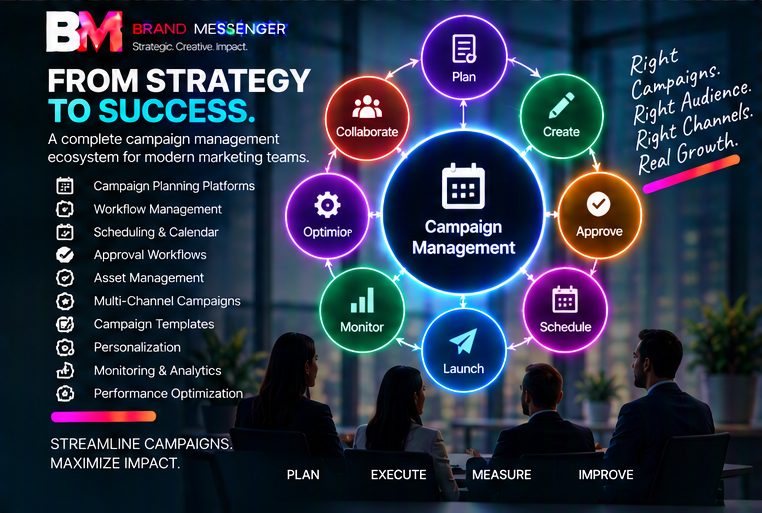
From Campaign Planning Platforms, Workflow Management, Scheduling, Approval Workflows, and Asset Management to Multi-Channel Campaign Management, Campaign Templates, Personalization, Monitoring, and Performance Optimization, we help transform campaign operations into a coordinated marketing technology environment.
Our approach connects:
Strategy → Planning → Audience → Creative → Approval → Scheduling → Activation → Monitoring → Measurement → Optimization
Plan Every Campaign. Coordinate Every Team. Connect Every Channel. Optimize Every Result.
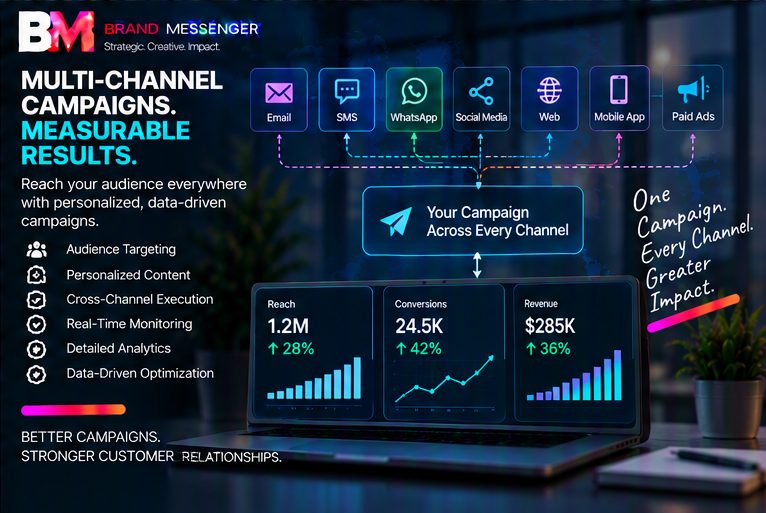
Our Campaign Management Technology Services
Brand Messenger provides comprehensive Campaign Management Technology capabilities, including:
Campaign Planning Platforms
Campaign Workflow Management
Campaign Scheduling
Campaign Approval Workflows
Campaign Asset Management
Multi-Channel Campaign Management
Campaign Templates
Campaign Personalization
Campaign Monitoring
Campaign Performance Optimization
Campaign Calendar Management
Campaign Brief Management
Campaign Task Management
Campaign Audience Management
Campaign Budget Coordination
Campaign Content Management
Campaign Version Management
Campaign Automation
Campaign Journey Integration
Campaign Collaboration
Campaign Governance
Campaign Tracking
Campaign Analytics
Campaign Dashboards
AI-Assisted Campaign Intelligence
Cross-Channel Campaign Reporting
Campaign Planning Platforms
Turn Marketing Strategy into Structured Campaign Execution
Effective campaigns begin before the first message is sent. Brand Messenger helps organizations create structured campaign planning environments where teams can define objectives, audiences, channels, content, schedules, responsibilities, budgets, and measurement requirements. Campaign Planning Platforms can help organize:
Campaign Objectives
Target Audiences
Customer Segments
Campaign Channels
Campaign Messages
Offers
Creative Requirements
Content Requirements
Campaign Timelines
Key Milestones
Team Responsibilities
Campaign Budgets
Approval Requirements
Tracking Requirements
KPIs
Conversion Goals
Reporting Requirements
Instead of campaign information being distributed across documents, spreadsheets, emails, messaging applications, and separate platforms, organizations can establish a more coordinated campaign planning process.
Campaign Brief Management
Create a Clear Foundation Before Campaign Production Begins
Campaign briefs can provide a central source of direction for marketing, creative, media, technology, and management teams. Brand Messenger can structure campaign briefs around:
Campaign Name
Business Objective
Marketing Objective
Target Audience
Customer Insight
Campaign Proposition
Key Message
Offer
Creative Direction
Channels
Deliverables
Timeline
Budget
KPIs
Responsibilities
Approval Requirements
A structured brief helps align everyone involved before campaign execution begins.
Campaign Workflow Management
Coordinate Every Step from Planning to Launch
Campaigns often move through many people, departments, and systems before they become active. Brand Messenger can design campaign workflows that organize the complete operational process: Campaign Request → Brief → Planning → Creative → Review → Approval → Scheduling → Launch → Monitoring → Reporting Workflow Management can support:
Task Assignment
Team Responsibilities
Campaign Stages
Status Management
Due Dates
Dependencies
Notifications
Review Processes
Approval Processes
Escalation Rules
Campaign Handoffs
Completion Tracking
This creates greater visibility into what is happening, who is responsible, what is waiting, and what needs to happen next.
Campaign Task Management
Turn Complex Campaigns into Manageable Actions
Large campaigns can contain dozens or hundreds of individual tasks. Brand Messenger can structure campaign activities around:
Strategy Tasks
Audience Preparation
Creative Production
Copywriting
Design
Video Production
Landing Pages
Tracking Setup
Platform Configuration
Media Setup
Testing
Approval
Scheduling
Launch
Monitoring
Reporting
Tasks can be assigned to appropriate teams with deadlines, dependencies, priorities, and status information. This provides marketing managers with a clearer operational view of campaign readiness.
Campaign Scheduling
Coordinate Campaign Timing Across Channels and Teams
Timing is a critical component of campaign management. Brand Messenger can help organizations create centralized campaign schedules covering:
Campaign Start Dates
Campaign End Dates
Channel Launch Dates
Content Publication
Email Sends
SMS Campaigns
WhatsApp Campaigns
Social Campaigns
Advertising Launches
Promotional Periods
Event Campaigns
Product Launches
Follow-Up Activities
Reporting Dates
Campaign scheduling can also connect with automation and journey technologies so customer interactions can occur according to predefined timing and behavioral conditions.
Campaign Calendar Management
See the Complete Marketing Activity in One View
Organizations running multiple campaigns need visibility across their entire marketing calendar. Brand Messenger can create campaign calendars showing:
Active Campaigns
Upcoming Campaigns
Scheduled Campaigns
Product Launches
Seasonal Campaigns
Promotional Campaigns
Events
Content Campaigns
Paid Media
Customer Campaigns
Retention Campaigns
Key Deadlines
Campaign calendars can help reduce scheduling conflicts and improve coordination between marketing teams, business units, markets, and channels.
Campaign Approval Workflows
Build Control into Campaign Execution
Campaign materials may require approval from marketing managers, brand teams, clients, legal teams, compliance teams, product owners, or senior management before launch. Brand Messenger can create structured approval workflows such as: Creative Submitted → Marketing Review → Brand Review → Required Business/Compliance Review → Final Approval → Scheduling Approval workflows can support:
Multi-Stage Approval
Role-Based Approval
Creative Approval
Copy Approval
Campaign Approval
Budget Approval
Channel Approval
Revision Requests
Approval Status
Approval History
Notifications
Final Release Controls
This helps organizations maintain stronger campaign governance while reducing informal approval processes.
Campaign Asset Management
Keep Every Campaign Asset Organized and Accessible
Campaigns can generate large volumes of creative and marketing assets. Brand Messenger can help organize:
Advertising Creative
Display Banners
Social Media Creative
Videos
Images
Email Designs
Landing Page Assets
Campaign Copy
Product Images
Presentations
Promotional Materials
Brand Assets
Documents
Campaign Templates
Assets can be associated with specific campaigns, audiences, markets, channels, versions, and approval statuses. This helps teams locate the correct campaign material and reduces the risk of using outdated or unapproved assets.
Campaign Version Management
Maintain Control as Campaign Creative Evolves
Campaign assets frequently pass through multiple revisions. Brand Messenger can structure version management around: Draft → Review → Revision → Approved Version → Published Asset Version management can help teams understand:Current Version
Previous Versions
Revision History
Approval Status
Asset Owner
Campaign Association
Channel Usage
Publication Status
This becomes particularly important for organizations managing many campaigns, brands, markets, or external agencies.
Multi-Channel Campaign Management
Manage Multiple Channels as One Campaign
A modern campaign may operate simultaneously across:
SMS
Websites
Landing Pages
Mobile Applications
Push Notifications
Social Media
Search Advertising
Display Advertising
Programmatic Advertising
Video
CRM
Customer Portals
Events
Offline Media
Brand Messenger helps organizations coordinate these channels around the same campaign objective. Instead of managing ten independent channel campaigns, the organization can manage: One Campaign → Multiple Audiences → Multiple Channels → Unified Measurement
Cross-Channel Campaign Coordination
Keep Messaging, Timing and Customer Experience Connected
Different channels should support one another rather than compete for customer attention. Brand Messenger can coordinate:
Campaign Timing
Audience Segments
Creative Messaging
Offers
Channel Sequencing
Customer Journey
Frequency
Personalization
Conversion Goals
Performance Measurement
For example:
Advertising → Landing Page → Lead → Email → WhatsApp → CRM → Sales or: Email → Website → Product Interest → Personalized Follow-Up → Conversion This creates continuity across the campaign experience.
Campaign Templates
Standardize What Works and Scale Campaign Production
Organizations frequently repeat similar campaign structures. Brand Messenger can create reusable templates for:
Product Launch Campaigns
Lead Generation Campaigns
Promotional Campaigns
Customer Onboarding
Retention Campaigns
Renewal Campaigns
Loyalty Campaigns
Event Campaigns
Re-Engagement Campaigns
Seasonal Campaigns
Sales Campaigns
Account-Based Campaigns
Templates can include predefined:
Campaign Structure
Workflow
Tasks
Channels
Approval Stages
Creative Requirements
Tracking
KPIs
Reporting
Teams can then adapt proven campaign structures rather than rebuilding every campaign from the beginning.
Campaign Personalization
Create Different Experiences for Different Customers
Campaign Management Technology becomes more powerful when connected with customer data. Brand Messenger can use appropriate information from CRM, CDP, customer behavior, lifecycle stages, and audience segments to personalize campaign experiences. Personalization can include:
Customer Segment
Message
Content
Product
Offer
Creative
Landing Page
Recommendation
Channel
Customer Journey
Follow-Up
Instead of:
One Campaign → One Message → Everyone organizations can move toward: One Campaign → Multiple Customer Segments → Relevant Experiences
Dynamic Campaign Audiences
Allow Campaign Audiences to Change as Customers Change
Customer status does not remain static. A prospect can become a customer. A customer can become high-value. An active customer can become inactive. When connected with Brand Messenger's Customer Data Platform & First-Party Data, campaign audiences can be updated according to appropriate customer information. For example: Prospect → Campaign Audience Prospect Converts → Customer Profile Updated → Acquisition Audience Removed → Onboarding Campaign Started or: Customer Becomes Inactive → Retention Segment → Re-Engagement Campaign This creates more responsive campaign management.
Campaign Automation
Automate Repetitive Campaign Operations
Brand Messenger can connect campaign management with Marketing Automation to reduce repetitive manual activities. Automation can support:
Campaign Activation
Audience Updates
Task Notifications
Approval Notifications
Scheduled Communication
Lead Routing
Customer Journey Entry
Customer Journey Exit
CRM Updates
Follow-Up
Campaign Status Changes
Performance Alerts
Reporting
The process can become: Campaign Plan → Audience → Trigger → Automation → Channel → Customer Response → Next Action
Campaign Journey Integration
Move Beyond Campaigns Toward Continuous Customer Experiences
Campaigns are usually temporary. Customer relationships are continuous. Brand Messenger can connect campaigns with Customer Journey Orchestration so campaign interactions influence what happens next. For example: Campaign → Customer Engagement → Product Interest → Nurturing Journey → Conversion → Onboarding Journey A campaign therefore becomes one component of a larger customer lifecycle rather than an isolated marketing event.
Campaign Monitoring
Know What Is Happening While the Campaign Is Active
Marketing teams should not have to wait until a campaign ends to understand performance. Brand Messenger can create campaign monitoring environments showing appropriate real-time or regularly updated information such as:
Campaign Status
Audience Reach
Engagement
Leads
Conversions
Channel Performance
Customer Responses
Media Spend
Cost per Result
Revenue
Funnel Progression
Campaign Issues
Performance Alerts
This allows teams to identify emerging opportunities or problems earlier.
Campaign Performance Analytics
Understand What Is Driving Results
Brand Messenger can analyze campaign performance across:
Audiences
Channels
Creative
Messages
Offers
Landing Pages
Customer Segments
Customer Journeys
Conversions
Revenue
Cost
Customer Acquisition
Customer Retention
Rather than simply asking:
“Did the campaign perform?”
organizations can investigate:
Which audience performed?
Which channel contributed?
Which creative worked?
Where did customers drop off?
Which journey converted?
What should change next?
Campaign Performance Optimization
Turn Campaign Intelligence into Continuous Improvement
Campaign optimization uses performance data to improve active and future marketing activity. Brand Messenger can optimize areas such as:
Audience Selection
Customer Segmentation
Campaign Timing
Channel Mix
Message Strategy
Creative
Personalization
Offers
Landing Pages
Budget Allocation
Media Spend
Conversion Paths
The optimization cycle becomes: Launch → Monitor → Analyze → Learn → Adjust → Optimize → Scale This turns campaign management into a continuous performance process.
A/B & Campaign Experimentation
Test Before Assuming
Campaign technology can support controlled experimentation across appropriate campaign elements. Testing can include:
Subject Lines
Campaign Messages
Creative Variants
Calls to Action
Landing Pages
Audience Segments
Campaign Timing
Customer Journey Paths
Results can help teams determine which approaches perform more effectively before expanding them across larger audiences.
AI-Assisted Campaign Intelligence
Add Intelligence to Campaign Decisions
Brand Messenger can incorporate AI-assisted capabilities to help analyze campaign information and identify potential optimization opportunities. AI-assisted Campaign Intelligence can support:
Audience Performance Analysis
Campaign Trend Detection
Customer Response Prediction
Conversion Propensity
Campaign Forecasting
Channel Performance Analysis
Creative Performance Analysis
Customer Journey Intelligence
Lead Prioritization
Performance Anomaly Detection
Next-Best Action
Optimization Recommendations
AI can support marketing teams with decision intelligence while appropriate campaign rules and human oversight remain part of campaign management.
Campaign Collaboration
Connect Marketing, Creative, Media and Business Teams
Campaign execution often involves: Marketing → Creative → Content → Media → Digital → Sales → Management → External Partners Brand Messenger Campaign Management Technology can help coordinate these teams through:
Shared Campaign Workspaces
Tasks
Comments
Campaign Status
Asset Sharing
Review
Approval
Deadlines
Notifications
Campaign Calendars
Performance Dashboards
This creates a more transparent operational environment around campaign execution.
Campaign Governance
Create Structure Without Slowing Marketing Down
Organizations running large numbers of campaigns need appropriate governance. Brand Messenger can help establish campaign controls around:
User Roles
Campaign Ownership
Approval Authority
Brand Requirements
Asset Status
Campaign Status
Audience Eligibility
Customer Preferences
Channel Requirements
Budget Controls
Tracking Requirements
Reporting Standards
Campaign History The objective is to create greater operational control while keeping campaign processes efficient. CRM integration allows campaign activity to become part of the wider customer relationship.
Brand Messenger can connect:
Campaign → Lead → CRM → Qualification → Sales → Customer
CRM information can also determine which customers enter specific campaigns.
For example:
CRM Segment → Campaign → Customer Response → CRM Updated → Next Action
This creates a stronger connection between marketing execution and customer management. Brand Messenger's Customer Data Platform & First-Party Data capabilities can provide customer intelligence for campaign management.
The process can operate as:
Customer Data → Unified Profile → Segment → Campaign → Engagement → Customer Data
CDP integration can support: Audience Creation Customer Segmentation Customer Exclusion Lifecycle Campaigns Behavioral Campaigns Customer Value Campaigns Retention Campaigns Re-Engagement Campaigns Customer responses can return to the customer data environment and improve future segmentation.
Brand Messenger can connect Campaign Management Technology directly with its Omnichannel Marketing Technology capabilities.
Campaigns can be orchestrated across: Brand Messenger's AI Marketing & Personalization capabilities can add predictive and personalization intelligence to campaign operations.
AI-assisted capabilities can support: Audience Selection Predictive Segmentation Purchase Intent Lead Scoring Campaign Personalization Recommendation Engines Next-Best Offer Next-Best Action Customer Churn Intelligence Campaign Optimization The relationship becomes:
Campaign Data → AI Intelligence → Marketing Decision → Campaign Action → Customer Response → Learning Customer Intelligence & Behavioral Analytics can help explain how audiences respond to campaigns.
Brand Messenger can connect:
Campaign → Customer Behavior → Engagement → Journey → Conversion → Retention
Behavioral analytics can help identify: High-Engagement Audiences Campaign Interest Conversion Behavior Journey Patterns Drop-Off Customer Value Retention Impact Re-Engagement Opportunities This allows campaign decisions to be informed by customer behavior rather than campaign metrics alone. Coordinate Owned Marketing and Paid Advertising
Brand Messenger operates across both MarTech and AdTech, allowing campaign technology to connect owned customer communication with paid media environments.
A campaign can span:
Paid Advertising → Landing Page → Lead → CRM → Email → SMS / WhatsApp → Sales → Conversion → Retention
Customer data can also inform eligible advertising audiences:
CDP → Customer Segment → AdTech Audience → Paid Campaign → Conversion → CRM / CDP
This creates greater continuity between advertising acquisition and long-term customer marketing. See Planning, Execution and Performance in One Environment
Brand Messenger can develop campaign dashboards for different teams and decision-makers. Campaign Operations Campaign Calendar
Upcoming Campaigns • Launch Dates • Promotions • Events • Key Deadlines
Channel Performance Audience Performance Campaign Performance Journey Performance Executive Campaign Intelligence This provides operational and performance visibility within the same campaign management environment. Campaign Management Technology can operate as the planning, workflow, execution, and control layer across the Brand Messenger MarTech ecosystem.
It can connect with: Marketing Automation CRM & Customer Management Technology Customer Data Platform & First-Party Data Omnichannel Marketing Technology Customer Journey Orchestration AI Marketing & Personalization Customer Intelligence & Behavioral Analytics Personalization Technology Lead Management Content & Digital Experience Technology Marketing Analytics Marketing Dashboards & Business Intelligence MarTech Integration & Data Infrastructure Brand Messenger AdTech Together:
Strategy → Campaign → Audience → Workflow → Creative → Approval → Activation → Customer Journey → Conversion → Analytics → Optimization
Campaign technology can support more than customer acquisition. Awareness Acquisition Nurturing Conversion Onboarding Engagement Growth Retention Re-Engagement This allows campaign technology to support the complete customer relationship. Brand Messenger Campaign Management Technology can support: Retail & E-Commerce FMCG & Consumer Brands B2B & Enterprise Technology & SaaS Financial Services Telecommunications Automotive Real Estate Travel & Tourism Hospitality Healthcare Education Entertainment & Media Professional Services Events & Exhibitions Subscription Businesses Franchise & Multi-Location Businesses Membership Organizations Non-Profit Organizations Government & Public Sector Startups & Scale-Ups Brand Messenger helps organizations: Centralize campaign planning Improve campaign workflow management Coordinate marketing teams Manage campaign schedules Establish structured approval processes Organize campaign assets Maintain campaign versions Coordinate multiple marketing channels Standardize campaigns through reusable templates Personalize campaign experiences Connect campaigns with customer data Automate repetitive campaign operations Connect campaigns with customer journeys Improve campaign monitoring Identify performance issues earlier Improve campaign analytics Continuously optimize campaign performance Connect CRM and CDP with campaigns Coordinate MarTech and AdTech Improve operational visibility Strengthen campaign governance Build a scalable campaign management environment Brand Messenger combines MarTech, customer data, first-party data, CDP, CRM, customer behavior analytics, journey analytics, audience intelligence, predictive analytics, AI Marketing & Personalization, customer experience intelligence, Marketing Automation, omnichannel technology, AdTech, and business intelligence within one connected customer intelligence framework.Campaign Management & CRM
Connect Campaign Activity with Customer Relationships
Campaign Management & Customer Data Platform
Put Unified Customer Intelligence Behind Campaign Decisions
Campaign Management & Omnichannel Technology
Campaign Management & AI Marketing
Campaign Management & Customer Intelligence
Connecting MarTech Campaigns with AdTech
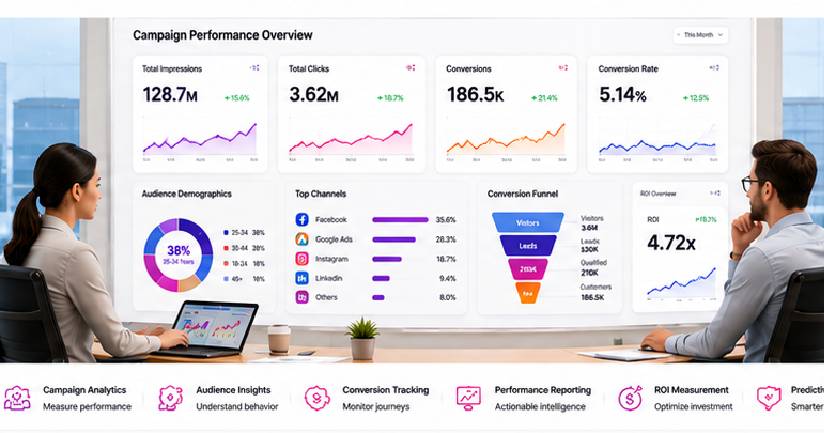
Campaign Management Dashboards
Campaign Management Across Brand Messenger MarTech
Campaign Management Across the Customer Lifecycle
Industries We Serve
Benefits of Campaign Management Technology
Why Choose Brand Messenger?
We do not view customer analytics simply as charts showing visits, clicks, and conversions.
Our approach is designed to answer increasingly valuable questions:
What happened?
Who did it?
How did they behave?
Why might it matter?
What patterns are emerging?
What may happen next?
What should the organization do next?
The intelligence cycle becomes:
Observe → Connect → Understand → Analyze → Predict → Decide → Act → Measure → Learn
Our Customer Intelligence & Behavioral Analytics capabilities span Customer Behavior Analytics, Audience Intelligence, Customer Journey Analytics, Consumer Insights, Visitor Analytics, Engagement Analytics, Customer Lifetime Value Analysis, Churn Prediction, Retention Analytics, Customer Experience Intelligence, behavioral segmentation, predictive intelligence, and customer dashboards.
Where relevant, integration with Face Signatures by Messenger2050 Technologies can extend this intelligence into physical environments, helping connect appropriate visual and visitor behavioral signals with the wider customer and marketing intelligence ecosystem.
The result is more than analytics.
It is a connected customer intelligence environment designed to help organizations understand behavior, discover opportunities, identify risk, improve experiences, strengthen customer relationships, and make better marketing and business decisions.
Understand Every Signal. Discover Every Pattern. Predict What Matters. Turn Customer Intelligence into Growth.
Explore More: Link to Face Signature