





AI Marketing Intelligence Integration
Connect Customer Behavior, Audience Intelligence and Predictive Analytics with Marketing Decisions.
Modern organizations collect enormous amounts of information from customer interactions, campaigns, websites, retail locations, events, CRM systems, digital platforms, physical environments, and operational systems.
The challenge is no longer simply collecting data.
The challenge is turning those signals into usable marketing intelligence.
At Brand Messenger, our AI Marketing Intelligence Integration service connects marketing systems, customer data, campaign information, and where appropriate physical-space intelligence from Face Signatures by Messenger2050 Technologies to help organizations understand audiences, analyze behavior, identify patterns, measure engagement, and make better-informed marketing decisions.
Our core capabilities include:
Customer Behavior Intelligence
Audience Analytics
Predictive Marketing
Retail Analytics
Event Analytics
Customer Traffic & Visitor Intelligence
Engagement Intelligence
Customer Journey Intelligence
Location Intelligence
Campaign Intelligence
Product & Display Interest Analytics
Return-Visit Analysis
Crowd & Movement Analytics
Marketing Performance Intelligence
Executive Dashboards & Business Intelligence
Face Signatures Integration
CRM & CDP Integration
MarTech Integration
Marketing Automation Integration
AI-Assisted Decision Intelligence
The objective is to connect previously fragmented information into a broader intelligence environment:
Customer Signals → Behavioral Data → Audience Intelligence → Marketing Systems → AI Analysis → Insights → Marketing Decisions → Campaigns → Measurement → Learning
Understand Behavior. Discover Patterns. Predict Opportunities. Turn Intelligence into Marketing Action.
What Is AI Marketing Intelligence Integration?
AI Marketing Intelligence Integration is the connection of customer, audience, campaign, behavioral, digital, transactional, and appropriate physical-space intelligence with the technologies used to plan, execute, and measure marketing.
Instead of treating information as separate systems:
Website Analytics
CRM
Campaign Data
Retail Analytics
Event Analytics
Customer Behavior
Face Signatures Intelligence
Brand Messenger can help create a connected intelligence framework:
Data Sources → Integration → Customer & Audience Intelligence → AI Analysis → Marketing Insights → Activation → Performance Measurement
This gives organizations a more complete understanding of how customers and audiences interact with brands across relevant environments.
Face Signatures + Brand Messenger
Connecting Physical-Space Intelligence with Marketing Intelligence
Face Signatures, a technology of Messenger2050 Technologies, can provide an additional intelligence layer for appropriate physical environments.
Within Brand Messenger's marketing-intelligence ecosystem, Face Signatures capabilities can contribute to understanding areas such as:
Visitor Traffic
People Analytics
Movement Patterns
Repeat Visits
Audience Engagement
Crowd Behavior
Event Attendance
Retail Activity
Product or Display Interaction
Location Performance
Visitor Trends
Time-Based Activity
Customer Flow
Physical-Space Behavioral Signals
Brand Messenger can connect relevant intelligence with wider marketing systems to create a broader view of audience behavior.
The concept becomes:
Digital Behavior + CRM Data + Campaign Data + Transaction Data + Physical-Space Behavioral Signals → Marketing Intelligence
From Face Signatures to Marketing Intelligence
Face Signatures should not operate as an isolated analytics system when relevant insights can appropriately contribute to broader business decisions.
Brand Messenger can create an integration layer:
Face Signatures → Visitor / Behavioral Intelligence → Marketing Intelligence Integration → CRM / CDP / Analytics / BI → Audience Understanding → Marketing Decisions → Campaign & Experience Optimization
This allows appropriate physical-space intelligence to become part of the wider marketing-information environment.
Our AI Marketing Intelligence Integration Services
Brand Messenger provides capabilities across:
AI Marketing Intelligence Strategy
Marketing Intelligence Architecture
Face Signatures Marketing Integration
Customer Behavior Intelligence
Audience Analytics
Predictive Marketing Intelligence
Retail Analytics
Event Analytics
Visitor Analytics
Customer Traffic Analytics
Footfall Intelligence
Engagement Analytics
Movement & Flow Analytics
Crowd Behavior Intelligence
Return-Visit Analytics
Product Interest Analytics
Display Engagement Analytics
Location Intelligence
Customer Journey Intelligence
Campaign Intelligence
Customer Segmentation Intelligence
Behavioral Segmentation
Audience Trend Analysis
Peak-Time Intelligence
Location Performance Analytics
Customer Experience Intelligence
CRM Intelligence Integration
CDP Integration
MarTech Integration
Marketing Automation Integration
Campaign Management Integration
Business Intelligence Integration
Data Integration
API & Data Pipeline Integration
Marketing Dashboards
Retail Dashboards
Event Intelligence Dashboards
Executive Intelligence Dashboards
AI-Assisted Pattern Detection
Predictive Audience Intelligence
Marketing Performance Intelligence
Reporting & Visualization
Privacy-Aware Analytics Architecture
Data Governance & Access Controls
Customer Behavior Intelligence
Understand What Customers Actually Do
Customer behavior is expressed through interactions.
Depending on the environment and available data, these interactions may include:
Website Visits
App Activity
Email Engagement
Advertising Responses
Purchases
CRM Activity
Store Visits
Event Attendance
Product Interest
Repeat Visits
Physical Movement
Content Engagement
Brand Messenger can help connect these signals into behavioral intelligence.
The model becomes:
Customer Interaction → Behavioral Signal → Data → Pattern → Insight → Marketing Decision
Digital + Physical Customer Behavior
Most customer analytics traditionally focus heavily on digital activity.
A customer may:
See an Advertisement → Visit a Website → Visit a Store → Explore Products → Leave → Return Later → Purchase
If only website analytics are considered, much of that journey may remain invisible.
Where appropriate systems and lawful data practices are available, Brand Messenger can help connect:
Digital Interaction
Physical Interaction
CRM / Transactional Information
into a broader analytical environment.
Customer Traffic Intelligence
Understand When and Where Customer Activity Happens
Face Signatures and other appropriate data sources can contribute to analysis of visitor activity within physical environments.
Brand Messenger can organize intelligence around:
Visitor Volume
Traffic Patterns
Busy Periods
Quiet Periods
Day-of-Week Trends
Time-of-Day Trends
Location Comparisons
Event Traffic
Campaign Period Comparisons
This can help organizations answer questions such as:
When are our locations busiest?
Which locations receive greater traffic?
How does traffic change during campaigns?
How does an event affect visitor activity?
Visitor Flow Intelligence
Understanding how people move through an environment can provide valuable operational and marketing context.
Potential environments include:
Retail Stores
Shopping Centers
Exhibitions
Trade Shows
Events
Hospitality Locations
Entertainment Venues
Corporate Spaces
The analytical framework can become:
Entry → Movement → Engagement Area → Exit
Aggregated patterns can help organizations understand how spaces and experiences are being used.
Return-Visit Intelligence
Understand Repeat Engagement
Where appropriate technology, permissions, and lawful processing allow, return-visit analysis can help organizations understand patterns such as:
New vs. Returning Visitors
Repeat Attendance
Visit Frequency
Repeat Store Engagement
Event Re-Attendance
Location Loyalty
This can contribute to broader retention and customer-engagement analysis.
Identity-related capabilities should be implemented according to applicable privacy, biometric-data, consent, retention, and access requirements.
Audience Analytics
Understand Who Is Engaging, When and How
Brand Messenger Audience Analytics can combine multiple sources of information to create a broader understanding of audiences.
Analysis can include:
Audience Size
Audience Segments
Engagement
Behavioral Patterns
Traffic
Customer Interests
Return Visits
Location
Time
Campaign Response
Customer Journey
Conversion where measurable
The framework becomes:
Audience → Behavior → Engagement → Journey → Response → Value
Audience Segmentation Intelligence
Instead of treating every visitor or customer as identical, Brand Messenger can organize audiences into meaningful analytical segments.
Depending on available information, examples can include:
New Visitors
Returning Visitors
High-Engagement Audiences
Existing Customers
Prospects
Event Attendees
Repeat Customers
Product-Interest Groups
Location-Based Segments
Campaign-Responsive Audiences
Segmentation can support more relevant marketing analysis and activation.
Behavioral Segmentation
Behavioral segmentation focuses on actions rather than simply static customer characteristics.
Signals can include:
Visited → Returned → Engaged → Explored → Responded → Purchased
This can help identify groups based on meaningful interaction patterns.
Audience Engagement Intelligence
Move Beyond Simple Traffic Counts
Traffic alone does not explain engagement.
Brand Messenger can help organizations analyze signals such as:
Visitor Volume
Engagement Areas
Repeat Activity
Time Patterns
Product or Display Interest
Event Participation
Campaign Interaction
Content Response
The objective is to understand not only:
“How many people were there?”
but also:
“What patterns of engagement occurred?”
Audience Trend Analysis
Marketing intelligence becomes more valuable when measured over time.
Brand Messenger can analyze trends across:
Hour → Day → Week → Month → Campaign → Season → Year
This can reveal changes in:
Traffic
Engagement
Audience Composition where appropriately measured
Return Visits
Product Interest
Location Performance
Campaign Response
Predictive Marketing Intelligence
Move from What Happened to What May Happen Next
Historical analytics explains the past.
Predictive Marketing uses historical and current data to estimate potential future patterns.
Depending on data quality and the use case, Brand Messenger can apply AI-assisted predictive analysis to areas such as:
Customer Traffic
Audience Activity
Campaign Performance
Customer Engagement
Product Interest
Event Attendance
Peak Periods
Customer Retention
Churn Risk
Conversion Potential
Location Demand
The process becomes:
Historical Data → Current Signals → Pattern Analysis → Predictive Model → Probability / Forecast → Marketing Decision
Predictions are estimates rather than guarantees.
Predictive Audience Intelligence
Brand Messenger can use historical audience patterns and current signals to help estimate:
Likely Audience Activity
Potential Engagement
High-Activity Periods
Audience Trends
Potential Return Behavior
Campaign Response Patterns
The objective is to support planning before an outcome occurs.
Predictive Customer Traffic
Retailers, venues, and event operators may benefit from anticipating customer traffic.
Potential inputs can include:
Historical Traffic
Day
Time
Season
Campaign Activity
Event Schedule
Promotions
Location Trends
The output may support:
Marketing Timing
Campaign Planning
Staffing Decisions
Customer Experience Planning
Promotional Scheduling
Predictive Campaign Intelligence
Brand Messenger can combine campaign history with audience and behavioral information to support AI-assisted estimates around:
Potential Engagement
Audience Response
Timing
Channel Performance
Creative Performance
Conversion Probability where sufficient data exists
Predictions should be interpreted alongside human judgment, campaign context, and changing market conditions.
Predictive Product Interest
Where suitable behavioral and transactional data is available, organizations may analyze patterns around:
Product Engagement
Product Categories
Display Interest
Historical Purchases
Seasonal Demand
Campaign Influence
This can support product and merchandising decisions.
Retail Analytics
Turn the Physical Store into a Source of Marketing Intelligence
Retail environments generate valuable behavioral signals that conventional digital analytics may not capture.
Brand Messenger can combine Face Signatures capabilities, retail data, marketing data, and business intelligence to support Retail Analytics.
Potential intelligence can include:
Store Traffic
Visitor Trends
Customer Flow
Peak Hours
Return Visits
Product Area Interest
Display Engagement
Promotional Zone Activity
Location Performance
Campaign Period Comparison
Store-to-Store Comparison
Retail Customer Journey Intelligence
A physical retail journey can be analyzed conceptually as:
Store Entry → Movement → Department → Product / Display Interest → Engagement → Checkout / Exit → Return Visit
Where appropriate systems are integrated, this can be combined with:
Digital Campaign → Website → Store → Purchase → CRM
to create a richer understanding of customer behavior.
Product & Display Interest Analytics
Understand Which Areas Attract Attention and Engagement
Retailers invest heavily in:
Displays
Product Placement
Promotional Areas
Store Layout
Digital Screens
Brand Zones
Brand Messenger can help analyze activity around these environments.
This can support questions such as:
Which areas attract greater engagement?
Which displays correspond with stronger visitor activity?
How does engagement change during a promotion?
Which locations perform differently?
Store Performance Intelligence
Brand Messenger can create comparative intelligence across multiple stores.
For example:
Store A → Traffic → Engagement → Return Activity → Sales
Store B → Traffic → Engagement → Return Activity → Sales
Store C → Traffic → Engagement → Return Activity → Sales
This can help management identify patterns and investigate why locations perform differently.
Retail Campaign Effectiveness
A campaign may create digital engagement but its impact on physical environments can be harder to understand.
Brand Messenger can help compare:
Before Campaign: vs.
During Campaign
vs.
After Campaign
across relevant indicators such as:
Traffic
Engagement
Product Interest
Return Activity
Sales where integrated
This does not automatically establish causation, but it can provide valuable evidence for deeper campaign analysis.
Peak-Hour Intelligence
Understanding high-activity periods can support:
Promotional Scheduling
Staff Planning
Product Demonstrations
Customer Service
Digital Screen Content
Campaign Timing
The model becomes:
Time → Traffic → Engagement → Operational Context → Marketing Opportunity
Location Intelligence
Understand Marketing Performance by Place
Brand Messenger can organize intelligence across:
Stores
Branches
Venues
Exhibition Booths
Event Zones
Shopping Locations
Service Centers
Geographic Markets
Location intelligence can compare:
Traffic + Engagement + Audience Patterns + Campaign Activity + Business Performance
across different locations.
Multi-Location Analytics
Enterprise organizations can compare:
Location → Traffic → Engagement → Customer Behavior → Campaign → Business Outcome
This can help identify:
Strong Locations
Underperforming Locations
High-Traffic / Low-Conversion Locations
Strong Engagement Zones
Different Audience Patterns
Expansion Opportunities requiring further analysis
Event Analytics
Understand the Audience Beyond Registration Numbers
An event may know how many registrations were issued.
That does not necessarily explain how audiences behaved once they arrived.
Brand Messenger Event Analytics can combine relevant event systems and Face Signatures intelligence to support analysis of:
Attendance
Visitor Traffic
Crowd Movement
Zone Engagement
Booth Engagement
Session Activity
Peak Periods
Repeat Attendance
Audience Flow
Sponsor Areas
Exhibitor Areas
Event Campaign Performance
Event Audience Intelligence
The analytical journey can become:
Registration → Arrival → Attendance → Movement → Engagement → Session / Booth Activity → Exit → Follow-Up
Where appropriate integrations exist, this can connect with:
CRM → Marketing Automation → Post-Event Engagement
Exhibition & Trade Show Analytics
Brand Messenger can help organizers and exhibitors understand:
Booth Traffic
Visitor Flow
Engagement Patterns
Peak Booth Times
Repeat Visitors
Zone Popularity
Comparative Booth Performance
Event Traffic Trends
This can provide more meaningful information than attendance totals alone.
Booth Engagement Intelligence
For exhibitors, one important question is:
Did the booth actually attract and engage visitors?
Brand Messenger can organize intelligence around:
Traffic → Booth Visit → Engagement → Lead Capture where available → Follow-Up → Opportunity
This can connect physical event activity with B2B marketing systems.
Sponsor Intelligence
Sponsors increasingly expect measurable value.
Where appropriate data is available, Brand Messenger can help report:
Sponsored-Zone Traffic
Engagement
Activity Periods
Event Participation
Digital Campaign Interaction
Lead or CRM outcomes where integrated
This can strengthen post-event sponsor reporting.
Event ROI Intelligence
Event ROI can combine multiple indicators:
Event Investment → Attendance → Audience Engagement → Lead Generation → CRM Opportunities → Sales Outcomes where measurable → ROI Analysis
Not every event outcome is immediately financial, so Brand Messenger can also track engagement and brand-related performance indicators.
Crowd Behavior Intelligence
Face Signatures capabilities can contribute to understanding aggregated crowd patterns in appropriate environments.
Potential applications include:
Crowd Density
Movement Patterns
High-Activity Zones
Low-Activity Zones
Event Flow
Venue Utilization
For Brand Messenger, the focus is on turning appropriate behavioral information into marketing, event, customer-experience, and business intelligence.
Customer Journey Intelligence
Connect Digital and Physical Touchpoints
Customers increasingly move between channels.
A journey may look like:
Social Ad → Website → Product Research → Store Visit → Product Engagement → Purchase → CRM → Email → Return Visit
Brand Messenger can integrate available signals across the journey.
The objective is:
Understand the Journey—not merely individual channels.
Physical-to-Digital Intelligence
A physical interaction can potentially trigger or inform digital follow-up where the necessary permissions and systems exist.
For example:
Event Interaction → Lead Capture → CRM → Marketing Automation → Follow-Up
or:
Retail Purchase → CRM → Customer Segment → Loyalty Communication
Face Signatures behavioral intelligence can provide additional analytical context, but identifiable marketing activation should use appropriate consent and lawful data-processing mechanisms.
Digital-to-Physical Intelligence
Brand Messenger can also examine how digital marketing relates to physical activity.
For example:
Digital Campaign → Website Engagement → Store Traffic → Purchase
or:
Event Campaign → Registration → Physical Attendance → Post-Event Engagement
This can help organizations better understand the relationship between digital marketing and real-world customer activity.
Campaign Intelligence
Connect Campaign Performance with Customer Behavior
Brand Messenger can combine:
Campaign Data
Audience Data
Customer Behavior
Website Activity
Retail Activity
Event Activity
CRM Information
Conversion Data
The framework becomes:
Campaign → Audience → Exposure → Engagement → Behavior → Conversion → Revenue → Learning
Campaign Effectiveness Intelligence
Instead of evaluating campaigns only through clicks or impressions, organizations can examine a broader set of outcomes where data is available.
These may include:
Website Activity
Customer Traffic
Store Visits
Event Attendance
Product Interest
Engagement
Leads
Purchases
Repeat Activity
This creates a more complete performance view.
Marketing Attribution Integration
Brand Messenger can connect Marketing Intelligence with Advertising Measurement & Attribution.
A customer journey may involve:
Advertising → Website → Social → Store / Event → CRM → Conversion
Attribution can help evaluate the contribution of measurable touchpoints.
No attribution model perfectly captures every influence, so results should be interpreted within the limitations of available data and identity resolution.
CRM Integration
Connect Behavior with Customer Relationships
Brand Messenger can integrate appropriate intelligence with CRM environments.
The relationship becomes:
Customer Interaction → Behavioral Signal → CRM Context → Customer Segment → Marketing Action → Customer Response
CRM integration can support:
Lead Management
Customer Segmentation
Sales Follow-Up
Event Follow-Up
Loyalty
Retention
Customer Service
Marketing Automation
CDP Integration
A Customer Data Platform can help organize information from multiple customer sources.
The architecture can become:
Website + App + CRM + Transactions + Campaigns + Appropriate Physical-Space Signals → CDP → Customer / Audience Profile → Segmentation → Analytics → Marketing Activation → Measurement
This can provide a stronger foundation for customer intelligence.
MarTech Integration
Brand Messenger AI Marketing Intelligence can connect with our wider MarTech capabilities, including:
Marketing Automation
CRM
CDP
Omnichannel Marketing
Customer Journey Orchestration
AI Marketing & Personalization
Customer Intelligence
Campaign Management
Lead Management
Loyalty & Retention
Marketing Analytics
Business Intelligence
The integrated framework becomes:
Customer Data → Intelligence → Decision → Marketing Technology → Customer Experience → Performance
Marketing Automation Integration
Insights become more valuable when they can inform action.
Brand Messenger can connect intelligence with marketing automation workflows such as:
Customer Signal → Segment → Approved Rule → Communication → Response → Measurement
Possible applications include:
Follow-Up
Lead Nurturing
Customer Retention
Re-Engagement
Event Follow-Up
Loyalty Communications
Automation should operate within appropriate permissions and marketing-consent requirements.
Personalization Integration
Marketing Intelligence can support more relevant customer experiences.
The process can become:
Customer / Audience Context → Intelligence → Segment → Content Decision → Personalized Experience
Potential applications include:
Content
Offers
Product Recommendations
Website Experiences
Customer Journeys
Personalization should be proportionate and privacy-aware.
Predictive Next-Best-Action
Where sufficient data and appropriate business rules exist, AI can help identify potential next actions.
For example:
Customer Behavior + Customer History + Current Context → Potential Next-Best-Action
Possible outputs may include:
Provide Information
Send Follow-Up
Recommend Product
Offer Support
Re-Engage
Route to Sales
AI recommendations should remain governed by business rules and appropriate human oversight.
Customer Experience Intelligence
Use Behavior to Improve Experiences
Marketing Intelligence is not only about advertising.
It can also help organizations understand customer experiences.
Brand Messenger can examine:
Traffic
Journey
Engagement
Friction
Drop-Off
Repeat Visits
Customer Feedback
Location Performance
The process becomes:
Experience → Behavior → Data → Insight → Improvement
Retail Experience Optimization
Retail intelligence may help identify:
Congested Areas
Underused Areas
High-Interest Displays
Traffic Patterns
Customer Journey Issues
Peak Periods
This can inform:
Store Layout
Promotional Placement
Customer Service
Product Presentation
Campaign Planning
Event Experience Optimization
Event intelligence can help organizers understand:
High-Traffic Areas
Low-Traffic Areas
Session Activity
Booth Activity
Crowd Flow
Engagement Periods
These insights can inform future:
Venue Planning
Event Layout
Programming
Sponsorship
Exhibitor Placement
Marketing
Marketing Intelligence Data Integration
Bring Disconnected Information Together
Brand Messenger can integrate information from appropriate sources such as:
Face Signatures
CRM
CDP
Website Analytics
Apps
E-Commerce
POS
Advertising Platforms
Marketing Automation
Event Systems
Registration Systems
Customer Service Systems
Business Intelligence Platforms
The architecture becomes:
Data Sources → Integration Layer → Intelligence → Dashboard → Decision → Activation
API & Data Pipeline Integration
For enterprise environments, Brand Messenger can support integration architecture using:
APIs
Webhooks
Data Pipelines
Data Warehouses
Data Lakes
BI Platforms
CRM Connectors
CDP Connectors
Marketing Platforms
The objective is to reduce isolated data silos.
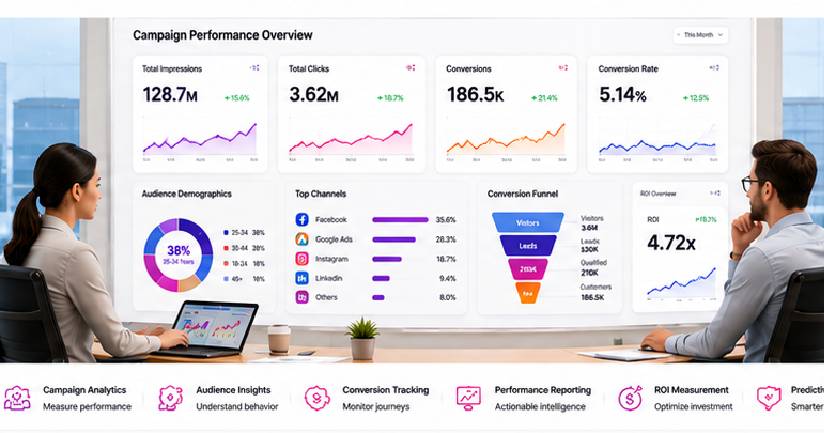
Marketing Intelligence Dashboard
Turn Complex Data into Decision-Ready Information
Brand Messenger can develop dashboards around:
Customers
Traffic • Engagement • Return Activity • Journey
Audiences
Segments • Trends • Behavior
Retail
Stores • Locations • Displays • Product Areas
Events
Attendance • Booths • Zones • Engagement
Campaigns
Media • Response • Conversion • Performance
Predictive Intelligence
Forecasts • Patterns • Opportunities • Risks
Business Performance
Leads • Sales • Revenue • ROI where integrated
Retail Intelligence Dashboard
A retail dashboard can present:
Today's Traffic
Peak Hours
Location Comparison
Visitor Trends
Return Activity
Product / Display Engagement
Campaign Period Comparison
Sales Context
Management can move from raw data to a more usable operating view.
Event Intelligence Dashboard
An event dashboard can provide views around:
Attendance
Audience Flow
Zone Activity
Booth Engagement
Peak Times
Repeat Activity
Sponsor Areas
Leads where integrated
Post-Event Follow-Up
This can support organizers, sponsors, exhibitors, and management.
Executive Marketing Intelligence Dashboard
Give Leadership the Bigger Picture
Executives do not necessarily need every raw metric.
Brand Messenger can create consolidated views around:
Audience: Who is engaging?
Behavior
What are they doing?
Locations
Where is engagement occurring?
Campaigns
What is influencing activity?
Customers
What is happening across the journey?
Performance
What business outcomes are being generated?
Prediction
What may happen next?
Action
What should management investigate or prioritize?
AI-Assisted Root-Cause Analysis
When performance changes, the important question is often:
Why?
Brand Messenger can use AI-assisted analysis to investigate relationships between:
Campaign Changes
Audience Activity
Location Performance
Traffic
Engagement
Product Interest
Customer Journey
Conversion
The system can help surface potential explanations for human analysis.
Correlation should not automatically be treated as causation.
AI Marketing Recommendations
Where appropriate, intelligence can support recommendations around:
Campaign Timing
Audience Focus
Location Strategy
Promotional Activity
Event Planning
Content
Customer Engagement
Product Promotion
The framework becomes:
Data → Pattern → Insight → Recommendation → Human Decision → Action
Brand Messenger positions AI as a decision-support capability, not an unquestionable decision-maker.
Real-Time & Near-Real-Time Intelligence
Some environments may benefit from faster intelligence.
Depending on the integrated technology and data availability, dashboards can support real-time or near-real-time views of:
Visitor Activity
Crowd Activity
Event Traffic
Location Activity
Campaign Signals
Actual update frequency depends on the connected systems and deployment architecture.
Privacy-Aware Marketing Intelligence
Intelligence Must Be Designed Responsibly
Customer intelligence can involve sensitive data.
Face, biometric, identity, location, and behavioral information may be subject to additional legal and regulatory requirements depending on the jurisdiction and use case.
Brand Messenger and Messenger2050 Technologies can structure deployments around principles such as:
Data Minimization
Purpose Limitation
Appropriate Consent
Controlled Access
Retention Controls
Security
Role-Based Access
Aggregated Analytics where appropriate
Governance
Auditability
Specific legal requirements should be assessed for each deployment and jurisdiction.
Aggregated Audience Intelligence
Not every marketing question requires knowing who a particular person is.
Many useful questions can be answered through aggregated information:
How many visitors arrived?
Which zones were busiest?
When was activity highest?
Which location performed better?
Which display attracted greater engagement?
Where appropriate, Brand Messenger can prioritize aggregated analytical approaches when individual identity is unnecessary.
Identity-Based Capabilities
Certain use cases may require persistent identity or recognition.
Where such functionality is used, deployment should consider:
Legal Basis
Consent where required
Notice
Data Storage
Access
Retention
Security
Biometric Regulations
Purpose Restrictions
Technical capability should not automatically determine whether a particular use is appropriate.
AI Marketing Intelligence Governance
Enterprise intelligence requires governance across:
Data Sources
Data Ownership
Access
Identity
Consent
Analytics
Models
Reports
Marketing Activation
Retention
Security
The principle becomes:
Intelligence with Accountability.
AI Marketing Intelligence for Retail
Brand Messenger can support retailers across:
Traffic → Behavior → Product Interest → Campaign → Purchase → Return Visit
Potential applications include:
Store Analytics
Customer Flow
Peak Hours
Product Display Intelligence
Campaign Analysis
Multi-Location Comparison
Customer Journey
Predictive Traffic
Executive Dashboards
AI Marketing Intelligence for Shopping Centers
Shopping centers and malls can use aggregated intelligence to understand:
Visitor Traffic
Zone Activity
Peak Periods
Movement Patterns
Event Impact
Promotional Activity
Location Performance
This can support marketing, tenant strategy, events, and customer-experience planning.
AI Marketing Intelligence for Events & Exhibitions
Brand Messenger can support:
Registration → Attendance → Movement → Booth / Zone Engagement → Leads → CRM → Follow-Up → Revenue where measurable
This creates a connected event-marketing intelligence framework.
AI Marketing Intelligence for Hospitality
Hotels, resorts, and hospitality environments can use appropriate intelligence to understand:
Visitor Activity
Venue Usage
Event Engagement
Location Patterns
Campaign Performance
Customer Journey
Use cases should be designed according to the privacy expectations and legal requirements of hospitality environments.
AI Marketing Intelligence for Entertainment Venues
Potential environments include:
Cinemas
Entertainment Centers
Festivals
Exhibitions
Attractions
Brand Messenger can help connect audience activity, marketing campaigns, events, ticketing or CRM data where available.
AI Marketing Intelligence for Corporate Events
Organizations can evaluate:
Attendance
Session Activity
Engagement
Traffic
Booths
Networking Areas
Follow-Up
Leads
Event Performance
This can strengthen future event planning and B2B marketing.
AI Marketing Intelligence for B2B
B2B organizations can connect:
Campaign → Event → Booth → Lead → CRM → Sales Opportunity → Revenue
This can be particularly valuable for:
Trade Shows
Exhibitions
Conferences
Product Demonstrations
Corporate Events
It helps bridge physical engagement with sales and marketing systems.
AI Marketing Intelligence for Multi-Location Enterprises
Organizations operating multiple branches or venues can create a consolidated intelligence layer:
Location 01
Location 02
Location 03
↓
Central Marketing Intelligence
↓
Comparative Analytics
↓
Executive Dashboard
↓
Strategy
This supports enterprise-level decision-making while preserving appropriate location-level analysis.
AI Marketing Intelligence + Brand Messenger AdTech
Brand Messenger can connect Marketing Intelligence with:
Audience Targeting
Programmatic Advertising
Paid Media
Dynamic Creative
Retargeting
Bid Optimization
Advertising Measurement
Attribution
The cycle becomes:
Audience Intelligence → Media Strategy → Advertising → Customer Response → Behavioral Intelligence → Measurement → Optimization
AI Marketing Intelligence + Brand Messenger MarTech
Our MarTech environment can connect:
CRM
CDP
Marketing Automation
Omnichannel Marketing
Customer Journey Orchestration
AI Personalization
Customer Intelligence
Campaign Management
Loyalty & Retention
Marketing Analytics
Business Intelligence
The connected cycle becomes:
Customer → Data → Intelligence → Journey → Marketing → Experience → Response → Learning
AI Marketing Intelligence + AI Content Generation
Intelligence can help inform what content may be needed.
The relationship becomes:
Audience Intelligence → Content Requirement → AI Content Generation → Campaign → Audience Response → Intelligence
This creates a continuous creative-learning cycle.
AI Marketing Intelligence + AI Creative Studio
The AI Creative Studio can use appropriate audience and performance insights to inform creative thinking.
The relationship becomes:
Behavior → Insight → Creative Opportunity → AI Creative Studio → Campaign Concept → Activation → Performance
This helps creative teams work from evidence as well as imagination.
AI Marketing Intelligence + Marketing Campaigns
Campaigns can become more intelligence-led:
Audience Intelligence → Campaign Planning → Creative → Channel Activation → Customer Response → Behavior Analytics → Performance → Next Campaign
This creates continuous improvement rather than isolated campaigns.
AI Marketing Intelligence + Brand Strategy
Marketing intelligence can also inform strategic branding questions.
For example:
Who engages with the brand?
Which experiences generate stronger interest?
How do audiences behave across locations?
Which campaigns correspond with stronger activity?
Which audience groups appear to respond differently?
These insights can complement qualitative research and broader brand strategy.
AI Marketing Intelligence + Customer Experience
Brand Messenger can connect:
Customer Behavior + Journey Analytics + Customer Feedback + Operational Data
to identify opportunities to improve customer experiences.
Marketing intelligence can therefore support both:
Customer Acquisition
and
Customer Experience Improvement
AI Marketing Intelligence + Loyalty & Retention
Where appropriate customer identity and consent mechanisms exist, intelligence can support:
Repeat-Visit Analysis
Retention Trends
Customer Segmentation
Re-Engagement
Loyalty Analysis
Customer Lifetime Value
The journey becomes:
Acquire → Engage → Understand → Retain → Grow
AI Marketing Intelligence Integration Architecture
A Brand Messenger deployment can conceptually connect:
Intelligence Sources
Face Signatures • Website • App • CRM • POS • E-Commerce • Events • Advertising → Data & Integration Layer
APIs • Data Pipelines • CDP • Data Warehouse → Intelligence Layer
Customer Behavior • Audience Analytics • Retail Analytics • Event Analytics • Predictive Intelligence → Decision Layer
Dashboards • Reports • Alerts • Recommendations → Marketing Layer
CRM • Automation • Campaigns • Personalization • AdTech → Business Outcomes
Engagement • Leads • Conversion • Retention • Revenue • ROI
Complete AI Marketing Intelligence Integration Process
Brand Messenger can structure an engagement as:
Business & Marketing Objectives → Customer Journey Review → Available Data & Technology Audit → Face Signatures Use-Case Assessment → Privacy & Governance Requirements → Data Architecture → Integration Planning → CRM / CDP / MarTech Connections → Face Signatures Intelligence Integration → Audience & Behavior Analytics → Retail / Event / Location Intelligence → Predictive Models where appropriate → Dashboard Development → Marketing Activation Rules → Measurement → Human Decision-Making → Optimization
The complete intelligence cycle becomes:
Observe → Connect → Understand → Analyze → Predict → Decide → Activate → Measure → Learn
Industries We Serve
Brand Messenger AI Marketing Intelligence Integration can support appropriate use cases across:
Retail
Shopping Centers
FMCG
Consumer Brands
E-Commerce
Events
Exhibitions
Trade Shows
Conferences
Hospitality
Hotels & Resorts
Entertainment
Cinemas
Attractions
Corporate Environments
Automotive
Real Estate
Telecommunications
Financial Services
Professional Services
B2B Organizations
Multi-Location Enterprises
Education and other sectors where the intended deployment is appropriate
Different industries and jurisdictions can require substantially different approaches to privacy, biometrics, consent, security, and data governance.
Benefits of AI Marketing Intelligence Integration
Brand Messenger can help organizations:
Understand customer behavior more comprehensively
Connect digital and physical behavioral signals
Understand visitor traffic
Analyze audience engagement
Identify movement and activity patterns
Understand repeat-visit trends
Measure retail activity
Analyze event audiences
Evaluate booth and zone engagement
Compare locations
Identify peak periods
Connect campaigns with customer behavior
Integrate CRM and CDP intelligence
Connect Face Signatures with marketing systems
Build predictive marketing models
Develop executive dashboards
Improve marketing planning
Support customer journey analysis
Connect intelligence with automation
Build privacy-aware analytics architectures
Turn fragmented data into decision-ready intelligence
Why Choose Brand Messenger?
Brand Messenger combines Customer Behavior Intelligence, Audience Analytics, Predictive Marketing, Retail Analytics, Event Analytics, Customer Journey Intelligence, Location Intelligence, Campaign Intelligence, Face Signatures technology expertise, CRM, CDP, MarTech, AdTech, Marketing Automation, Personalization, Data Integration, Analytics, and Business Intelligence within one connected marketing-intelligence environment.
We do not approach Marketing Intelligence as simply:
Camera → Data → Dashboard
or:
CRM → Report → Marketing Campaign
We approach it as:
Customer → Interaction → Digital Signals → Physical-Space Signals → Face Signatures Intelligence → CRM / CDP → Audience Intelligence → Behavioral Analytics → Predictive Intelligence → Marketing Decision → Campaign → Customer Response → Business Outcome → Learning
This distinction is important.
Face Signatures provides a specialized intelligence layer for relevant physical environments.
Brand Messenger connects that intelligence with marketing strategy, customer journeys, campaigns, MarTech, AdTech, analytics, and business decision-making.
Together, the ecosystem can help organizations move beyond fragmented views of:
Website Visitors
Store Visitors
Event Attendees
CRM Customers
Advertising Audiences
and toward a more connected understanding of customer and audience behavior across relevant touchpoints.
The result is not simply more data.
It is a connected AI Marketing Intelligence capability designed to help organizations understand behavior, discover patterns, analyze audiences, evaluate physical and digital engagement, anticipate potential opportunities, improve marketing decisions, and measure what happens next.
From Customer Behavior to Business Intelligence.
See the Signals. Understand the Audience. Connect the Journey. Predict What Matters. Turn Intelligence into Marketing Action.