





Digital Experience Platforms (DXP)
Connect Content, Customers, Data and Digital Services. Build Unified Experiences Across Every Digital Touchpoint.
Customers no longer experience a brand through one website or one marketing channel.
They move between websites, mobile applications, customer portals, e-commerce environments, campaigns, email, messaging, social media, customer-service systems, digital products, and physical-to-digital touchpoints often as part of the same journey.
For enterprises, the challenge is not simply creating more digital channels.
The challenge is making those channels feel like one connected experience.
At Brand Messenger, our Digital Experience Platforms (DXP) service helps organizations plan, design, integrate and optimize the technology ecosystem required to manage content, customer interactions, personalization, digital services and experiences across multiple touchpoints.
Our four core capabilities are:
Customer Portals
Experience Platforms
Content Personalization
Unified Digital Experiences
The service can extend across content management, customer data, CRM, CDP, marketing automation, customer journeys, AI personalization, e-commerce, digital asset management, analytics, APIs, enterprise integrations, conversational AI, identity and access, and experience optimization.
Our approach connects:
Customer → Identity & Context → Content → Data → Digital Experience → Interaction → Business System → Customer Journey → Analytics → Personalization → Continuous Improvement
The objective is not simply to build another website.
It is to create a connected digital experience ecosystem capable of serving customers consistently across channels, devices, journeys, brands and business systems.
One Customer. Multiple Touchpoints. One Connected Digital Experience.
What Is a Digital Experience Platform?
A Digital Experience Platform is a technology architecture that helps organizations create, manage, deliver, personalize, integrate and measure digital experiences across multiple customer touchpoints.
A traditional website may primarily deliver pages and content.
A DXP can connect:
Content
Customer Data
Digital Services
Personalization
Commerce
Marketing
Customer Experience
Analytics
into a broader digital environment.
The architecture becomes:
Customer → Digital Touchpoint → Experience Layer → Content + Customer Data + Business Services → Personalized Interaction → Measurement
A DXP can therefore act as the experience layer connecting the customer-facing digital environment with the technologies operating behind it.
Brand Messenger DXP Services
Our Digital Experience Platform capabilities can include:
DXP Strategy & Consulting
Digital Experience Architecture
Customer Portals
Partner Portals
Member Portals
Employee Experience Portals
Dealer & Distributor Portals
Experience Platforms
Enterprise Websites
Multi-Site Platforms
Multi-Brand Digital Experiences
Content Management Systems
Headless & Composable Experience Architecture
Content Personalization
Dynamic Content Delivery
Customer Journey Personalization
AI-Assisted Personalization
Customer Data Integration
CRM Integration
CDP Integration
Marketing Automation Integration
E-Commerce Integration
Digital Asset Management Integration
Search & Content Discovery
Conversational AI Integration
Customer Self-Service
Authentication & Customer Identity Integration
API & Webhook Integration
Omnichannel Experience Integration
Mobile Experience Integration
Campaign Experience Integration
Localization & Multilingual Experiences
Experience Analytics
Conversion Optimization
A/B & Experience Testing
Customer Journey Analytics
DXP Governance
Digital Experience Operations
Enterprise Integration
Experience Performance Monitoring
Continuous Experience Optimization
Customer Portals
Give Customers a Connected Digital Home
A customer portal can become the primary digital environment through which customers interact with an organization after or sometimes before becoming a customer.
Instead of information being distributed across disconnected emails, websites, support systems and account interfaces, Brand Messenger can help organizations create a centralized experience.
Depending on the organization and connected systems, a customer portal can provide access to:
Customer Profiles
Account Information
Products & Services
Orders
Projects
Documents
Support
Service Requests
Appointments
Messages
Notifications
Knowledge
Resources
Payments
Subscriptions
Loyalty
Recommendations
Customer Communications
The experience becomes:
Customer → Secure Portal → Account → Services → Content → Support → Communication → Relationship
Customer Portal Strategy
A portal should not simply become a collection of features.
Brand Messenger can begin by understanding:
Who will use the portal?
Why will they return?
What tasks should they be able to complete?
Which systems must be connected?
What information should they see?
What should remain restricted?
How should the experience change across the customer lifecycle?
This creates:
Customer Need → Portal Experience → Business Process → Technology → Outcome
Customer Self-Service
Let Customers Complete Appropriate Tasks Without Unnecessary Friction
A well-designed DXP can provide self-service capabilities for appropriate customer activities.
These may include:
Updating Information
Finding Documents
Viewing Orders
Checking Status
Accessing Resources
Submitting Requests
Opening Support Cases
Managing Preferences
Reviewing Services
Finding Answers
Booking Appointments
Self-service does not mean eliminating human support.
The model should be:
Self-Service When Convenient → Human Assistance When Needed
Personalized Customer Portals
Not every customer needs to see the same portal experience.
Depending on available customer data and permissions, a DXP can adapt:
Dashboard Content
Recommended Resources
Products
Services
Notifications
Offers
Support Information
Navigation
Calls to Action
The model becomes:
Customer Identity + Relationship + Context → Relevant Portal Experience
B2B Customer Portals
Enterprise and B2B organizations may require more complex portal environments.
Potential capabilities can include:
Company Accounts
Multiple Users
Role-Based Access
Account Management
Contract Information
Project Information
Service Requests
Documentation
Technical Resources
Quotes
Orders
Account Communications
Support
Sales Collaboration
The DXP can become an important part of the long-term customer relationship.
Partner Portals
Brand Messenger can develop digital experiences for:
Business Partners
Channel Partners
Resellers
Affiliates
Strategic Partners
Potential capabilities include:
Resources → Campaign Materials → Product Information → Leads → Training → Support → Performance
This can connect with our wider Partner & Alliance Marketing services.
Dealer & Distributor Portals
For organizations operating through dealer or distributor networks, DXP architecture can support:
Product Information
Marketing Assets
Campaign Materials
Sales Resources
Training
Dealer Communications
Lead Distribution
Support
Performance Information
This connects digital experience technology with Distributor & Dealer Marketing.
Member Portals
Membership organizations can use experience platforms to provide:
Member Profiles
Resources
Content
Events
Communities
Benefits
Membership Information
Communications
Support
The portal becomes a continuing relationship environment rather than simply an account page.
Experience Platforms
Build the Technology Foundation Behind Connected Digital Experiences
An Experience Platform provides the underlying architecture through which organizations can manage and deliver customer-facing experiences.
It can connect:
Websites
Portals
Apps
Content
Customer Data
Commerce
Marketing
Customer Service
Personalization
Analytics
The objective is to create a reusable experience foundation rather than repeatedly building disconnected digital properties.
Enterprise Digital Experience Architecture
A broader Brand Messenger DXP architecture can become:
Customer Touchpoints
Website • Portal • App • Commerce • Campaign • Messaging → Experience Layer
Navigation • Interface • Search • Personalization • Customer Services → Content Layer
CMS • Content • Media • Digital Assets • Localization → Customer Intelligence Layer
CRM • CDP • Customer Profiles • Segmentation • Journey Context → Business Services
Commerce • Support • Orders • Booking • Loyalty • Accounts → Integration Layer
APIs • Webhooks • Middleware • Data Pipelines → Analytics & Intelligence
Experience Analytics • Conversion • Journey Analytics • AI
This creates an integrated digital-experience architecture.
Enterprise Websites as Experience Platforms
A modern enterprise website can become significantly more than a corporate brochure.
It can provide:
Personalized Content
Product Discovery
Service Discovery
Customer Login
AI Assistance
Lead Generation
Commerce
Customer Support
Dynamic Campaign Experiences
Location Content
Industry Content
Customer Resources
The website becomes:
Corporate Presence + Marketing Platform + Customer Experience + Business Interface
Multi-Site Experience Platforms
Large organizations may operate:
Corporate Websites
Product Websites
Country Websites
Campaign Sites
Customer Portals
Brand Websites
Partner Sites
Brand Messenger can help establish a shared architecture for managing multiple digital properties.
The objective becomes:
Central Standards + Shared Technology + Local Flexibility
Multi-Brand DXP
Organizations managing several brands may require separate customer-facing identities while sharing technology behind them.
A DXP can support:
Shared Infrastructure → Brand A Experience
Brand B Experience
Brand C Experience
Each brand can maintain its own:
Identity
Content
Audience
Products
Customer Journey
while selected technology and data services remain shared.
Content Management
Manage Content as an Enterprise Capability
Content is one of the central components of a DXP.
Brand Messenger can help organizations structure content for:
Websites
Apps
Portals
Campaigns
Products
Customer Journeys
Localization
Personalization
The lifecycle becomes:
Plan → Create → Review → Approve → Publish → Personalize → Measure → Update
Content Management System Integration
Brand Messenger can work with appropriate CMS architectures to connect content with the wider digital experience.
A CMS may manage:
Pages
Articles
Product Information
Service Information
Campaign Content
Media
Landing Pages
Resources
The DXP extends this content into a broader experience system.
Headless Digital Experiences
Separate Content from the Experience Where It Creates Value
In a headless architecture, content management can be separated from the front-end presentation layer.
Content can then potentially be delivered to:
Website
Mobile App
Portal
Digital Display
Commerce Experience
Other Connected Interfaces
The architecture becomes:
Content Repository → API → Multiple Experience Channels
This can improve flexibility for organizations operating many digital touchpoints.
Composable DXP Architecture
Not every organization needs one enormous technology suite.
A composable architecture can combine specialized technologies for:
Content + Commerce + CRM + CDP + Search + Personalization + Analytics + Automation
through APIs and integration services.
The principle becomes:
Build the Experience Ecosystem Around Business Needs—not Around One Vendor.
Content Personalization
Deliver More Relevant Content to Different Customers
A single static experience assumes that every visitor has the same needs.
They usually do not.
Brand Messenger can design personalization strategies based on appropriate signals such as:
Customer Segment
Customer Type
Location
Language
Product Interest
Industry
Journey Stage
Campaign Source
Previous Interaction
CRM Relationship
Content Behavior
The process becomes:
Customer Context → Personalization Rules / Intelligence → Relevant Content → Customer Response
Anonymous Visitor Personalization
Personalization does not always require knowing a person's identity.
Experiences may be adapted using appropriate contextual signals such as:
Location
Device
Referral Source
Campaign
Current Page
Content Interest
Session Behavior
This can create useful relevance without unnecessarily identifying every visitor.
Known Customer Personalization
Where a customer is appropriately identified and relevant permissions exist, personalization can use additional context from:
CRM
CDP
Account
Purchase History
Product Ownership
Customer Segment
Previous Engagement
Loyalty Status
This can create a more relevant customer experience.
Dynamic Content
A DXP can dynamically select appropriate content according to defined rules or intelligence.
For example:
New Visitor → Introduction
Existing Customer → Customer Resources
Enterprise Prospect → Enterprise Solutions
Returning Product Visitor → Relevant Product Content
The objective is not simply changing content.
It is improving relevance.
AI-Assisted Content Personalization
AI can support personalization by analyzing patterns across:
Customer Behavior
Content Engagement
Customer Segments
Product Interest
Journey Stage
Historical Performance
The process can become:
Customer Signals → AI Analysis → Content Recommendation → Experience → Response → Learning
AI recommendations should operate within appropriate business rules and governance.
Next-Best-Content
A DXP can help determine which content may be most relevant next.
For example:
Visitor Reads Industry Article → Relevant Case Study → Product / Service Information → Consultation CTA
The experience becomes a guided content journey rather than a disconnected page sequence.
Unified Digital Experiences
Make Multiple Digital Touchpoints Feel Like One Brand and One Relationship
A customer may interact with:
Website → App → Email → Portal → Customer Service → E-Commerce
If every system feels disconnected, the organization appears fragmented.
Brand Messenger can help create greater consistency across:
Brand
Content
Navigation
Customer Identity
Customer Data
Personalization
Communications
Services
Customer Journey
The objective is:
Many Touchpoints. One Experience.
Cross-Channel Experience Continuity
Where appropriate technologies and permissions allow, a customer journey can continue across channels.
For example:
Advertising → Website → AI Assistant → Customer Portal → Email → Sales Team
or:
Mobile App → Product Research → Desktop Website → Purchase → Customer Portal
The goal is to reduce unnecessary repetition and disconnected experiences.
Unified Customer Identity
A connected experience may require an appropriate method for recognizing customers across authenticated systems.
The architecture can become:
Customer → Identity → Account → CRM / CDP Context → Experience
Identity architecture should include appropriate:
Authentication
Authorization
Consent
Access Controls
Privacy
Security
Customer Identity & Access Management Integration
For authenticated experiences, Brand Messenger can integrate appropriate identity and access technologies.
Capabilities can include:
Customer Login
Account Registration
Password Management
Multi-Factor Authentication
Single Sign-On where appropriate
Role-Based Access
Permissions
Session Management
Security requirements should be determined according to the sensitivity of the system and data.
CRM + DXP
Connect Customer Relationships with Digital Experiences
CRM provides relationship context.
DXP provides the digital experience.
Together:
Customer → DXP → Interaction → CRM → Customer Context → Relevant Experience → New Interaction
Potential applications include:
Customer Recognition
Lead Capture
Account Context
Sales Follow-Up
Customer Service
Personalization
Lifecycle Communication
CDP + DXP
A Customer Data Platform can help organize customer signals from multiple sources.
The relationship becomes:
Customer Data Sources → CDP → Unified Customer Profile / Segment → DXP → Personalized Experience → Customer Response → Updated Intelligence
This creates a powerful connection between customer data and customer experience.
Marketing Automation + DXP
Digital experiences can trigger marketing journeys.
For example:
Content Engagement → Lead → CRM → Marketing Automation → Email Journey
or:
Portal Activity → Customer Signal → Appropriate Follow-Up
This connects website and portal activity with broader marketing operations.
Customer Journey Orchestration + DXP
A DXP can become one of the primary execution environments for customer journeys.
The relationship becomes:
Customer Journey Stage → Customer Context → Relevant Experience → Customer Action → Next Journey Stage
The experience can adapt across:
Awareness
Education • Discovery
Consideration
Comparison • Evidence • Product Information
Conversion
Offer • Form • Commerce • Consultation
Onboarding
Setup • Education • Support
Retention
Resources • Service • Loyalty
Growth
Recommendations • Upgrades • Additional Services
Conversational AI + DXP
Make the Digital Experience Conversational
Brand Messenger can integrate Conversational AI Experiences into DXP environments.
AI assistants can support:
Website Navigation
Product Discovery
Customer Support
Account Assistance
Content Discovery
Lead Qualification
Commerce
Portal Assistance
The architecture becomes:
Customer → DXP → AI Assistant → Knowledge + Customer Context + Business Systems → Response / Action
This adds a conversational interface to the wider digital experience.
Conversational Commerce + DXP
For commerce environments:
Customer → Conversation → Product Discovery → Recommendation → Product Experience → Cart → Checkout
This can connect conversational AI with the digital commerce journey.
E-Commerce + DXP
Connect Content and Commerce
Customers often need more than a product grid.
A DXP can connect:
Editorial Content + Product Content + Personalization + Customer Data + Commerce
The journey becomes:
Discover → Learn → Compare → Select → Purchase → Support → Return
Brand Messenger can help create experiences where commerce is integrated naturally with the wider brand and customer journey.
Product Experience
DXP architecture can support rich product experiences including:
Product Information
Visual Content
Video
Comparisons
Recommendations
Guides
Related Content
Reviews where appropriate
Support Resources
This helps connect product information with customer decision-making.
Digital Asset Management Integration
Organizations may manage thousands of:
Images
Videos
Logos
Documents
Campaign Assets
Product Assets
A Digital Asset Management system can connect with the DXP to help teams find, govern and distribute approved assets.
The architecture becomes:
DAM → Approved Asset → Content → Digital Experience
Brand Governance Across Digital Experiences
Keep the Brand Consistent as Digital Operations Scale
Brand Messenger can connect DXP implementation with our Brand Guidelines and wider branding capabilities.
Governance can cover:
Logo
Colors
Typography
UI Components
Imagery
Voice & Tone
Content
Accessibility
Interaction Patterns
This creates:
Brand Standards → Digital Design System → DXP → Consistent Experiences
Digital Design Systems
Enterprise DXP environments can benefit from reusable design components.
These may include:
Navigation
Buttons
Forms
Cards
Product Components
Content Modules
Alerts
Dashboards
Portal Components
The objective is:
Design Once → Reuse Consistently → Scale Faster
Multi-Device Experiences
Customers may access digital experiences through:
Desktop
Laptop
Tablet
Smartphone
Other connected interfaces
Brand Messenger can design responsive and adaptive experiences appropriate to the intended devices and contexts.
Mobile Digital Experiences
Mobile experiences may require different priorities:
Faster Navigation
Shorter Journeys
Touch-Friendly Interfaces
Location Context
Mobile Commerce
Messaging
App Integration
A unified DXP strategy should account for these differences rather than merely shrinking a desktop website.
Search & Content Discovery
Help Customers Find What They Need
Large digital environments can contain thousands of pages, products and resources.
Brand Messenger can integrate search and discovery experiences across:
Products
Services
Articles
Documentation
Resources
Support Content
AI-assisted and semantic discovery can also be considered where appropriate.
AI-Powered Experience Discovery
Conversational and AI-assisted search can allow customers to search using natural questions rather than exact keywords.
For example:
“Which solution is suitable for a multinational retailer?”
The experience can identify relevant content and guide the customer toward appropriate information.
Localization & Multilingual DXP
Enterprise organizations may operate across:
Countries
Regions
Languages
Cultures
Brand Messenger can structure digital experiences around:
Global Platform → Regional Experience → Local Content
Capabilities can include:
Multilingual Content
Country Sites
Regional Products
Local Campaigns
Localized Navigation
Market-Specific Content
Translation and localization should include appropriate human review for important customer-facing communication.
Multi-Market Digital Experience
Different markets may require differences in:
Products
Pricing
Offers
Regulations
Language
Customer Journey
Content
Support
A DXP can provide centralized governance while allowing controlled local variation.
Campaign Experiences
Connect Marketing Campaigns with the Digital Platform
Campaigns often create temporary landing pages disconnected from the broader customer experience.
Brand Messenger can integrate campaigns into the DXP:
Campaign → Landing Experience → Personalized Content → Lead / Commerce → CRM → Customer Journey
This creates stronger continuity between advertising and owned digital experiences.
DXP + Brand Messenger AdTech
Advertising can bring customers into the experience platform.
The connected journey becomes:
Audience Targeting → Advertising → DXP → Personalized Experience → Conversion → Attribution → Optimization
Brand Messenger can connect DXP with:
Programmatic Advertising
Paid Media
Retargeting
Audience Intelligence
Dynamic Creative
Advertising Measurement
DXP + Brand Messenger MarTech
DXP becomes especially powerful when connected with our wider MarTech environment.
This can include:
CRM
CDP
Marketing Automation
Omnichannel Marketing
Customer Journey Orchestration
AI Marketing & Personalization
Customer Intelligence
Campaign Management
Content Marketing Technology
Lead Management
Loyalty & Retention
Marketing Analytics
MarTech Operations
The ecosystem becomes:
Customer Data → Intelligence → Content → Experience → Interaction → Marketing → Relationship → Growth
DXP + AI Marketing Intelligence
Brand Messenger can connect DXP behavior with AI Marketing Intelligence.
Potential digital signals include:
Page Activity
Content Interest
Search Behavior
Product Interest
Journey Progress
Conversion
Return Activity
These can contribute to broader customer intelligence.
The cycle becomes:
Digital Experience → Customer Behavior → Intelligence → Personalization → Improved Digital Experience
DXP + Physical-Space Intelligence
Where appropriate and lawfully implemented, wider customer intelligence may also include relevant physical-space behavioral signals.
The broader model can become:
Digital Behavior + CRM + Transaction Data + Appropriate Physical-Space Signals → Customer Intelligence → Experience Strategy
This is one area where Brand Messenger's broader connection with Face Signatures technology by Messenger2050 Technologies can support suitable enterprise use cases.
Face Signatures does not need to be a core component of every DXP deployment; it is an optional intelligence integration where the business case, environment, privacy requirements and technology architecture justify it.
DXP + AI Content Generation
Digital platforms require substantial volumes of content.
Brand Messenger can connect AI Content Generation capabilities for:
Images
Video
Copy
Design
Content Variations
The workflow can become:
Content Requirement → AI-Assisted Generation → Human Review → Approval → DXP → Personalization → Measurement
DXP + AI Creative Studio
The Brand Messenger AI Creative Studio can support:
Digital Experience Concepts
Visual Directions
Campaign Experiences
Portal Concepts
Interactive Concepts
Content Worlds
The relationship becomes:
Experience Strategy → Creative Concept → UX / UI → Technology → DXP
DXP + Content Marketing Technology
Content Marketing Technology can manage:
Planning → Creation → Approval → Asset Management → Distribution → Analytics
The DXP can become one of the primary environments where that content reaches customers.
DXP + Lead Management
For B2B and service organizations:
Visitor → Content → Personalized Experience → Form / Conversation → Lead → CRM → Qualification → Sales
The DXP therefore contributes directly to the revenue journey.
DXP + Loyalty & Retention
Existing customers can receive digital experiences designed around:
Membership
Rewards
Customer Resources
Recommendations
Account Services
Renewal
Retention
Customer Growth
This transforms the DXP from an acquisition platform into a lifecycle platform.
DXP + Customer Success
Customer-success experiences can include:
Onboarding
Product Education
Knowledge
Account Resources
Support
Training
Adoption Content
The DXP can therefore support customers well beyond the initial conversion.
Experience Analytics
Understand How Customers Use the Digital Experience
Brand Messenger can integrate analytics across:
Visitors
Sessions
Content
Navigation
Search
Products
Forms
Leads
Commerce
Portal Usage
Customer Journeys
Personalization
Conversion
The objective is to understand:
What Customers Do → Where They Struggle → What They Need → What Should Improve
Customer Journey Analytics
Instead of measuring pages independently, journey analytics examines sequences.
For example:
Homepage → Solution → Case Study → Pricing → Form
or:
Email → Portal → Product → Support → Renewal
This can help organizations understand how different experiences contribute to customer outcomes.
Experience Funnel Analytics
A DXP can support funnel measurement such as:
Visitor → Engaged Visitor → Product / Service Interest → Lead → Opportunity → Customer
or:
Customer → Portal → Service → Support → Resolution
The exact funnel depends on the business model.
Conversion Optimization
Turn Experience Data into Improvement
Brand Messenger can connect DXP with our Conversion & Experience Optimization services.
Optimization can include:
Navigation
Content
Calls to Action
Forms
Landing Pages
Product Pages
Checkout
Personalization
Customer Portals
The cycle becomes:
Measure → Identify Friction → Develop Hypothesis → Test → Learn → Improve
A/B Testing
Organizations can test alternative experiences such as:
Headline A vs. Headline B
CTA A vs. CTA B
Layout A vs. Layout B
Content A vs. Content B
Testing should be designed around meaningful hypotheses rather than random variation.
Experience Personalization Measurement
Personalization should be measured.
Brand Messenger can help evaluate whether personalized experiences correspond with improvements in:
Engagement
Content Discovery
Leads
Conversion
Customer Satisfaction indicators
Revenue where measurable
Personalization should not be assumed to improve performance automatically.
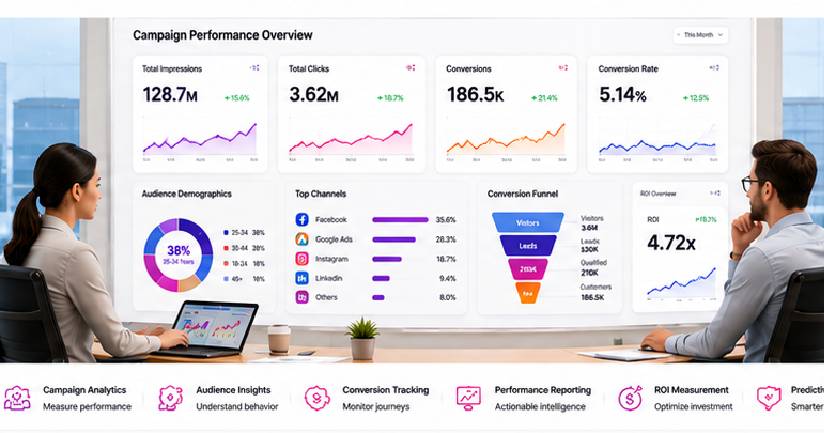
Digital Experience Performance Dashboard
A Brand Messenger DXP dashboard can consolidate:
Experience
Traffic • Engagement • Navigation • Search
Content
Consumption • Performance • Discovery
Customers
Segments • Journey • Return Activity
Personalization
Variants • Engagement • Outcomes
Conversion
Leads • Commerce • Forms • Funnel
Technology
Availability • Integration • Performance
Business
Pipeline • Customers • Revenue where connected
This creates a more complete view of digital performance.
Executive DXP Dashboard
Leadership may require a simplified view:
Digital Audience: Who is using our experiences?
Customer Journey
How are they progressing?
Content
What is performing?
Conversion
Where is digital activity creating business outcomes?
Customers
How are existing customers using the platform?
Experience
Where is friction occurring?
Growth
Which opportunities should we investigate?
The goal is to transform digital experience data into management intelligence.
DXP Integration Architecture
Connect the Experience Layer with the Enterprise
A DXP rarely operates alone.
Brand Messenger can integrate with appropriate:
CRM Systems
CDPs
Marketing Automation
E-Commerce
ERP
Customer Service
Helpdesk
Booking Systems
Payment Systems
Product Information Systems
DAM
Analytics
Business Intelligence
Identity Systems
Conversational AI
Internal Business Applications
The DXP becomes the customer-facing layer connected with the wider enterprise.
API-First Digital Experiences
APIs can connect the DXP with business capabilities.
For example:
DXP → API → Product Catalog
DXP → API → CRM
DXP → API → Booking System
DXP → API → Customer Account
DXP → API → Support System
This allows the customer experience to interact with underlying systems without rebuilding every capability inside the DXP itself.
Event-Driven Experience Architecture
Webhooks and event-based integrations can allow customer activity to trigger other systems.
For example:
Form Submitted → CRM
Purchase Completed → Marketing Automation
Support Request → Helpdesk
Customer Milestone → Personalized Experience
This helps create more responsive digital journeys.
DXP + Data Warehouse & Business Intelligence
Experience data can flow into broader enterprise analytics.
The architecture can become:
DXP → Customer Interaction Data → Data Platform → BI → Business Intelligence
This enables digital experience performance to be evaluated alongside:
Sales
Revenue
Customers
Products
Operations
Enterprise Digital Experience Operations
Build the Operating Model Behind the Platform
Technology alone does not create a successful DXP.
Organizations also need clear ownership across:
Content
Brand
Marketing
Customer Experience
Technology
Data
Security
Analytics
Brand Messenger can help establish an operating model defining:
Who Creates → Who Approves → Who Publishes → Who Measures → Who Optimizes
Content Governance
Enterprise content governance can define:
Content Owners
Approval Workflows
Publishing Permissions
Review Cycles
Localization
Archiving
Versioning
This helps prevent large DXP environments from becoming inconsistent or outdated.
Experience Governance
Brand Messenger can help define standards around:
UX
UI
Brand
Content
Accessibility
Personalization
Data
Integrations
Analytics
Customer Journey
The principle becomes:
Flexible Experiences. Consistent Standards.
Personalization Governance
Organizations should define:
Which data can be used
Which customer segments can be created
Which experiences can be personalized
Who approves personalization
How performance is evaluated
When personalization should stop
This helps prevent uncontrolled or inappropriate personalization.
Privacy-Aware Digital Experiences
Digital Experience Platforms can process substantial customer data.
Brand Messenger can design experience architectures around principles such as:
Data Minimization
Purpose Limitation
Appropriate Consent
Preference Management
Controlled Access
Data Retention
Transparency
Security
Governance
Specific requirements depend on the jurisdiction, industry and data involved.
DXP Security
Enterprise DXP environments should consider security across:
Customer Accounts
Authentication
Authorization
APIs
Content Administration
Customer Data
Integrations
Infrastructure
Logging
Monitoring
The appropriate controls depend on the sensitivity and purpose of the platform.
Accessibility
Build Digital Experiences for More People
Accessibility should be considered across:
Navigation
Content
Forms
Color Contrast
Keyboard Interaction
Images
Video
Components
Customer Portals
Specific accessibility standards and legal requirements should be assessed according to the markets and organizations involved.
Experience Performance
Digital experiences should also be designed around technical performance.
Important considerations can include:
Page Performance
Mobile Experience
Asset Optimization
Platform Reliability
Search Performance
Integration Performance
A sophisticated experience that performs poorly technically can still create a poor customer experience.
DXP Scalability
Enterprise platforms may need to support growth across:
More Customers
More Content
More Markets
More Brands
More Products
More Digital Channels
More Integrations
Architecture should therefore consider future scale rather than only current requirements.
DXP Modernization
Transform Fragmented Legacy Digital Experiences
Organizations may already have:
Old Websites
Separate Portals
Disconnected CMS Platforms
Isolated Customer Data
Multiple Marketing Systems
Legacy Applications
Brand Messenger can develop a modernization roadmap:
Current Environment → Audit → Target Architecture → Priorities → Migration → Integration → New Experience
Transformation can be phased rather than requiring everything to be replaced simultaneously.
DXP Migration Strategy
Migration may involve:
Content
Customer Accounts
Digital Assets
SEO
URLs
Integrations
Customer Data
Forms
Analytics
Business Workflows
A structured migration helps reduce disruption during platform transformation.
Composable Modernization
Organizations do not always need to replace every existing system.
Brand Messenger can evaluate which components should be:
Retained
Integrated
Modernized
Replaced
Added
The objective is to build the right ecosystem rather than replace technology unnecessarily.
Digital Experience Transformation
A DXP initiative can become part of wider digital transformation.
The progression can become:
Static Website → Connected Website → Customer Portal → Personalized Experience → Integrated Customer Journey → Unified Digital Experience Platform → AI-Assisted Experience Ecosystem
This allows organizations to mature progressively.
AI-Enabled Digital Experience Platform
Move from Static Experiences Toward Intelligent Experiences
Brand Messenger can integrate AI across appropriate areas of the DXP.
Potential applications include:
AI Search
Conversational AI
Content Recommendations
Customer Assistance
Product Recommendations
Content Personalization
Journey Intelligence
Predictive Analytics
Content Generation
Experience Analysis
The architecture becomes:
Customer Data + Content + Behavior + AI → More Intelligent Digital Experience
AI should support the experience without removing appropriate human control, business rules or governance.
Predictive Digital Experiences
Where sufficient quality data exists, predictive models can help estimate:
Content Interest
Product Interest
Conversion Probability
Customer Churn Risk
Potential Next Action
Customer Journey Needs
The system can then use these predictions as one input into experience decisions.
Predictions are probabilistic and should not be treated as guaranteed customer intent.
Next-Best-Experience
The longer-term DXP opportunity is not merely:
Which page should we show?
It is:
What is the most useful next experience for this customer?
The framework can become:
Customer Context + Journey + Behavior + Business Rules + Intelligence → Next-Best-Experience
That experience may be:
Content
Product
Support
Conversation
Offer
Account Action
Human Assistance
DXP for B2B Organizations
Brand Messenger can create B2B experiences connecting:
Content → Industry Solutions → Product Information → Account-Based Experiences → Lead Generation → CRM → Sales → Customer Portal
This can support complex B2B customer journeys.
DXP for Retail & E-Commerce
Retail environments can connect:
Content → Product Discovery → Personalization → Commerce → Customer Account → Loyalty → Customer Service
This creates an end-to-end digital retail experience.
DXP for Financial Services
Appropriate DXP implementations can connect:
Public Content
Customer Portals
Product Information
Customer Service
Secure Account Experiences
Personalized Content
Financial-service deployments may require additional security, regulatory, accessibility and governance controls.
DXP for Healthcare
Appropriate healthcare digital experiences can include:
Information
Patient or Customer Portals
Appointment Journeys
Educational Content
Support
Healthcare deployments involving health information require specialized privacy, security and regulatory architecture.
DXP for Hospitality & Travel
Digital experiences can connect:
Discovery → Destination / Property Content → Booking → Pre-Arrival → Stay → Support → Loyalty
This creates a connected guest journey.
DXP for Media & Entertainment
Experience platforms can support:
Content Discovery
Audience Accounts
Personalized Content
Membership
Subscriptions
Communities
Events
Entertainment Discovery
This can connect content, audiences and customer relationships within one digital ecosystem.
DXP for Professional Services
Professional-services organizations can connect:
Expertise → Insights → Services → Consultation → Client Portal → Documents → Communication → Ongoing Relationship
This turns the website and client portal into a connected business-development and customer-service environment.
DXP for Multi-Brand Enterprises
Brand Messenger can help organizations coordinate:
Corporate Brand → Brand Portfolio → Shared DXP Infrastructure → Individual Brand Experiences
This can connect directly with our Brand Architecture services.
DXP for Global Enterprises
Global DXP environments can support:
Global Governance + Regional Operations + Local Experiences
This may include:
Multi-Language
Multi-Country
Multi-Brand
Multi-Currency where commerce requires
Local Content
Local Products
Regional Teams
The objective is to scale without losing control.
Complete Brand Messenger DXP Process
Brand Messenger can structure a Digital Experience Platform engagement as:
Business Strategy → Customer & Audience Understanding → Customer Journey → Current Digital Experience Audit → Technology & Data Audit → DXP Strategy → Experience Architecture → Content Architecture → Customer Portal Strategy → CRM / CDP Architecture → Personalization Strategy → UX & UI Design → Integration Architecture → Platform Development / Configuration → Content & Data Migration → Testing → Security & Governance Review → Launch → Analytics → Experience Optimization → Continuous Development
The complete operating cycle becomes:
Understand → Architect → Connect → Design → Build → Personalize → Deliver → Measure → Optimize → Evolve
Across the Brand Messenger Digital Experience Ecosystem
A DXP can connect multiple Brand Messenger capabilities:
Brand Strategy
Define the Experience Promise → Brand Guidelines
Create Consistency → Content Marketing Technology
Manage Content → AI Creative Studio
Create Experience Concepts → AI Content Generation
Produce Content → DXP
Deliver the Experience → CRM + CDP
Understand the Customer → Marketing Automation
Continue the Relationship → Conversational AI
Assist Through Dialogue → AI Marketing Intelligence
Understand Behavior → AdTech
Acquire Audiences → Analytics & BI
Measure Business Impact
This creates a wider Brand Messenger ecosystem:
Brand → Content → Data → Technology → Experience → Conversation → Customer → Intelligence → Growth
Industries We Serve
Brand Messenger Digital Experience Platform services can support:
Enterprise Organizations
Multi-Brand Groups
Retail
E-Commerce
Consumer Brands
Technology
SaaS
Telecommunications
Financial Services
FinTech
Insurance
Healthcare
Hospitality
Travel & Tourism
Real Estate
Automotive
Media
Entertainment
Education
Professional Services
B2B Organizations
Manufacturing
Distribution
Membership Organizations
Events
Government & Public-Sector Organizations
Non-Profit Organizations
Global and Multi-Market Enterprises
Architecture, security, privacy and regulatory requirements should be adapted to the specific industry and use case.
Benefits of Digital Experience Platforms
Brand Messenger can help organizations:
Create unified customer experiences
Connect websites, portals and digital services
Build personalized content experiences
Centralize customer-facing digital capabilities
Connect CRM and customer experiences
Activate CDP customer intelligence
Integrate marketing automation
Connect content with commerce
Improve customer self-service
Develop secure customer portals
Support B2B customer relationships
Build partner and dealer portals
Manage multiple brands
Manage multiple websites
Support multiple markets and languages
Create reusable experience components
Improve content governance
Connect conversational AI
Introduce AI-assisted personalization
Improve digital customer journeys
Integrate enterprise systems through APIs
Measure experience performance
Optimize conversion
Build scalable digital architectures
Modernize legacy digital experiences
Create a foundation for continuous digital transformation
Why Choose Brand Messenger?
Brand Messenger combines Digital Experience Strategy, Customer Portals, Experience Platforms, Content Personalization, Unified Digital Experiences, Brand Strategy, UX/UI, Content Technology, CRM, CDP, Marketing Automation, Customer Journey Orchestration, Conversational AI, AI Marketing Intelligence, AI Creative Studio, AI Content Generation, E-Commerce, AdTech, MarTech, Analytics and Business Intelligence within one connected ecosystem.
We do not approach DXP as simply:
CMS → Website → Content
We approach it as:
Customer → Identity & Context → Digital Touchpoint → Content → Experience → Personalization → Conversation → Commerce / Service → CRM / CDP → Customer Journey → Analytics → Intelligence → Continuous Optimization
The difference is important.
A website publishes information.
A portal provides customer access.
A CMS manages content.
A CRM manages customer relationships.
A CDP organizes customer data.
Marketing automation manages customer communications.
Conversational AI creates dialogue.
Analytics measures behavior.
A properly designed Digital Experience Platform brings these capabilities together at the experience layer, allowing the organization to deliver a more connected digital relationship with the customer.
Because DXP operates within the wider Brand Messenger Branding, Digital Marketing, Creative Technology, AI, Conversational AI, AdTech, MarTech, Customer Intelligence, Content, Analytics and Business Intelligence ecosystem, the platform does not have to end at the digital interface.
It can connect the complete customer lifecycle:
Discover → Explore → Engage → Converse → Compare → Convert → Onboard → Use → Receive Support → Return → Grow
The result is not simply another digital platform.
It is an enterprise digital experience ecosystem designed to connect customers, content, data, technology and business services into more relevant, personalized and unified experiences across the customer journey.
One Customer. One Connected Experience. Every Digital Touchpoint.
Connect the Content. Unify the Data. Personalize the Journey. Integrate the Technology. Deliver Digital Experiences Designed to Grow with the Customer and the Enterprise.