






Government & Public Sector Marketing
Inform Citizens. Communicate Public Services. Build Participation. Strengthen the Connection Between Institutions and the Communities They Serve.
Government and public-sector communication has a fundamentally different purpose from ordinary commercial marketing.
A commercial organization may communicate primarily to generate demand, customers and revenue. A public institution may need to explain a new service, inform citizens about an emergency, increase awareness of a public-health initiative, encourage participation in a consultation, communicate infrastructure changes, improve uptake of a government service or make complex public information easier to understand.
The objective is therefore not simply:
Reach More People.
It is:
Deliver the Right Public Information to the Right Communities, Through the Right Channels, in a Form People Can Understand, Access and Act Upon.
At Brand Messenger, our Government & Public Sector Marketing service brings together citizen awareness, public-information campaigns, government communications, civic engagement, digital communication, public-service marketing, community outreach, content production, events, media strategy, technology, analytics and responsible AI-assisted intelligence within one connected public communication ecosystem.
Our core capabilities include:
⦁ Citizen Awareness
⦁ Public Campaigns
⦁ Government Communications
⦁ Civic Engagement
Our wider capabilities can extend across public information campaigns, service-awareness campaigns, behavioral communication, public-health communication, emergency and safety communication, infrastructure communication, environmental campaigns, citizen-service adoption, public consultations, community outreach, digital government communication, social media, multilingual communication, accessible content, public events, stakeholder engagement, media planning, campaign measurement, public sentiment and feedback analysis, dashboards and communication intelligence.
International public-communication frameworks increasingly emphasize that government communication should be citizen-centered, transparent, evidence-informed, measurable and capable of supporting two-way engagement rather than functioning only as one-way publicity. The OECD also explicitly distinguishes public communication serving the common good from party/electoral political communication.
Our approach connects:
Public Institution → Public Purpose → Citizen Need → Information → Communication → Understanding → Participation / Service Action → Feedback → Measurement → Improvement
What Is Government & Public Sector Marketing?
Government & Public Sector Marketing is the strategic use of communication, campaigns, media, technology and engagement methods to help public institutions connect people with:
⦁ Public Information
⦁ Government Services
⦁ Programs
⦁ Policies
⦁ Safety Information
⦁ Public Initiatives
⦁ Community Programs
⦁ Consultations
⦁ Civic Participation Opportunities
In this context, the word marketing does not mean turning government into a commercial brand.
It means applying professional capabilities in:
Research + Communication + Creative + Media + Digital Technology + Engagement + Measurement
to legitimate public-service objectives.
UK government communication standards similarly describe government marketing as supporting policy and operational objectives by understanding citizen needs, using research and reliable data, working across appropriate channels and measuring effectiveness and outcomes.
Public Communication Is Not Political Campaigning
Brand Messenger distinguishes clearly between:
Government & Public-Sector Communication
Communication about public services, programs, safety, policies, civic information and legitimate institutional responsibilities.
and:
Political / Electoral Campaigning
Communication intended to promote political parties, candidates or electoral outcomes.
Our Government & Public Sector Marketing service is designed around:
Citizen Information. Public Services. Public Awareness. Participation. Institutional Communication.
The OECD similarly defines public communication separately from party- or election-linked political communication and emphasizes its role in delivering information, listening and responding to citizens in service of the common good.
Brand Messenger Government & Public Sector Marketing Services
Our capabilities can include:
⦁ Government Communication Strategy
⦁ Public-Sector Marketing Strategy
⦁ Citizen Awareness Campaigns
⦁ Public Information Campaigns
⦁ Public Service Campaigns
⦁ Government Service Awareness
⦁ Civic Engagement
⦁ Citizen Engagement
⦁ Community Outreach
⦁ Stakeholder Engagement
⦁ Public Consultation Communication
⦁ Behavioral Communication
⦁ Public Health Campaigns
⦁ Public Safety Campaigns
⦁ Emergency Communication
⦁ Disaster Preparedness Communication
⦁ Environmental Awareness Campaigns
⦁ Sustainability Communication
⦁ Transport & Mobility Campaigns
⦁ Road Safety Campaigns
⦁ Education Awareness Campaigns
⦁ Tourism Promotion
⦁ Investment Promotion
⦁ Economic Development Communication
⦁ Digital Government Campaigns
⦁ E-Government Service Promotion
⦁ Citizen Portal Adoption Campaigns
⦁ Public App Adoption Campaigns
⦁ Government Social Media
⦁ Government Content Strategy
⦁ Public Information Content
⦁ Explainer Content
⦁ Public-Service Videos
⦁ Animation & Motion Graphics
⦁ Infographics
⦁ Digital Campaigns
⦁ Search Marketing
⦁ Display Advertising
⦁ Video Advertising
⦁ Digital Out-of-Home Campaigns
⦁ Traditional Media
⦁ Outdoor Communication
⦁ Radio Campaigns
⦁ Television Campaigns
⦁ Print Campaigns
⦁ SMS Communication
⦁ Email Communication
⦁ Appropriate Messaging Channels
⦁ Multilingual Campaigns
⦁ Accessible Communication
⦁ Community Events
⦁ Town Halls
⦁ Public Forums
⦁ Exhibitions
⦁ Government Conferences
⦁ Public-Sector Events
⦁ Hybrid Civic Events
⦁ Public Feedback Systems
⦁ Surveys
⦁ Citizen Experience Research
⦁ Campaign Analytics
⦁ Public Engagement Analytics
⦁ Communication Dashboards
⦁ Geographic Communication Intelligence
⦁ AI-Assisted Public Communication Intelligence
Citizen Awareness Campaigns
Make Important Public Information Visible, Understandable and Actionable
Governments frequently need to communicate information that citizens need to know rather than information they are actively searching for.
Citizen-awareness campaigns can support areas such as:
⦁ Public Health
⦁ Public Safety
⦁ Education
⦁ Environment
⦁ Transport
⦁ Utilities
⦁ Emergency Preparedness
⦁ Digital Government
⦁ Citizen Services
⦁ Community Programs
The communication journey becomes:
Public Issue → Citizen Awareness → Understanding → Appropriate Action
Awareness Is Not the Final Objective
A person seeing a campaign does not necessarily mean the campaign succeeded.
A stronger measurement architecture considers:
Did They See It?
↓
Did They Understand It?
↓
Was It Relevant?
↓
Did They Know What to Do?
↓
Could They Access the Service or Action?
↓
What Happened Next?
Recent OECD work specifically highlights the need to move beyond visibility metrics toward measuring whether communication changes understanding, attitudes or actions.
Public Information Campaigns
Brand Messenger can help institutions transform complex public information into communication designed for real audiences.
The architecture becomes:
Government Information
↓
Audience Need
↓
Clear Message
↓
Appropriate Format
↓
Relevant Channel
↓
Citizen Understanding
Public information should prioritize clarity over institutional complexity.
Government Communications
Communicate Clearly Across Institutions, Channels and Communities
Government communication can involve:
⦁ Ministries
⦁ Departments
⦁ Municipalities
⦁ Authorities
⦁ Agencies
⦁ Public Institutions
⦁ Public-Service Organizations
Brand Messenger can help develop communication systems that maintain consistency while allowing information to remain relevant to each institution and audience.
Government Communication Strategy
A communication strategy can begin with:
Public Objective
↓
Audience
↓
Information Need
↓
Desired Public-Service Outcome
↓
Message
↓
Channel
↓
Communication
↓
Feedback
↓
Measurement
The objective should be defined before the campaign format is selected.
Citizen-Centered Communication
Start with What People Need to Know
Institutional communication often begins with:
What Does the Government Want to Announce?
Citizen-centered communication asks another question:
What Does the Citizen Need to Understand or Do?
That change in perspective can affect:
⦁ Language
⦁ Content
⦁ Format
⦁ Channel
⦁ Timing
⦁ Accessibility
⦁ Call to Action
OECD guidance emphasizes public communication as a way to understand citizens' needs, gather feedback and make public services and policymaking more responsive.
Clear Government Communication
Public communication may involve complicated:
⦁ Regulations
⦁ Processes
⦁ Eligibility Requirements
⦁ Public Programs
⦁ Deadlines
⦁ Policies
⦁ Technical Information
Brand Messenger can help translate complex material into appropriate:
⦁ Plain-Language Content
⦁ Infographics
⦁ Videos
⦁ Animation
⦁ FAQs
⦁ Step-by-Step Guides
⦁ Social Content
⦁ Interactive Information
without changing the underlying official meaning.
Public Service Awareness
Help Citizens Discover Services That Already Exist
A public service creates limited value if eligible citizens do not know:
⦁ It Exists
⦁ Who It Is For
⦁ How It Works
⦁ How to Access It
⦁ What Information Is Required
⦁ Where to Get Help
Brand Messenger can create service-awareness campaigns connecting:
Citizen Need → Relevant Public Service → Clear Information → Access
Government Service Adoption Campaigns
Digital transformation has moved many public services toward:
⦁ Government Portals
⦁ Mobile Applications
⦁ Online Forms
⦁ Digital Payments
⦁ Online Appointments
⦁ Digital Certificates
⦁ Electronic Service Requests
Brand Messenger can help develop adoption campaigns that explain:
What the Service Does → Who Can Use It → Why It Is Useful → How to Access It → Where to Get Support
Digital Government Marketing
Digital-government communication can support:
⦁ E-Government Portals
⦁ Citizen Apps
⦁ Online Services
⦁ Smart City Services
⦁ Digital Identity Information
⦁ Public Dashboards
⦁ Digital Service Launches
The focus should remain on helping people successfully use the service—not simply generating downloads or traffic.
Civic Engagement
Move from Broadcasting to Participation
Government communication can operate in two directions.
Institution → Citizen
Information.
Citizen → Institution
Feedback.
A more connected model becomes:
Inform → Listen → Engage → Respond → Improve
The OECD identifies two-way communication, citizen feedback and stakeholder participation as important components of responsive public communication.
Public Consultation Communication
Brand Messenger can support communication around legitimate public consultations through:
⦁ Awareness
⦁ Explainer Content
⦁ Consultation Websites
⦁ Registration
⦁ Public Events
⦁ Digital Participation
⦁ Surveys
⦁ Community Outreach
⦁ Feedback Collection
⦁ Reporting
The objective is:
Help Relevant Communities Understand the Issue and Know How They Can Participate.
Citizen Participation Campaigns
Participation campaigns can support:
⦁ Consultations
⦁ Public Meetings
⦁ Community Programs
⦁ Planning Engagement
⦁ Public Forums
⦁ Service Feedback
⦁ Participatory Initiatives
Current UK Government Communication Service guidance likewise frames citizen participation around transparent, inclusive engagement and meaningful listening.
Community Outreach
Reach People Beyond Digital Advertising
Not every citizen can or should be reached exclusively through digital channels.
Community outreach may involve:
⦁ Community Organizations
⦁ Local Leaders
⦁ Schools
⦁ Universities
⦁ Healthcare Facilities
⦁ Community Centers
⦁ Public Events
⦁ Local Media
⦁ Civil-Society Organizations
A multi-channel strategy can help reach populations with different communication habits and levels of digital access.
Inclusive Public Communication
Public information should consider different:
⦁ Languages
⦁ Literacy Levels
⦁ Abilities
⦁ Ages
⦁ Cultural Contexts
⦁ Technology Access
⦁ Geographic Conditions
The principle is:
Public Information Should Be Designed for the Public It Needs to Reach.
Public-health communication guidance from the CDC similarly emphasizes scientifically rigorous, contextualized and respectful communication adapted to the communities being served.
Multilingual Government Communication
Brand Messenger can support multilingual campaign frameworks for governments serving linguistically diverse populations.
The process can become:
Official Information
↓
Translation
↓
Localization
↓
Quality Review
↓
Audience-Appropriate Distribution
Translation alone may not always be sufficient.
The communication may also require cultural and contextual adaptation while preserving the official meaning.
Accessible Public Communication
Accessibility can be considered across:
⦁ Websites
⦁ Videos
⦁ Documents
⦁ Social Content
⦁ Events
⦁ Digital Interfaces
Appropriate measures can include:
⦁ Clear Language
⦁ Captions
⦁ Transcripts
⦁ Alternative Text
⦁ Readable Layouts
⦁ Sufficient Contrast
⦁ Accessible Digital Design
Accessibility should be considered during creation rather than treated only as a final-stage adjustment.
Public Health Campaigns
Communicate Health Information Clearly and Responsibly
Brand Messenger can support authorized public-health communication around areas such as:
⦁ Prevention
⦁ Screening Awareness
⦁ Public Health Programs
⦁ Maternal & Child Health
⦁ Hygiene
⦁ Environmental Health
⦁ Emergency Health Information
Health communication requires particular care around accuracy and evidence.
Public Health Communication Should Inform not Exaggerate, Frighten or Misrepresent Scientific Evidence.
Public Safety Campaigns
Campaigns can support:
⦁ Road Safety
⦁ Fire Safety
⦁ Workplace Safety
⦁ Community Safety
⦁ Emergency Preparedness
⦁ Disaster Awareness
⦁ Child Safety
⦁ Public Building Safety
The communication architecture becomes:
Risk → Awareness → Understanding → Recommended Action → Preparedness
Behavioral Public Communication
Some campaigns seek more than awareness.
They may seek appropriate public actions such as:
⦁ Using a Public Service
⦁ Following Safety Guidance
⦁ Preparing for an Emergency
⦁ Reducing Waste
⦁ Using Public Transport
⦁ Completing an Administrative Requirement
Behavioral communication can use research to understand:
Audience → Context → Barrier → Motivation → Message → Action
UK government communication guidance describes behavioral science as a tool for understanding audience barriers and designing communications that support public outcomes.
Public Communication Should Not Rely on Manipulation
Behavioral communication should help people understand and act—not exploit vulnerabilities.
Brand Messenger's approach should avoid:
⦁ Deceptive Messaging
⦁ Hidden Persuasion
⦁ Fabricated Urgency
⦁ False Social Proof
⦁ Misleading Statistics
⦁ Dark Patterns
The objective is:
Make Beneficial Public Actions Easier to Understand and Access.
Emergency & Crisis Communication
Communicate Quickly Without Sacrificing Accuracy
During emergencies, communication may need to address:
⦁ What Happened
⦁ Who May Be Affected
⦁ What People Should Do
⦁ Where to Obtain Official Information
⦁ When Information Will Be Updated
A crisis communication structure can become:
Verify → Communicate → Update → Correct → Continue
Speed matters.
Accuracy matters more.
Emergency Multi-Channel Communication
Depending on the situation and available infrastructure, communication can potentially operate across:
⦁ Websites
⦁ Apps
⦁ SMS
⦁ Social Media
⦁ Broadcast
⦁ Digital Displays
⦁ Outdoor Systems
⦁ Community Networks
Critical messages should not depend unnecessarily on one channel.
Infrastructure & Public Works Communication
Large public projects can affect communities before, during and after implementation.
Communication can support:
⦁ Road Projects
⦁ Transport Projects
⦁ Utilities
⦁ Construction
⦁ Public Buildings
⦁ Urban Development
⦁ Infrastructure Maintenance
Campaigns can explain:
What Is Happening → Where → When → Expected Impact → Alternative Arrangements → Where to Get Updates
Transport & Mobility Communication
Brand Messenger can support communication around:
⦁ Public Transport
⦁ Road Safety
⦁ Traffic Changes
⦁ New Routes
⦁ Transit Systems
⦁ Mobility Programs
⦁ Transport Apps
This can connect public awareness with actual service adoption.
Environmental Awareness Campaigns
Campaigns can address areas such as:
⦁ Waste Reduction
⦁ Recycling
⦁ Clean Cities
⦁ Water Conservation
⦁ Air Quality
⦁ Environmental Protection
⦁ Sustainability Programs
Environmental claims should be specific and evidence-based rather than relying on vague sustainability language.
Education & Skills Campaigns
Public institutions can communicate:
⦁ Education Programs
⦁ Training
⦁ Scholarships
⦁ Skills Initiatives
⦁ Public Learning Opportunities
⦁ Digital Skills
The journey becomes:
Awareness → Eligibility / Relevance → Information → Application / Participation
Economic Development Communication
Government and development organizations may need to communicate around:
⦁ Business Programs
⦁ Entrepreneurship
⦁ Investment
⦁ Innovation
⦁ Industrial Development
⦁ Skills
⦁ Economic Initiatives
Brand Messenger can support communication strategy, content, digital campaigns, events and stakeholder engagement.
Investment Promotion Marketing
Investment-promotion agencies may require a more B2B-oriented public-sector marketing model.
This can include:
⦁ Destination / Market Positioning
⦁ Investment Content
⦁ Sector Campaigns
⦁ Business Events
⦁ Investor Communications
⦁ Digital Campaigns
⦁ International Marketing
Claims around incentives, regulations, market conditions or economic performance should be based on current official information.
Tourism & Destination Marketing
Public tourism authorities can use Brand Messenger capabilities across:
⦁ Destination Branding
⦁ Tourism Campaigns
⦁ International Promotion
⦁ Digital Content
⦁ Video
⦁ Social Media
⦁ Events
⦁ Visitor Marketing
This creates a bridge between public-sector communication and destination marketing.
Smart City Communication
Smart-city initiatives often introduce unfamiliar technologies or services.
Communication can explain:
⦁ What Is Being Introduced
⦁ What Problem It Addresses
⦁ How Citizens Use It
⦁ What Data Is Involved
⦁ What Safeguards Apply
⦁ How Feedback Can Be Provided
For technology involving sensors, AI, biometrics or public-space analytics, transparency and governance become particularly important.
Government Technology & Public Communication
Brand Messenger can support communication around:
⦁ AI Programs
⦁ Smart City Systems
⦁ Digital Government
⦁ Public-Service Technology
⦁ Mobility Technology
⦁ Emergency Technology
⦁ Citizen Platforms
Technology communication should explain capabilities and limitations without turning technical complexity into unsupported claims.
Government Social Media
Communicate Where Citizens Already Receive Information
Government social media can support:
⦁ Service Updates
⦁ Public Announcements
⦁ Campaigns
⦁ Emergency Information
⦁ Educational Content
⦁ Event Communication
⦁ Citizen Questions
The purpose is not simply follower growth.
It is:
Useful Public Communication Delivered Through Relevant Digital Channels.
Social Listening for Public Institutions
Public digital conversation can provide signals around:
⦁ Frequently Asked Questions
⦁ Public Confusion
⦁ Service Issues
⦁ Emerging Concerns
⦁ Communication Gaps
These signals can help communication teams investigate where additional information may be required.
Social conversation should not automatically be treated as representative of the entire population.
Public Sentiment Analysis
AI-assisted analysis can help organize large volumes of public comments or feedback into themes.
However:
Sentiment Analysis Estimates Patterns in Language. It Does Not Reveal the True Thoughts of an Entire Population.
Results should be interpreted with human review and awareness of sampling limitations.
Government Content Strategy
Public institutions may produce:
⦁ Announcements
⦁ Service Guides
⦁ FAQs
⦁ Videos
⦁ Reports
⦁ Social Content
⦁ Infographics
⦁ Public Notices
Brand Messenger can develop content architecture so citizens can find the information relevant to their needs.
Public Information Video
Brand Messenger's creative capabilities can support:
⦁ Explainer Videos
⦁ Public-Service Announcements
⦁ Animation
⦁ Motion Graphics
⦁ Instructional Videos
⦁ Documentary-Style Public Content
⦁ Social Video
Complex information can often become easier to understand when shown visually.
Public-Service Announcements
Public-service announcements can communicate:
Issue → Importance → Required Information / Action → Official Source
They should prioritize clarity, accuracy and accessibility.
Government Events & Public Forums
Brand Messenger's event ecosystem can support:
⦁ Government Conferences
⦁ Public Forums
⦁ Town Halls
⦁ Consultations
⦁ Community Events
⦁ Exhibitions
⦁ Public-Service Launches
⦁ Stakeholder Meetings
Capabilities can include:
Event Strategy → Registration → Technology → Content → Live Production → Engagement → Measurement
Hybrid Public Events
Hybrid events can connect:
Physical Participants + Remote Participants
through:
⦁ Live Streaming
⦁ Remote Speakers
⦁ Virtual Participation
⦁ Live Q&A
⦁ Polling
⦁ Digital Content
This can broaden access where appropriate.
Civic Engagement Technology
Technology can support:
⦁ Public Surveys
⦁ Live Polling
⦁ Q&A
⦁ Consultation Portals
⦁ Digital Feedback
⦁ Interactive Kiosks
⦁ Community Platforms
The principle is:
Technology Should Make Participation Easier—not Create Another Barrier to Participation.
Community Marketing for Public Programs
Brand Messenger's Community Marketing capabilities can support public-interest communities around:
⦁ Education
⦁ Environment
⦁ Health
⦁ Local Development
⦁ Youth
⦁ Public Programs
⦁ Citizen Services
Community environments require appropriate moderation, governance and privacy safeguards.
Government Media Planning
Use the Channels Citizens Actually Use
A public campaign can potentially combine:
⦁ Television
⦁ Radio
⦁ Outdoor
⦁ Digital
⦁ Search
⦁ Social
⦁ Video
⦁ Mobile
⦁ Community Media
Media planning should consider:
Audience + Geography + Accessibility + Information Urgency + Campaign Objective
rather than simply selecting the newest channel.
Geographic Public Communication
Some public information is geographically specific.
Examples can include:
⦁ Road Closures
⦁ Weather Alerts
⦁ Local Services
⦁ Municipal Programs
⦁ Public Events
⦁ Infrastructure Changes
Brand Messenger can structure geographically relevant campaigns while recognizing the accuracy limitations of different targeting technologies.
Public Communication + AdTech
Brand Messenger's AdTech capabilities can support legitimate public-information campaigns across appropriate:
⦁ Search
⦁ Display
⦁ Video
⦁ Social
⦁ Programmatic
⦁ Digital Audio
⦁ DOOH
The objective should remain public-service communication rather than political persuasion.
Contextual Public Information Advertising
Contextual targeting can place relevant public information around appropriate content environments without necessarily relying on individual identity.
For many public-information campaigns, this can offer a useful privacy-aware approach.
Public Communication + MarTech
Brand Messenger's MarTech capabilities can support appropriate government communication through:
⦁ CRM
⦁ Communication Automation
⦁ Omnichannel Communication
⦁ Journey Management
⦁ Content Technology
⦁ Analytics
depending on the public institution, service and legal framework.
Citizen Journey Management
A citizen service journey might become:
Campaign
↓
Information Page
↓
Eligibility / Service Information
↓
Application / Registration
↓
Service Interaction
↓
Update
↓
Completion
↓
Feedback
Marketing technology can help communication remain relevant to the service stage where appropriate.
Public-Service Journey Analytics
Brand Messenger can analyze appropriate digital journeys to understand where users:
⦁ Find Information
⦁ Continue
⦁ Leave
⦁ Encounter Friction
⦁ Complete an Action
The objective is:
Improve the Public-Service Experience not Profile Citizens Unnecessarily.
First-Party Public-Sector Data
Government institutions can hold sensitive information.
The existence of data does not automatically create a marketing purpose for using it.
Brand Messenger's principle is:
Use Data Because There Is a Legitimate, Defined Public-Service Purpose not Simply Because the Data Exists.
Data access, consent or other lawful basis, security, retention and governance must follow applicable institutional and legal requirements.
Privacy-Aware Public Communication
Public-sector marketing can incorporate:
⦁ Data Minimization
⦁ Purpose Limitation
⦁ Access Controls
⦁ Security
⦁ Retention Controls
⦁ Appropriate Permissions / Legal Basis
⦁ Transparency
⦁ Responsible Targeting
Sensitive data deserves heightened protection.
Biometrics & Public Communication
Where government projects involve biometric or physical-space technologies, communication should clearly distinguish between:
⦁ What Technology Does
⦁ Why It Is Being Used
⦁ What Data Is Processed
⦁ What Governance Applies
⦁ What Limitations Exist
The principle remains:
Use Identity Only When Identity Is Necessary. Use Aggregated Intelligence When It Is Enough.
Public Campaign Measurement
Measure Outcomes not Just Exposure
Brand Messenger can structure campaign measurement across:
Awareness
Reach
Information Exposure
Understanding
Message Comprehension
Information Recall where appropriately measured
Engagement
Website Interaction
Content Engagement
Public Questions
Action
Service Visits
Registrations
Applications
Defined Public Actions
Participation
Consultation Participation
Event Attendance
Survey Participation
Service
Service Uptake
Completion where measurable
Feedback
Citizen Feedback
Service Experience
Measurement should correspond to the campaign's legitimate objective.
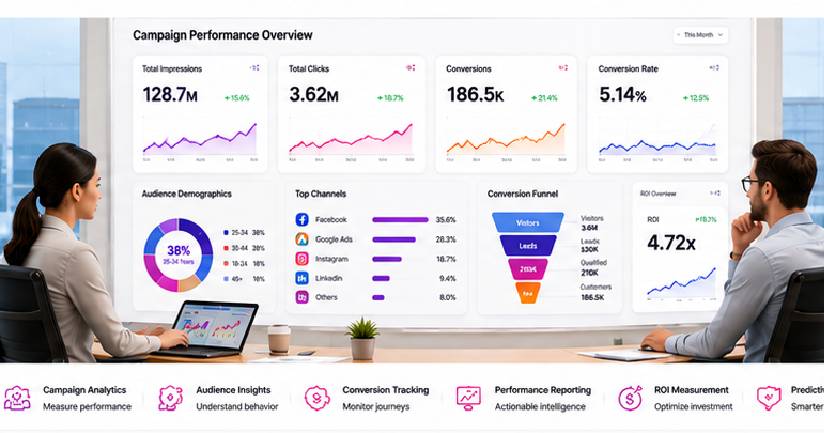
Government Communication Dashboards
Brand Messenger can create dashboards across:
Campaigns
Campaign Activity
Channel Performance
Public Information
Content Usage
Information Demand
Digital
Website
Apps
Digital Services
Engagement
Questions
Feedback
Participation
Geography
Regional / Municipal Performance where appropriate
Services
Defined Service Uptake Metrics
Events
Registration
Attendance
Participation
Outcomes
Objective-Specific Measures
The purpose is to create:
Public Communication → Evidence → Decision Support
Real-Time Public Communication Intelligence
For appropriate campaigns, live dashboards can monitor:
⦁ Campaign Activity
⦁ Website Demand
⦁ Public Questions
⦁ Service Traffic
⦁ Event Participation
⦁ Geographic Patterns
This can help communication teams identify areas requiring additional information.
Real-time data should not be mistaken for a complete representation of public opinion.
AI-Assisted Government Communication Intelligence
Use AI to Organize Information and Support Human Decision-Making
AI can assist with appropriate tasks such as:
⦁ Large-Scale Feedback Categorization
⦁ Communication Performance Analysis
⦁ Topic Identification
⦁ Public Question Analysis
⦁ Translation Assistance
⦁ Content Workflow Support
⦁ Anomaly Detection
⦁ Forecasting
The architecture becomes:
Public Communication Data → AI Analysis → Patterns → Human Review → Communication Decision
AI Should Support not Replace Public Accountability
AI-generated communication should remain subject to appropriate human review.
Particular care is required for:
⦁ Health
⦁ Safety
⦁ Emergencies
⦁ Legal Information
⦁ Eligibility
⦁ Rights
⦁ Public Policy
The principle is:
AI Can Assist the Communication Process. Public Institutions Remain Responsible for the Communication.
Mis- and Disinformation Response
Public institutions may encounter inaccurate information circulating about:
⦁ Public Services
⦁ Emergencies
⦁ Health
⦁ Government Programs
⦁ Infrastructure
⦁ Policies
Communication can respond through:
Monitor → Verify → Clarify → Publish Authoritative Information → Update
The OECD emphasizes that trustworthy public communication is important in building resilience to mis- and disinformation and warns that politicization can undermine that trust.
Correction & Update Protocols
When official information changes or an error is identified, communication systems should support:
⦁ Correction
⦁ Version Updates
⦁ Timestamping
⦁ Clear Source Identification
⦁ Redistribution of Updated Information
Trust depends partly on being willing to correct information transparently.
Government Communication & Public Trust
Communication can contribute to public trust, but marketing cannot manufacture trust independently of institutional performance.
Trust is also influenced by:
⦁ Service Quality
⦁ Policy Outcomes
⦁ Fairness
⦁ Integrity
⦁ Responsiveness
⦁ Transparency
⦁ Citizen Experience
Therefore:
Communication Can Explain Performance. It Cannot Substitute for Performance.
OECD research similarly connects trustworthy, responsive communication with institutional trust while noting that inaccurate, inaccessible, politically biased or irrelevant communication can undermine it.
Responsible Government & Public Sector Marketing
Brand Messenger's approach is built around:
Accuracy
Communicate verified information.
Transparency
Make the source and purpose clear.
Accessibility
Design communication people can access and understand.
Inclusivity
Consider different communities and communication needs.
Privacy
Use personal data only where appropriately justified and governed.
Neutrality
Keep public-service communication distinct from party-political campaigning.
Accountability
Maintain review and approval processes.
Measurement
Evaluate whether communication achieved its public-service objective.
Government Communication Approval Workflows
Public communication may require multiple levels of review.
A workflow can become:
Policy / Service Information
↓
Communication Team
↓
Subject-Matter Review
↓
Legal / Compliance Review where required
↓
Accessibility / Language Review
↓
Authorized Approval
↓
Publication
↓
Monitoring
↓
Update
Brand Messenger can help structure content and campaign workflows around institutional governance requirements.
Crisis Communication Governance
Emergency communication may require accelerated workflows.
The challenge is:
Communicate Fast Without Publishing Unverified Information.
Predefined:
⦁ Roles
⦁ Approval Authority
⦁ Templates
⦁ Channels
⦁ Escalation Procedures
can improve readiness before a crisis occurs.
Government & Public Sector Communication Maturity Model
Level 01 — Information Publishing
Notices + Websites + Traditional Communication
Level 02 — Multi-Channel Public Communication
Digital + Social + Video + Media + Community Outreach
Level 03 — Citizen-Centered Communication
Audience Research + Accessible Content + Public Feedback + Service Journeys
Level 04 — Connected Public Communication
Digital Services + Omnichannel Communication + Events + Analytics + Dashboards
Level 05 — Evidence-Led Public Communication
Campaign → Understanding → Participation → Service Action → Feedback → Measured Outcomes
Level 06 — AI-Assisted Public Communication Intelligence
Connected Data + Real-Time Analysis + Feedback Intelligence + Predictive Support + Executive Dashboards + Human Governance
The objective is not maximum technological complexity.
It is:
Better Information. Better Access. Better Participation. Better Public-Service Communication.
Complete Brand Messenger Government & Public Sector Marketing Process
A comprehensive engagement can follow:
Public Objective
↓
Institution
↓
Citizen / Stakeholder Need
↓
Research
↓
Audience
↓
Communication Strategy
↓
Message
↓
Creative
↓
Accessibility & Localization
↓
Media
↓
Digital Communication
↓
Community Outreach
↓
Public Engagement
↓
Service / Participation
↓
Feedback
↓
Measurement
↓
Communication Intelligence
↓
Improvement
The lifecycle becomes:
Understand → Inform → Explain → Reach → Engage → Listen → Respond → Measure → Improve
Across the Brand Messenger Government & Public Sector Ecosystem
Government Communication Strategy
Define the Public Communication Objective
↓
Citizen Awareness
Make Important Information Discoverable
↓
Public Campaigns
Coordinate Communication Across Channels
↓
Content & Creative Production
Turn Complex Information into Understandable Communication
↓
Digital Marketing & Media
Reach Relevant Communities
↓
Government Communications
Maintain Clear Institutional Communication
↓
Government & Public Sector Marketing
Citizen Awareness • Public Campaigns • Government Communications • Civic Engagement
↓
Community Marketing
Build Public and Community Participation
↓
Events & Public Forums
Create Physical and Digital Engagement
↓
Event Technology
Support Registration, Participation and Interaction
↓
MarTech
Coordinate Appropriate Citizen Communication Journeys
↓
AdTech
Deliver Legitimate Public-Information Campaigns at Scale
↓
Analytics & Business Intelligence
Measure Communication Performance
↓
AI-Assisted Public Communication Intelligence
Turn Appropriate Data and Feedback into Decision Support
The complete architecture becomes:
Government → Public Information → Citizen → Understanding → Participation / Service → Feedback → Intelligence → Better Communication
Public Institutions & Sectors We Can Support
Brand Messenger Government & Public Sector Marketing can support appropriate communication work across:
⦁ National Government Institutions
⦁ Ministries
⦁ Government Departments
⦁ Provincial / State Governments
⦁ Municipal Governments
⦁ City Authorities
⦁ Local Government
⦁ Public Agencies
⦁ Public Authorities
⦁ Regulatory Bodies
⦁ Public-Service Organizations
⦁ Public Health Organizations
⦁ Education Authorities
⦁ Transport Authorities
⦁ Tourism Authorities
⦁ Investment Promotion Agencies
⦁ Economic Development Organizations
⦁ Environmental Authorities
⦁ Emergency & Disaster Management Organizations
⦁ Public Utilities
⦁ Smart City Programs
⦁ Government Technology Programs
⦁ Public Infrastructure Organizations
⦁ Public Universities
⦁ Public Hospitals
⦁ Development Organizations
⦁ Government-Owned Enterprises where appropriate
Benefits of Government & Public Sector Marketing
Brand Messenger can help public institutions:
⦁ Develop citizen-centered communication strategies
⦁ Build public-awareness campaigns
⦁ Explain public programs and services
⦁ Improve digital-government service awareness
⦁ Develop civic-engagement campaigns
⦁ Support public consultations
⦁ Reach communities through multiple channels
⦁ Create multilingual communication
⦁ Improve accessibility
⦁ Produce public-information videos and animation
⦁ Develop public-health campaigns
⦁ Build safety and preparedness communication
⦁ Support infrastructure and transport communication
⦁ Develop environmental-awareness campaigns
⦁ Manage government social communication
⦁ Coordinate public-sector events
⦁ Build community outreach
⦁ Integrate appropriate marketing technology
⦁ Measure campaign outcomes
⦁ Analyze citizen journeys
⦁ Build public communication dashboards
⦁ Organize citizen feedback
⦁ Apply AI-assisted communication intelligence responsibly
⦁ Maintain privacy-aware communication practices
⦁ Create clearer connections between public institutions and the communities they serve
Why Choose Brand Messenger?
Brand Messenger combines communication strategy, branding, creative production, digital marketing, community engagement, event technology, AdTech, MarTech, analytics and AI-assisted intelligence within one connected Government & Public Sector Marketing environment.
We do not approach public-sector marketing as:
Government Announcement → Advertisement → Impressions.
We approach it as:
Public Need → Citizen Understanding → Accessible Information → Relevant Communication → Participation or Service Action → Feedback → Measurement → Improvement.
The distinction matters.
Citizen Awareness helps people understand information that affects them.
Public Campaigns coordinate communication around legitimate public objectives.
Government Communications create clear and consistent institutional information.
Civic Engagement creates opportunities for two-way participation and feedback.
Digital Government Marketing helps citizens discover and use public services.
Community Outreach reaches people beyond purely digital channels.
Accessible & Multilingual Communication helps information reach more of the population it is intended to serve.
Public Events & Hybrid Engagement create direct communication environments.
Analytics & Dashboards help institutions understand whether communication is actually reaching its objectives.
And AI-Assisted Public Communication Intelligence can help organize complex communication data while maintaining appropriate human responsibility and governance.
The result is not simply a government marketing campaign.
It is a connected public communication ecosystem designed to help institutions communicate clearly, reach diverse communities, improve public-service awareness, support meaningful civic participation and use evidence to continuously improve communication.
Inform Clearly. Reach Inclusively. Engage Responsibly. Listen Continuously. Communicate in the Public Interest.
Citizen Awareness. Public Campaigns. Government Communications. Civic Engagement. One Connected Government & Public Sector Communication Ecosystem.