







Education Marketing
Attract the Right Students. Strengthen Institutional Reputation. Increase Enrollment. Build Lifelong Relationships with Learners.
Education is more than a service.
For students and families, choosing a university, college, school or online learning platform can influence education, career development, personal growth and future opportunities. For educational institutions, the challenge is therefore not simply generating more advertising impressions or website traffic.
The challenge is connecting the right programs with the right prospective students, communicating institutional value clearly, building trust throughout the decision journey and converting genuine interest into applications, enrollment and long-term learner relationships.
At Brand Messenger, our Education Marketing service brings together education branding, student recruitment, enrollment marketing, digital marketing, content, social media, search, paid advertising, CRM, marketing automation, student journey management, events, community marketing and performance intelligence within one connected education-marketing ecosystem.
Our Education Marketing capabilities support:
⦁ Universities
⦁ Colleges
⦁ Schools
⦁ Online Learning Platforms
Our wider capabilities can extend across institutional branding, student recruitment, enrollment campaigns, program marketing, admissions marketing, international student marketing, parent engagement, open-day promotion, education fairs, course promotion, SEO, paid search, social media, video marketing, remarketing, landing pages, lead generation, inquiry management, CRM, email/SMS/WhatsApp communication, marketing automation, webinars, virtual events, student communities, alumni engagement, reputation management, analytics and AI-assisted marketing intelligence.
Our approach connects:
Institution → Programs → Prospective Students → Awareness → Research → Inquiry → Application → Admission → Enrollment → Student Experience → Alumni Relationship
The objective is not simply:
Get More Education Leads.
It is:
Build Trust, Communicate Educational Value and Create a Connected Journey from Student Discovery to Enrollment and Beyond.
What Is Education Marketing?
Education Marketing is the strategic process of connecting educational institutions, programs and learning opportunities with relevant students, parents, professionals and other education audiences.
It can combine:
Branding + Student Recruitment + Content + Digital Marketing + Admissions Marketing + CRM + Marketing Automation + Events + Community + Analytics
into a coordinated student-acquisition and relationship strategy.
The journey can become:
Discover → Explore → Compare → Inquire → Apply → Decide → Enroll → Learn → Graduate → Advocate
Different educational organizations may emphasize different stages.
Education Marketing Is More Than Student Recruitment
Student recruitment is an important part of education marketing.
But the wider discipline can also include:
⦁ Institutional Reputation
⦁ Brand Positioning
⦁ Program Awareness
⦁ Parent Communication
⦁ Student Engagement
⦁ International Marketing
⦁ Community Development
⦁ Alumni Relationships
⦁ Continuing Education
⦁ Lifelong Learning
The broader architecture becomes:
Institutional Brand → Student Acquisition → Student Relationship → Alumni Relationship
Brand Messenger Education Marketing Services
Our capabilities can include:
⦁ Education Marketing Strategy
⦁ Education Brand Strategy
⦁ Institutional Branding
⦁ School Branding
⦁ University Branding
⦁ College Branding
⦁ Online Learning Brand Strategy
⦁ Education Market Research
⦁ Competitive Positioning
⦁ Student Audience Research
⦁ Student Recruitment Marketing
⦁ Enrollment Marketing
⦁ Admissions Marketing
⦁ Program Marketing
⦁ Course Marketing
⦁ Degree Marketing
⦁ Certificate Program Marketing
⦁ Short Course Marketing
⦁ Executive Education Marketing
⦁ Professional Education Marketing
⦁ International Student Marketing
⦁ Domestic Student Marketing
⦁ Parent Marketing & Communication
⦁ School Admissions Campaigns
⦁ Undergraduate Recruitment
⦁ Postgraduate Recruitment
⦁ Graduate Program Marketing
⦁ Student Lead Generation
⦁ Inquiry Generation
⦁ Education SEO
⦁ Local SEO
⦁ International SEO
⦁ Paid Search Advertising
⦁ Social Media Marketing
⦁ Display Advertising
⦁ Native Advertising
⦁ Programmatic Advertising
⦁ Video Advertising
⦁ Remarketing & Retargeting
⦁ Education Content Marketing
⦁ Student-Focused Content
⦁ Education Video Production
⦁ Campus Content
⦁ Student Stories
⦁ Alumni Stories
⦁ Faculty & Academic Content
⦁ Thought Leadership
⦁ Landing Pages
⦁ Application Landing Pages
⦁ Conversion Rate Optimization
⦁ Student CRM
⦁ Inquiry Management
⦁ Lead Management
⦁ Marketing Automation
⦁ Email Marketing
⦁ SMS Campaigns
⦁ WhatsApp Campaigns
⦁ Application Nurturing
⦁ Enrollment Nurturing
⦁ Open-Day Marketing
⦁ Education Fair Marketing
⦁ Webinar Marketing
⦁ Virtual Events
⦁ Hybrid Events
⦁ Campus Event Marketing
⦁ Student Community Marketing
⦁ Ambassador Programs
⦁ Alumni Marketing
⦁ Reputation Management
⦁ Review Management
⦁ Education PR
⦁ Student Journey Analytics
⦁ Enrollment Funnel Analytics
⦁ Marketing Attribution
⦁ Education Marketing Dashboards
⦁ Predictive Analytics
⦁ AI-Assisted Education Marketing Intelligence
Education Marketing Strategy
Start with the Institution, the Program and the Student
Every education provider is different.
A university recruiting international postgraduate students requires a different strategy from a local school seeking admissions from families within a defined geographic area.
An online learning platform selling professional certificates requires another model entirely.
Brand Messenger can build education marketing around:
Institution
↓
Program / Educational Offering
↓
Target Student
↓
Student Need
↓
Market
↓
Value Proposition
↓
Marketing Journey
↓
Application / Enrollment
The strategy should fit the education model rather than forcing every institution into the same marketing funnel.
Institutional Brand Strategy
Build a Brand Students and Families Can Understand and Trust
An education brand can communicate:
⦁ Institutional Purpose
⦁ Academic Identity
⦁ Educational Approach
⦁ Student Experience
⦁ Campus Environment
⦁ Program Strengths
⦁ Career Development
⦁ Community
⦁ Research
⦁ Innovation
⦁ Values
Brand Messenger can connect institutional brand strategy with student recruitment so that campaigns communicate a consistent identity.
Education Brand Positioning
Educational institutions compete for attention in increasingly crowded markets.
Brand positioning helps answer:
Why This Institution?
Why This Program?
Why This Learning Experience?
Why Is It Relevant to This Student?
The objective is not to manufacture differentiation.
It is to identify and communicate genuine, supportable distinctions.
Institutional Identity & Creative
Brand Messenger can support education organizations across:
⦁ Brand Identity
⦁ Visual Systems
⦁ Campaign Identity
⦁ Admissions Creative
⦁ Prospectus Design
⦁ Digital Creative
⦁ Social Media Creative
⦁ Event Branding
⦁ Campus Campaign Materials
⦁ Presentation Design
⦁ Video & Motion Graphics
This creates visual consistency across the student journey.
Student Recruitment Marketing
Reach Prospective Students Before They Make Their Decision
Student recruitment can begin long before an application.
Prospective students may:
Discover an Institution
↓
Research Programs
↓
Compare Alternatives
↓
Read Reviews
↓
Watch Videos
↓
Visit Social Channels
↓
Attend an Open Day
↓
Ask Questions
↓
Submit an Inquiry
↓
Apply
Brand Messenger can build campaigns across this complete decision journey.
Student Recruitment Funnel
A typical recruitment architecture can become:
Audience → Prospect → Website Visitor → Inquiry → Applicant → Offer / Admission → Enrollment
Each stage requires different communication.
A prospect may need:
Awareness.
An inquiry may need:
Information.
An applicant may need:
Guidance.
An admitted student may need:
Confidence and enrollment support.
Enrollment Marketing
Turn Student Interest into Enrollment
Generating applications is not necessarily the final objective.
Educational institutions may also need to understand:
Application → Admission / Offer → Acceptance → Enrollment
Brand Messenger can develop marketing and communication journeys designed around these transitions.
Application-to-Enrollment Journey
A connected journey can become:
Inquiry
↓
Application Started
↓
Application Submitted
↓
Admission / Offer
↓
Student Decision
↓
Enrollment
↓
Onboarding
Communication should reflect the student's actual stage rather than repeatedly sending generic recruitment messages.
Admissions Marketing
Admissions teams and marketing teams can work together around:
⦁ Inquiry Campaigns
⦁ Application Information
⦁ Admissions Deadlines
⦁ Open Days
⦁ Program Information
⦁ Student Support Information
⦁ Application Reminders
⦁ Enrollment Communication
The objective is to reduce unnecessary fragmentation between:
Marketing → Recruitment → Admissions.
Program Marketing
Market Individual Programs with Their Own Value Proposition
An institution may offer dozens or hundreds of programs.
Marketing only the institutional brand may not be sufficient.
Brand Messenger can develop campaigns around:
⦁ Degrees
⦁ Diplomas
⦁ Certificates
⦁ Short Courses
⦁ Professional Qualifications
⦁ Executive Education
⦁ Online Programs
⦁ Continuing Education
The architecture becomes:
Institutional Brand → Program → Relevant Audience → Program Value → Application
Course Marketing
Course-level campaigns can communicate appropriate information around:
⦁ Subject
⦁ Curriculum
⦁ Learning Format
⦁ Duration
⦁ Entry Requirements
⦁ Faculty
⦁ Student Experience
⦁ Career Relevance
⦁ Application Process
Claims about employment, salaries, rankings, accreditation or outcomes should be accurate and supportable.
Undergraduate Student Marketing
Undergraduate recruitment can involve multiple decision participants.
The journey may include:
Student
Parents / Family
School / Counselor
Institution
Brand Messenger can design communication for the appropriate audience at each stage.
Postgraduate & Graduate Marketing
Postgraduate prospects may evaluate programs around:
⦁ Specialization
⦁ Research
⦁ Faculty
⦁ Career Development
⦁ Flexibility
⦁ Professional Relevance
⦁ Location
⦁ Study Format
Campaigns can therefore require more detailed program and career-focused information.
Professional & Executive Education Marketing
Professional learners may prioritize:
⦁ Skills
⦁ Career Development
⦁ Industry Relevance
⦁ Flexibility
⦁ Learning Format
⦁ Duration
⦁ Professional Network
The marketing journey can become:
Professional Need → Program Discovery → Evaluation → Enrollment → Learning → Career Application
University Marketing
Build Reputation, Recruitment and Relationships at Institutional Scale
Brand Messenger can support universities across:
⦁ Institutional Branding
⦁ Undergraduate Recruitment
⦁ Postgraduate Recruitment
⦁ International Recruitment
⦁ Research Communication
⦁ Faculty Content
⦁ Program Marketing
⦁ Campus Marketing
⦁ Open Days
⦁ Student Communities
⦁ Alumni Engagement
⦁ Executive Education
⦁ Continuing Education
A university marketing architecture can become:
Institution → Schools / Faculties → Programs → Students → Alumni
College Marketing
College marketing can focus on:
⦁ Local Recruitment
⦁ Regional Recruitment
⦁ Program Awareness
⦁ Career-Oriented Education
⦁ Admissions
⦁ Campus Experience
⦁ Student Success
⦁ Community Relationships
Brand Messenger can build campaigns according to the institution's actual market and student profile.
School Marketing
Build Trust with Students and Families
School marketing often requires a particularly strong focus on:
⦁ Reputation
⦁ Educational Approach
⦁ Campus Environment
⦁ Teachers
⦁ Student Development
⦁ Activities
⦁ Parent Communication
⦁ Admissions
The decision journey may become:
Parent / Student Awareness → Research → Inquiry → Campus Visit → Application → Admission → Enrollment
School Admissions Marketing
Brand Messenger can support:
⦁ Admissions Campaigns
⦁ Open-House Promotion
⦁ Campus Visit Campaigns
⦁ Parent Information
⦁ School Website Marketing
⦁ Local Search
⦁ Social Media
⦁ Video
⦁ Inquiry Management
⦁ Follow-Up Communication
For schools, geographic targeting and local reputation can be particularly important.
Parent Marketing & Communication
Parents may be important participants in education decisions.
Relevant communication can address:
⦁ Educational Approach
⦁ Student Support
⦁ Campus Environment
⦁ Programs
⦁ Activities
⦁ Admissions Process
⦁ Fees and Financial Information where applicable
⦁ Frequently Asked Questions
The goal should be informed decision-making rather than pressure-based marketing.
Online Learning Platform Marketing
Connect Digital Courses with Learners Across Markets
Online education creates a different acquisition model.
Potential offerings can include:
⦁ Online Degrees
⦁ Online Courses
⦁ Professional Certificates
⦁ Micro-Credentials
⦁ Skills Training
⦁ Corporate Learning
⦁ Subscription Learning
⦁ Cohort-Based Programs
Brand Messenger can connect digital acquisition with enrollment and learner retention.
Online Learning Funnel
The journey can become:
Search / Social / Content
↓
Course Discovery
↓
Course Page
↓
Registration / Trial / Inquiry
↓
Enrollment
↓
Course Activation
↓
Learning
↓
Completion
↓
Next Course / Continued Learning
This extends marketing beyond initial enrollment.
Course Discovery
Online learners may discover courses through:
⦁ Search Engines
⦁ Social Media
⦁ Video
⦁ Content
⦁ Paid Advertising
⦁ Recommendations
⦁ Communities
⦁ Partnerships
Brand Messenger can coordinate these channels around a unified acquisition strategy.
International Student Marketing
Reach Prospective Students Across Countries and Languages
Universities and colleges recruiting internationally may require market-specific strategies.
Brand Messenger can support:
⦁ International Market Research
⦁ Country-Level Campaigns
⦁ International SEO
⦁ Multi-Language SEO
⦁ Localized Landing Pages
⦁ International Paid Media
⦁ Country-Specific Content
⦁ International Student Campaigns
⦁ Webinars
⦁ Virtual Recruitment Events
The architecture becomes:
Institution → Country → Student Segment → Relevant Program → Localized Campaign → Inquiry → Application
International Marketing Is More Than Translating the Website
Students in different markets may:
⦁ Search Differently
⦁ Use Different Platforms
⦁ Have Different Questions
⦁ Evaluate Different Factors
⦁ Respond to Different Content
The strategy should therefore consider:
Market + Language + Search Behavior + Student Needs + Program Fit
rather than translation alone.
Education SEO
Be Discoverable When Students Research Their Options
Brand Messenger can develop SEO strategies around:
⦁ Institution Searches
⦁ Program Searches
⦁ Course Searches
⦁ Subject Searches
⦁ Location Searches
⦁ Career-Related Education Searches
⦁ Admissions Information
The objective is to connect useful education content with genuine search intent.
Program SEO
Individual program pages can be optimized around relevant:
⦁ Program Topics
⦁ Course Subjects
⦁ Qualification Types
⦁ Location
⦁ Study Format
⦁ Student Questions
without keyword stuffing or misleading claims.
Local SEO for Schools & Colleges
Local search can be especially important for institutions serving defined geographic markets.
Brand Messenger's Local SEO capabilities can support:
⦁ Google Business Profile Optimization
⦁ Local Keywords
⦁ Location Pages
⦁ Local Search Visibility
⦁ Maps Presence
⦁ Local Authority
The objective is:
Help Relevant Local Students and Families Find the Institution When They Are Actively Searching.
International SEO for Education
Institutions serving multiple countries or languages can connect education marketing with Brand Messenger's International SEO capabilities.
Potential elements can include:
⦁ Country Targeting
⦁ Language Targeting
⦁ hreflang
⦁ International Keyword Research
⦁ Localized Content
⦁ International Site Architecture
Paid Search for Education
Search advertising can help institutions reach prospective students searching for relevant:
⦁ Programs
⦁ Courses
⦁ Qualifications
⦁ Institutions
⦁ Study Options
Campaigns can be organized by:
Program → Audience → Search Intent → Landing Page → Inquiry / Application
Social Media Marketing for Education
Social media can help communicate:
⦁ Campus Life
⦁ Student Experiences
⦁ Academic Programs
⦁ Faculty
⦁ Events
⦁ Research
⦁ Alumni Stories
⦁ Admissions Information
Different platforms and audiences may require different content strategies.
Student-Led Social Content
Authentic student perspectives can help prospective students understand the learning environment.
Potential content can include:
⦁ Day-in-the-Life Content
⦁ Campus Tours
⦁ Student Interviews
⦁ Program Experiences
⦁ Clubs & Activities
⦁ Graduate Stories
Appropriate permissions should be obtained, particularly when students are minors.
Video Marketing for Education
Let Prospective Students Experience the Institution Before They Arrive
Brand Messenger's content and production capabilities can create:
⦁ Institutional Films
⦁ Campus Tours
⦁ Program Videos
⦁ Faculty Interviews
⦁ Student Stories
⦁ Alumni Stories
⦁ Admissions Videos
⦁ Event Films
⦁ Social Videos
⦁ Online Course Trailers
⦁ Motion Graphics
Video can help make complex educational offerings easier to understand.
Virtual Campus Experiences
Institutions can potentially use:
⦁ Interactive Campus Tours
⦁ 360° Experiences
⦁ VR Experiences
⦁ Interactive Maps
⦁ Digital Open Days
to help remote students explore the institution.
This can be particularly useful for international recruitment.
Education Content Marketing
Answer Student Questions Before Asking for an Application
Education decisions generate many questions.
Content can address:
⦁ Programs
⦁ Subjects
⦁ Admissions
⦁ Student Life
⦁ Career Development
⦁ Learning Formats
⦁ Faculty
⦁ Research
⦁ Campus
⦁ Application Process
The principle is:
Inform First. Build Trust. Then Create a Clear Path to Action.
Student Guides & Resources
Content can include:
⦁ Program Guides
⦁ Application Guides
⦁ Student Guides
⦁ Campus Guides
⦁ Subject Guides
⦁ Career Resources
⦁ FAQs
⦁ Webinars
⦁ Videos
These can support both search visibility and student decision-making.
Faculty & Academic Content
Faculty expertise can contribute to:
⦁ Articles
⦁ Interviews
⦁ Research Content
⦁ Webinars
⦁ Expert Commentary
⦁ Educational Videos
This can strengthen institutional thought leadership while helping prospective students understand the academic environment.
Student Stories
Student stories can communicate real experiences around:
⦁ Learning
⦁ Campus
⦁ Projects
⦁ Community
⦁ Personal Development
Stories should be genuine and appropriately authorized.
Alumni Stories
Alumni content can help prospective students understand possible pathways after education.
However:
Individual Alumni Success Should Not Be Presented as a Guaranteed Outcome for Every Student.
This is particularly important when discussing careers, salaries or employment.
Education Landing Pages
Campaign-specific landing pages can be developed for:
⦁ Programs
⦁ Courses
⦁ Open Days
⦁ Webinars
⦁ International Markets
⦁ Admissions Campaigns
The architecture becomes:
Campaign → Student Intent → Relevant Landing Page → Inquiry / Application
Application Landing Pages
An application-focused page should provide a clear path toward:
⦁ Program Information
⦁ Eligibility / Entry Requirements
⦁ Required Information
⦁ Important Dates
⦁ Application Process
⦁ CTA
The objective is to reduce unnecessary friction.
Conversion Rate Optimization
Brand Messenger can analyze education websites and landing pages around:
⦁ User Behavior
⦁ Forms
⦁ Calls to Action
⦁ Information Architecture
⦁ Application Journeys
⦁ Mobile Experience
⦁ Page Performance
The goal is to make it easier for genuinely interested students to find information and take the next appropriate step.
Student Lead Generation
Generate Relevant Student Interest not Just Form Submissions
A student lead can originate through:
⦁ Website Inquiry
⦁ Program Download
⦁ Open-Day Registration
⦁ Webinar
⦁ Education Fair
⦁ Social Campaign
⦁ Paid Advertising
⦁ Phone Inquiry
⦁ Chat
⦁ Messaging
Brand Messenger can connect these sources into a structured lead-management environment.
Student Lead Qualification
Relevant information can help distinguish:
⦁ General Interest
⦁ Program Interest
⦁ Application Intent
⦁ Enrollment Stage
But automated scoring should not be used to unfairly restrict educational access or make consequential admissions decisions.
Marketing intelligence should support communication and recruitment operations—not replace appropriate admissions processes.
Education CRM
Create a Connected View of the Prospective Student Journey
Brand Messenger can help connect education marketing with CRM.
The architecture can become:
Prospect
↓
Inquiry
↓
Program Interest
↓
Communication
↓
Application
↓
Admission / Offer
↓
Enrollment
This helps recruitment and marketing teams coordinate communication.
Student CRM Segmentation
Appropriate segmentation can include:
⦁ Program Interest
⦁ Study Level
⦁ Location
⦁ Inquiry Stage
⦁ Application Stage
⦁ Communication Preferences
Sensitive information should not be used for inappropriate targeting or discriminatory decision-making.
Education Marketing Automation
Automation can support communication across:
⦁ Inquiry Confirmation
⦁ Program Information
⦁ Open-Day Invitations
⦁ Webinar Invitations
⦁ Application Reminders
⦁ Deadline Communication
⦁ Enrollment Information
⦁ Student Onboarding
The objective is:
Deliver Relevant Information at the Right Stage not Automate the Student Relationship into a Sequence of Generic Messages.
Email Marketing for Education
Email campaigns can support:
⦁ Program Information
⦁ Student Stories
⦁ Admissions Updates
⦁ Event Invitations
⦁ Application Information
⦁ Enrollment Communication
Segmentation can help keep communication relevant.
SMS Marketing
SMS can be useful for appropriate time-sensitive communication such as:
⦁ Event Reminders
⦁ Application Deadlines
⦁ Appointment Information
⦁ Enrollment Reminders
where students have provided appropriate communication permissions.
WhatsApp Marketing
Where appropriate and permitted, WhatsApp can support:
⦁ Inquiry Communication
⦁ Event Reminders
⦁ Application Information
⦁ Admissions Updates
The channel should be used responsibly and according to applicable platform and communication requirements.
Omnichannel Education Marketing
A prospective student may interact through:
Search → Website → Email → Social → Webinar → WhatsApp → Application Portal
Brand Messenger can coordinate these touchpoints within a more connected student journey.
Open-Day Marketing
Turn Campus Visits into Meaningful Recruitment Experiences
Brand Messenger can support:
⦁ Open-Day Campaign Strategy
⦁ Registration
⦁ Paid Promotion
⦁ SMS / WhatsApp
⦁ Event Branding
⦁ Event Technology
⦁ Smart Check-In
⦁ Campus Wayfinding
⦁ Presentations
⦁ Live Production
⦁ Student Engagement
⦁ Follow-Up
This connects Education Marketing with Brand Messenger's wider event ecosystem.
Open-Day Journey
The journey can become:
Campaign
↓
Registration
↓
Reminder
↓
Campus Arrival
↓
Check-In
↓
Program Sessions
↓
Campus Experience
↓
Follow-Up
↓
Application
This allows the open day to become part of a measurable recruitment journey.
Education Fairs
Universities, colleges and learning providers can use Brand Messenger's event and exhibition capabilities for:
⦁ Education Fairs
⦁ Recruitment Exhibitions
⦁ International Student Fairs
⦁ Career Events
Capabilities can connect:
Booth → Visitor → Engagement → Inquiry → CRM → Follow-Up
Webinar Marketing
Webinars can support:
⦁ Program Information
⦁ Admissions Q&A
⦁ Faculty Sessions
⦁ International Recruitment
⦁ Career Information
⦁ Online Course Discovery
The journey becomes:
Promotion → Registration → Webinar → Q&A → Follow-Up → Application
Virtual Recruitment Events
Brand Messenger can support virtual:
⦁ Open Days
⦁ Program Sessions
⦁ Admissions Sessions
⦁ Student Panels
⦁ Faculty Q&A
⦁ International Recruitment Events
This can help institutions reach students who cannot physically visit.
Hybrid Education Events
Brand Messenger's Hybrid Events capabilities can connect:
Campus Audience + Remote Audience
through:
⦁ Live Streaming
⦁ Remote Speakers
⦁ Virtual Participation
⦁ Live Q&A
⦁ Polling
⦁ Networking
This can extend recruitment events across geographic boundaries.
Community Marketing for Education
Build Relationships Before and After Enrollment
Brand Messenger's Community Marketing capabilities can support:
⦁ Prospective Student Communities
⦁ Student Communities
⦁ Parent Communities
⦁ Alumni Communities
⦁ Program Communities
⦁ Professional Learning Communities
The relationship can become:
Prospective Student → Applicant → Student → Graduate → Alumni → Advocate
Student Ambassador Communities
Institutions can develop structured student ambassador programs.
Ambassadors can potentially contribute to:
⦁ Campus Tours
⦁ Student Q&A
⦁ Social Content
⦁ Open Days
⦁ Community Discussions
⦁ Student Stories
Student participation should be voluntary, appropriately governed and transparently represented.
Alumni Marketing
Continue the Relationship Beyond Graduation
Alumni communities can support:
⦁ Networking
⦁ Events
⦁ Continuing Education
⦁ Mentoring
⦁ Institutional News
⦁ Community
⦁ Advocacy
This extends education marketing into a lifelong relationship model.
Continuing Education Marketing
Graduates may later return for:
⦁ Professional Development
⦁ Short Courses
⦁ Certifications
⦁ Executive Education
⦁ Postgraduate Study
The lifecycle can therefore become:
Student → Graduate → Professional → Lifelong Learner
Education Reputation Management
Educational institutions depend heavily on trust.
Brand Messenger can support:
⦁ Reputation Monitoring
⦁ Review Management
⦁ Social Listening
⦁ Digital Presence
⦁ Response Strategy
⦁ Crisis Communication Support
The goal is not to suppress legitimate criticism.
It is:
Listen → Understand → Respond Appropriately → Improve.
Reviews & Student Feedback
Reviews can influence prospective students.
Brand Messenger can help institutions:
⦁ Monitor Reviews
⦁ Encourage Genuine Feedback
⦁ Respond Professionally
⦁ Identify Recurring Issues
Fake reviews or manipulated testimonials should not form part of a responsible education-marketing strategy.
Education PR
PR can support communication around:
⦁ Institutional Developments
⦁ Research
⦁ Academic Achievements
⦁ New Programs
⦁ Partnerships
⦁ Events
⦁ Faculty Expertise
⦁ Student Achievements
Claims should remain accurate and verifiable.
Remarketing & Retargeting
Prospective students may visit a program page without applying immediately.
Appropriate remarketing can reconnect audiences with:
⦁ Program Information
⦁ Open Days
⦁ Webinars
⦁ Application Deadlines
⦁ Relevant Content
The principle remains:
Re-Engage with Relevance not Relentless Repetition.
Education Audience Segmentation
Potential segments can include:
⦁ Prospective Undergraduate Students
⦁ Postgraduate Students
⦁ Professional Learners
⦁ International Students
⦁ Parents
⦁ Alumni
⦁ Corporate Learners
Segmentation should focus on legitimate marketing relevance and avoid inappropriate use of sensitive characteristics.
First-Party Education Data Strategy
Educational institutions can build first-party relationships through:
⦁ Website Inquiries
⦁ Event Registrations
⦁ Applications
⦁ CRM
⦁ Student Communities
⦁ Alumni Programs
The architecture becomes:
Direct Relationship → Permission & Preferences → First-Party Data → CRM / CDP → Relevant Communication
Education Customer / Student Journey Analytics
Understand How Prospective Students Reach Enrollment
A prospective student's journey may become:
Google Search
↓
Program Page
↓
Video
↓
Open-Day Registration
↓
Campus Visit
↓
Email Follow-Up
↓
Application
↓
Enrollment
Brand Messenger's Customer Journey Analytics capabilities can help connect appropriate touchpoints and identify where students progress or disengage.
Education Funnel Analytics
A recruitment funnel can be monitored across:
Website Visitors
↓
Inquiries
↓
Applications Started
↓
Applications Submitted
↓
Admissions / Offers
↓
Acceptances
↓
Enrollments
This helps institutions understand where recruitment performance changes.
Application Drop-Off Analysis
Brand Messenger can analyze appropriate application journeys to investigate:
⦁ Form Abandonment
⦁ Information Friction
⦁ Device Issues
⦁ Page Performance
⦁ Application Complexity
The objective is not to weaken necessary admissions requirements.
It is to reduce avoidable digital friction.
Marketing Attribution for Education
Institutions may want to understand which channels contribute to:
⦁ Inquiries
⦁ Applications
⦁ Enrollments
Potential touchpoints can include:
⦁ Search
⦁ Social
⦁ Events
⦁ Paid Advertising
⦁ Content
⦁ Referrals
Attribution assigns contribution according to a selected model.
It does not automatically prove that one marketing interaction caused enrollment.
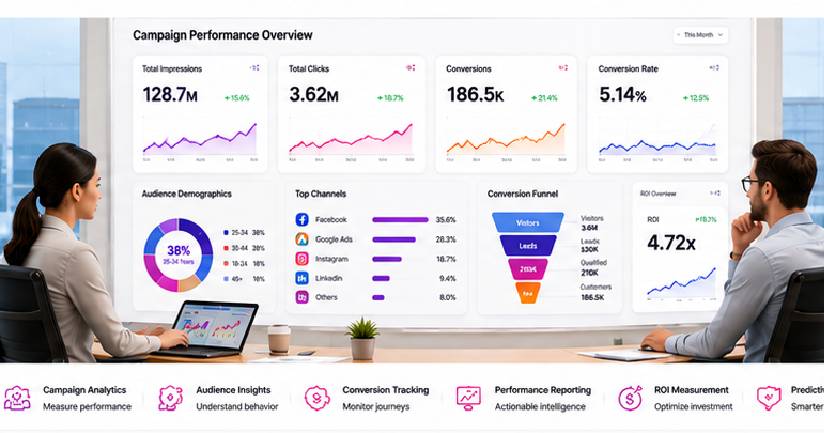
Education Marketing Dashboards
Brand Messenger can create dashboards around:
Awareness
Traffic
Search
Campaign Reach
Recruitment
Inquiries
Leads
Applications
Started
Submitted
Admissions
Offers / Relevant Admissions Stage
Enrollment
Accepted / Enrolled where available
Marketing
Channels
Campaigns
Cost
Events
Open Days
Webinars
Education Fairs
This creates a connected recruitment-performance view.
Cost per Inquiry
Where campaign spend and inquiry data are available:
Marketing Investment ÷ Defined Inquiries
can provide a cost-per-inquiry measure.
But inquiry quantity alone should not determine campaign quality.
Cost per Application
Institutions can also analyze:
Marketing Investment ÷ Applications
where attribution and definitions are sufficiently reliable.
Cost per Enrollment
Where appropriate data is connected:
Marketing Investment ÷ Attributed Enrollments
can provide an acquisition-cost perspective.
This should be interpreted alongside:
⦁ Program Economics
⦁ Student Quality / Fit according to legitimate admissions criteria
⦁ Retention
⦁ Marketing Attribution Limitations
rather than treated as the only measure of recruitment success.
AI-Assisted Education Marketing Intelligence
Use AI to Support Better Marketing Decisions
AI can help analyze appropriate marketing data across:
⦁ Recruitment Trends
⦁ Campaign Performance
⦁ Program Interest
⦁ Content Engagement
⦁ Student Journeys
⦁ Funnel Performance
⦁ Application Patterns
The architecture becomes:
Education Data → AI Analysis → Patterns → Insights → Human Interpretation → Marketing Decision
Predictive Enrollment Intelligence
Where sufficient reliable historical data exists, predictive models can support estimates around:
⦁ Inquiry Volume
⦁ Application Volume
⦁ Enrollment Trends
⦁ Campaign Demand
⦁ Program Interest
These are planning estimates—not guaranteed outcomes.
Predictive Marketing / Admissions Decision-Making
Brand Messenger's predictive education marketing capabilities should remain focused on areas such as:
⦁ Marketing Planning
⦁ Demand Forecasting
⦁ Campaign Optimization
⦁ Communication
They should not be treated as an automated substitute for appropriate academic admissions processes.
AI-Powered Personalization
Education marketing experiences can potentially personalize:
⦁ Program Recommendations
⦁ Content
⦁ Event Invitations
⦁ Communications
based on appropriate student-selected interests and relevant marketing signals.
The principle is:
Help Students Discover Relevant Educational Opportunities not Manipulate Their Educational Decisions.
Education Marketing + AdTech
Brand Messenger's AdTech capabilities can support:
⦁ Search Advertising
⦁ Social Advertising
⦁ Display Advertising
⦁ Native Advertising
⦁ Programmatic Advertising
⦁ Video Advertising
⦁ Remarketing
⦁ Audience Targeting
⦁ Bid Optimization
⦁ Advertising Measurement
for appropriate education campaigns.
Education Marketing + MarTech
Brand Messenger's MarTech ecosystem can connect:
CRM + CDP + Marketing Automation + Omnichannel Communication + Customer Journey Orchestration + Analytics
to create a more coordinated recruitment environment.
Education Marketing + Content Production
Brand Messenger can connect education marketing with:
⦁ Film Production
⦁ Animation
⦁ Motion Graphics
⦁ Photography
⦁ Social Content
⦁ Digital Design
⦁ Interactive Experiences
to create content across the complete recruitment journey.
Education Marketing + Event Technology
Education events can connect with:
⦁ Online Registration
⦁ QR Entry
⦁ Smart Check-In
⦁ Event Apps
⦁ Interactive Kiosks
⦁ Digital Wayfinding
⦁ Live Polling
⦁ Hybrid Participation
⦁ Live Dashboards
through Brand Messenger's wider event technology capabilities.
Education Marketing + Community Marketing
A connected model can become:
Recruitment Marketing
↓
Prospective Student Community
↓
Student Community
↓
Alumni Community
↓
Professional / Lifelong Learning Community
This can transform a transactional recruitment relationship into a longer-term institutional ecosystem.
Responsible Education Marketing
Education marketing requires particular care because people may make significant financial, academic and career decisions based on institutional information.
Brand Messenger's approach should prioritize:
⦁ Accurate Program Information
⦁ Clear Admissions Information
⦁ Supportable Claims
⦁ Transparent Advertising
⦁ Genuine Testimonials
⦁ Appropriate Data Use
⦁ Responsible Targeting
⦁ Privacy-Aware Marketing
⦁ Accessible Digital Experiences
The principle is:
Market the Real Educational Opportunity not an Exaggerated Promise of the Future.
Education Outcome Claims
Claims about:
⦁ Employment
⦁ Salaries
⦁ Career Outcomes
⦁ Rankings
⦁ Accreditation
⦁ Acceptance Rates
⦁ Graduate Success
should be based on appropriate evidence and presented with relevant context.
A marketing campaign should not turn exceptional individual outcomes into promises for every student.
Student Privacy
Education marketing systems may contain information relating to prospective students, applicants and enrolled learners.
Brand Messenger's approach can incorporate:
⦁ Defined Purpose
⦁ Data Minimization
⦁ Appropriate Permissions
⦁ Access Controls
⦁ Security
⦁ Retention
⦁ Communication Preferences
⦁ Age-Appropriate Considerations
particularly where schools or minors are involved.
Marketing to Minors
School and youth-focused campaigns require additional care.
Strategies should consider:
⦁ Age
⦁ Parent / Guardian Role
⦁ Platform Requirements
⦁ Privacy
⦁ Appropriate Messaging
⦁ Avoidance of Manipulative Techniques
Marketing should support informed educational choices rather than exploit the vulnerability or inexperience of younger audiences.
Education Marketing Maturity Model
Level 01 — Basic Institutional Promotion
Website + Social Media + Admissions Advertising
Level 02 — Digital Student Recruitment
SEO + Paid Media + Content + Landing Pages + Lead Generation
Level 03 — Connected Enrollment Marketing
CRM + Email + SMS / WhatsApp + Automation + Application Journeys
Level 04 — Omnichannel Education Marketing
Advertising + Content + Events + CRM + CDP + Communities + Journey Orchestration
Level 05 — Enrollment & Relationship Intelligence
Acquisition → Application → Enrollment → Student Relationship → Alumni
Level 06 — AI-Powered Education Marketing Intelligence
First-Party Data + AI Analysis + Predictive Demand + Personalization + Journey Intelligence + Executive BI
The objective is not to make every institution technologically complex.
It is:
Build the Marketing and technology environment appropriate to the institution, its students and its growth objectives.
Complete Brand Messenger Education Marketing Process
A comprehensive engagement can follow:
Institution
↓
Education Market
↓
Programs
↓
Target Students
↓
Student Research
↓
Brand Positioning
↓
Education Marketing Strategy
↓
Content
↓
SEO
↓
Social Media
↓
Paid Advertising
↓
Events
↓
Student Inquiry
↓
CRM
↓
Marketing Automation
↓
Application
↓
Admission / Offer
↓
Enrollment
↓
Student Onboarding
↓
Community
↓
Student Experience
↓
Graduation
↓
Alumni Relationship
↓
Continuing Education
↓
Marketing Intelligence
↓
Future Recruitment Optimization
The lifecycle becomes:
Discover → Research → Inquire → Apply → Decide → Enroll → Learn → Graduate → Connect → Continue
Across the Brand Messenger Education Marketing Ecosystem
Brand Strategy & Positioning
Define the Institution and Educational Value Proposition
↓
Content Marketing & Creative Production
Communicate Programs, People and Student Experiences
↓
SEO & International SEO
Build Search Visibility
↓
Social Media Marketing
Reach and Engage Prospective Students
↓
AdTech & Paid Media
Activate Relevant Paid Acquisition
↓
Education Marketing
Universities • Colleges • Schools • Online Learning Platforms
↓
Landing Pages & Conversion Optimization
Turn Interest into Inquiry and Application
↓
CRM & Customer Management Technology
Manage Prospective Student Relationships
↓
Marketing Automation
Coordinate Recruitment Communication
↓
Omnichannel Marketing Technology
Connect Email, SMS, WhatsApp, Web and Other Relevant Channels
↓
Event Marketing & Audience Acquisition
Promote Open Days, Fairs, Webinars and Recruitment Events
↓
Event Registration, Ticketing & Smart Check-In
Manage Education Event Participation
↓
Hybrid Events
Connect Campus and Remote Audiences
↓
Community Marketing
Build Student, Parent, User and Alumni Communities
↓
Customer Journey Analytics
Understand the Student Recruitment Journey
↓
Predictive Analytics
Support Demand and Enrollment Forecasting
↓
Marketing Dashboard & KPI Reporting
Turn Recruitment and Enrollment Data into Decision Intelligence
The complete architecture becomes:
Institution → Student → Discovery → Inquiry → Application → Enrollment → Learning → Alumni → Lifelong Relationship
Education Organizations We Can Support
Brand Messenger Education Marketing can support:
⦁ Universities
⦁ Colleges
⦁ Schools
⦁ Online Learning Platforms
⦁ Business Schools
⦁ Professional Training Organizations
⦁ Technical & Vocational Institutes
⦁ Executive Education Providers
⦁ Language Schools
⦁ Continuing Education Providers
⦁ Certification Providers
⦁ EdTech Companies
⦁ E-Learning Platforms
⦁ Corporate Learning Providers
⦁ International Education Organizations
⦁ Educational Associations
⦁ Training Academies
⦁ Specialized Learning Centers
Benefits of Education Marketing
Brand Messenger can help education organizations:
⦁ Strengthen institutional branding
⦁ Clarify education-market positioning
⦁ Build student recruitment strategies
⦁ Market individual programs and courses
⦁ Reach domestic and international students
⦁ Improve digital search visibility
⦁ Develop international SEO
⦁ Run student acquisition campaigns
⦁ Build education-focused social media
⦁ Create institutional and program content
⦁ Produce campus and student videos
⦁ Develop recruitment landing pages
⦁ Generate relevant student inquiries
⦁ Improve application journeys
⦁ Connect marketing with admissions
⦁ Implement education CRM
⦁ Build marketing automation journeys
⦁ Coordinate email, SMS and WhatsApp communication
⦁ Promote open days and education fairs
⦁ Deliver virtual and hybrid recruitment events
⦁ Develop student ambassador programs
⦁ Build student and alumni communities
⦁ Connect first-party student marketing data
⦁ Analyze recruitment funnels
⦁ Measure campaign contribution
⦁ Develop education marketing dashboards
⦁ Apply AI-assisted marketing intelligence responsibly
⦁ Support enrollment forecasting where sufficient data exists
⦁ Build longer-term student and alumni relationships
Why Choose Brand Messenger?
Brand Messenger combines branding, student recruitment, digital marketing, content, AdTech, MarTech, CRM, marketing automation, events, community marketing, analytics and AI-assisted intelligence within one connected Education Marketing ecosystem.
We do not approach Education Marketing as:
Advertise the Institution → Generate Leads → Send More Messages.
We approach it as:
Understand the Institution → Understand the Student → Position the Educational Opportunity → Build Trust → Create Useful Content → Reach Relevant Audiences → Support Research → Generate Genuine Interest → Manage the Inquiry → Support the Application Journey → Connect Marketing with Enrollment → Continue the Relationship Beyond Admission.
The distinction matters.
Institutional Branding establishes identity and trust.
Student Recruitment Marketing creates relevant awareness and demand.
Program Marketing connects individual educational opportunities with the right audiences.
SEO & Content Marketing help students discover useful information during research.
Paid Media & AdTech extend targeted acquisition.
CRM & Marketing Automation connect inquiries with structured communication.
Open Days, Webinars & Hybrid Events create direct interaction with prospective students.
Community Marketing develops relationships across students, parents, users and alumni.
Customer Journey Analytics helps institutions understand how prospects progress toward enrollment.
Education Marketing Dashboards connect marketing activity with recruitment performance.
And AI-Assisted Marketing Intelligence can help institutions analyze patterns, forecast demand and improve marketing decisions while maintaining appropriate human oversight.
The result is not simply a student recruitment campaign.
It is a connected education growth and relationship ecosystem designed to help institutions build reputation, reach relevant learners, support informed educational decisions, increase qualified enrollment opportunities and develop relationships that can continue long after graduation.
Build the Reputation. Reach the Learner. Create the Connection. Support the Decision. Grow Enrollment. Build Relationships for Life.
Universities. Colleges. Schools. Online Learning Platforms. One Connected Education Marketing Ecosystem.