





IoT Customer Experiences
Connect Devices, Environments, Sensors and Intelligence. Turn Physical Spaces into Responsive Customer Experiences.
The customer experience is no longer limited to websites, mobile applications, advertisements, stores, events or conventional digital screens.
Increasingly, the physical environment itself can become connected, measurable and responsive.
A customer enters a retail environment and an interactive installation activates. A hotel room responds to approved guest preferences. An exhibition experience changes when visitors interact with a physical product. A connected device communicates its status through an application. Sensors help an event operator understand activity across different zones. A Digital Twin receives information from physical assets. Smart displays respond to environmental conditions. A building connects physical systems with digital services.
At Brand Messenger, our IoT Customer Experiences service connects the Internet of Things (IoT), connected devices, sensors, smart environments, intelligent spaces, customer experience, interactive technology, AI, Digital Twins, smart displays, mobile experiences, data and analytics to create a new generation of physical-digital experiences.
Our four core capabilities are:
Connected Devices
Smart Environments
Sensor-Based Experiences
Intelligent Spaces
Our wider capabilities can extend across connected retail, smart venues, hospitality, exhibitions, events, smart buildings, connected products, experience centers, interactive installations, location intelligence, environmental sensing, Digital Twins, XR, smart kiosks, AI-assisted experiences and enterprise IoT integration.
Our approach connects:
Physical Environment → Device / Sensor → Connectivity → Data → Context → Intelligence → Experience → Customer Interaction → Business System → Analytics → Optimization
The objective is not simply to connect more devices.
It is to determine where connected technology can make an experience more useful, responsive, measurable or intelligent.
Connect the Physical. Understand the Environment. Respond to the Moment. Create Intelligent Experiences.
What Are IoT Customer Experiences?
The Internet of Things (IoT) connects physical objects, devices, equipment, sensors and environments with software and data systems.
Within customer experience, IoT can create a bridge between:
Physical World ↔ Digital World: A connected environment can potentially detect an appropriate event or condition, communicate it digitally, apply business logic or intelligence, and trigger an experience or operational response.
The basic model becomes:
Physical Signal → Connected Device → Data → Experience Logic → Digital / Physical Response
For example:
Customer Interaction → Sensor → Interactive Content
Environment Condition → Sensor → Smart Display
Physical Asset → IoT Data → Digital Twin
Connected Product → App → Customer Service
IoT therefore becomes an experience infrastructure, not simply a hardware category.
Brand Messenger IoT Customer Experience Services
Our capabilities can include:
IoT Customer Experience Strategy
Connected Experience Consulting
Connected Device Experiences
Smart Environment Strategy
Sensor-Based Experiences
Intelligent Spaces
Connected Retail
Smart Store Experiences
Smart Venue Experiences
Connected Event Experiences
Smart Exhibition Experiences
Connected Hospitality Experiences
Smart Building Experiences
Connected Product Experiences
Smart Product Interfaces
Interactive Installations
Proximity-Based Experiences
Environmental Sensor Experiences
Occupancy & Traffic Intelligence
Location-Aware Experiences
Smart Kiosk Integration
Interactive Digital Signage Integration
Smart Screen Integration
Mobile + IoT Experiences
DXP + IoT Integration
CRM + IoT Integration
CDP + IoT Integration
Conversational AI + IoT
Digital Twin + IoT
XR + IoT
Projection + IoT
Face Signatures Integration where appropriate
SAFE AI Integration for relevant government and city applications
IoT Analytics
Experience Analytics
Real-Time & Near-Real-Time Dashboards
Alerts & Event Triggers
API Integration
Data Integration
IoT Experience Architecture
Privacy & Security Planning
Experience Optimization
Connected Devices
Turn Physical Products and Devices into Digital Touchpoints
Connected devices can communicate with applications, platforms and other systems.
Depending on the product and use case, these may include:
Consumer Devices
Retail Devices
Smart Displays
Kiosks
Wearable Devices
Hospitality Devices
Sensors
Equipment
Appliances
Interactive Installations
Building Devices
Event Technology
Industrial Equipment
The experience can become:
Device → Connectivity → Platform → Customer → Data → Service
This creates opportunities for relationships that continue after the original customer interaction or purchase.
Connected Product Experiences
A conventional product interaction may end after purchase.
A connected product can potentially create an ongoing digital relationship:
Purchase → Activation → App / Portal → Usage → Support → Service → Updates → Customer Relationship
Depending on the product, customers may access:
Product Status
Usage Information
Controls
Instructions
Support
Maintenance Information
Relevant Recommendations
Service Notifications
The product itself becomes another customer touchpoint.
Connected Products + Mobile
Make the Smartphone the Interface to the Physical Product
Mobile applications or mobile web experiences can become interfaces for connected products.
Potential functions can include:
Setup
Controls
Status
Notifications
Usage
Help
Account
Service
The architecture becomes:
Physical Product ↔ IoT Platform ↔ Mobile Experience ↔ Customer
Connected Products + Customer Portals
Connected-device information can also become part of a customer portal.
A customer may access:
My Account
My Devices
Device Status
Support
Service History
Documentation
Notifications
This connects IoT with Brand Messenger's wider Digital Experience Platform (DXP) capabilities.
Connected Products + CRM
Appropriate device information can potentially contribute to customer-service workflows.
For example:
Connected Product → Service Signal → Customer System → Support Workflow
or:
Customer Reports Issue → CRM → Device Information → Service Team
This can help organizations understand customer service in the context of the connected product.
Only appropriate data should be connected with customer records.
Connected Products + Customer Lifecycle
Connected devices can create additional lifecycle touchpoints:
Purchase → Setup → Usage → Support → Maintenance → Upgrade → Renewal / Replacement
Brand Messenger can help organizations design communication and service experiences around these stages.
Smart Environments
Make the Environment Part of the Experience
A Smart Environment combines physical spaces with connected devices, sensors, software and intelligent experience logic.
Potential environments include:
Retail Stores
Shopping Centers
Hotels
Resorts
Events
Exhibitions
Corporate Offices
Experience Centers
Airports
Entertainment Venues
Real Estate Developments
Campuses
Smart Buildings
Public Spaces
The environment becomes:
Space + Devices + Sensors + Data + Intelligence + Experience
Smart Retail Environments
Retail environments can combine:
Smart Screens
Interactive Kiosks
Digital Signage
Product Displays
Sensors
Mobile Experiences
Digital Twins
Customer Analytics
Appropriate Physical-Space Intelligence
The architecture can become:
Store → Connected Touchpoints → Interaction Signals → Intelligence → Customer Experience
Connected Retail Experiences
Potential retail applications can include:
Interactive Product Displays
Connected Shelves
Smart Screens
Digital Product Information
QR / Mobile Continuation
Environmental Experiences
Product Demonstrations
Experience Analytics
The objective is to make physical retail more connected without turning the customer experience into unnecessary technological complexity.
Smart Product Displays
A product display can respond when a customer intentionally interacts with an item or interface.
For example:
Product Interaction → Sensor → Display → Product Content
The screen might present:
Features
Video
3D Visualization
Product Comparison
Related Products
This connects physical discovery with digital content.
Sensor-Based Product Storytelling
Let Physical Interaction Trigger Digital Content
Sensors can connect physical actions with digital storytelling.
A visitor might:
Approach an Installation → Interact with an Object → Trigger Content → Explore a Brand Story → Continue on a Smart Display or Mobile Device
The physical environment becomes an interactive interface.
Sensor-Based Experiences
Sensors can detect appropriate physical or environmental conditions and use them as inputs for an experience.
Potential sensor categories can include:
Motion
Proximity
Touch
Pressure
Light
Temperature
Environmental Conditions
Occupancy
Device Status
Location Signals
The experience model becomes:
Sense → Understand → Respond
Motion-Triggered Experiences
An installation can activate when movement is detected within an intended interaction zone.
Potential applications include:
Retail Displays
Exhibitions
Museums
Events
Experience Centers
Interactive Art
The journey becomes:
Visitor Approaches → Experience Activates → Content Responds
This can create attention without requiring the visitor to touch a screen.
Proximity-Based Experiences
Proximity can help determine when an experience should become available or change.
For example:
Visitor Far Away
→ Awareness Content
Visitor Approaches
→ Product Content
Visitor Interacts
→ Detailed Experience
The content evolves with the interaction context.
Touch & Object Interaction
Sensors can allow physical objects to become controls.
Instead of pressing a conventional digital button, the visitor may:
Pick Up an Object
Place an Object
Touch a Surface
Move a Product
Select a Physical Sample
and trigger corresponding digital content.
This can create highly intuitive experiential installations.
Environmental Sensor Experiences
Let the Environment Influence the Content
Environmental information can potentially influence an experience.
Examples can include:
Temperature → Relevant Information
Weather → Contextual Content
Light Conditions → Display Adjustment
Occupancy → Experience Mode
This can connect IoT with Interactive Digital Signage and Smart Screens.
Smart Screens + IoT
A smart display can receive appropriate data from connected systems.
The architecture becomes:
Sensor / Device → IoT Platform → Experience Logic → Smart Screen
Potential applications can include:
Contextual Content
Operational Information
Product Information
Event Information
Environmental Data
This turns the screen into a responsive physical-digital touchpoint.
Interactive Kiosks + IoT
Brand Messenger can connect Interactive Kiosks & Smart Displays with connected environments.
A kiosk can potentially respond to:
Location
Building Information
Event Data
Product Data
Connected Devices
Environmental Context
The kiosk becomes part of the smart environment rather than an isolated screen.
Intelligent Spaces
Move from Connected Devices to Connected Environments
An Intelligent Space brings multiple connected technologies together within one physical environment.
Instead of:
Sensor A
Screen B
Kiosk C
System D
operating separately, Brand Messenger can help create a coordinated experience architecture:
Sensors + Devices + Screens + Kiosks + Mobile + AI + Data + Business Systems → Intelligent Space
The environment can become more aware of operational context and more responsive to appropriate customer needs.
Intelligent Retail Spaces
A connected retail environment may combine:
Entrance
Visitor / Traffic Intelligence → Store
Connected Displays → Product Zone
Sensor-Based Interaction → Smart Screen
Product Information → Customer Device
Mobile Continuation → Checkout / Commerce
Transaction → Analytics
Customer & Store Intelligence
This creates a connected physical customer journey.
Intelligent Event Spaces
Events can use IoT to connect:
Registration
Venue Areas
Smart Screens
Interactive Installations
Exhibitor Experiences
Environmental Systems
Audience Flow
Digital Twins
The event becomes:
Venue + People + Devices + Content + Data + Intelligence
Smart Event Experiences
Potential applications can include:
Interactive Booths
Connected Displays
Smart Wayfinding
Sensor-Based Activations
Venue Activity Dashboards
Digital Twin Integration
Audience Flow Intelligence
Environmental Monitoring
This can connect with Brand Messenger's wider Event & Experiential Marketing capabilities.
Smart Exhibitions
Exhibition environments can combine:
Interactive Kiosks
Smart Product Displays
Touchscreens
IoT Sensors
Digital Signage
XR
Holographic Experiences
AI Customer Assistants
The physical booth can become a connected digital experience environment.
IoT + Experience Centers
Build Physical Spaces That Respond
Experience Centers are ideal environments for connected technologies.
Brand Messenger can combine:
Connected Products
Sensors
Interactive Displays
Smart Kiosks
Projection
Digital Twins
XR
Conversational AI
Data Visualization
A visitor's interaction with one physical element can trigger experiences elsewhere in the environment.
The result becomes:
One Space. Multiple Connected Experiences.
Intelligent Corporate Experience Centers
A corporate Experience Center might guide visitors through:
Company → Innovation → Products → Technology → Operations → Future Vision
Connected technologies can coordinate content across multiple zones.
This creates a structured physical-digital narrative.
Smart Showrooms
Showrooms can connect:
Physical Products
Product Sensors
Interactive Displays
Product Configurators
Mobile
CRM
Customer Assistance
The journey becomes:
Explore Physical Product → Trigger Digital Information → Configure → Request Assistance → CRM
IoT + Hospitality
Create Connected Guest Environments
Hospitality environments can use connected technologies across appropriate:
Rooms
Guest Services
Common Areas
Conference Spaces
Restaurants
Experience Areas
Potential customer experiences can include:
Environmental Controls
Service Interfaces
Digital Concierge
Smart Displays
Connected Room Features
Customer control, transparency and privacy should remain central.
Smart Hotel Rooms
Connected room technology can potentially allow guests to control appropriate:
Lighting
Temperature
Entertainment
Curtains
Room Functions
through authorized interfaces.
The experience becomes:
Guest → Interface → Connected Room Environment
Where preferences are stored or linked to a guest account, appropriate consent and data governance should apply.
IoT + Real Estate
Property developments can integrate connected customer experiences into:
Residential Buildings
Commercial Buildings
Mixed-Use Developments
Communities
Sales Centers
Potential applications can include:
Smart Building Experiences
Connected Facilities
Visitor Interfaces
Digital Wayfinding
Environmental Information
Digital Twins
This connects physical property with digital services.
Smart Buildings
Connect Building Systems with Digital Experience
A Smart Building may contain multiple connected systems.
Brand Messenger's role can focus on the experience and intelligence layer connecting appropriate building information with:
Occupants
Visitors
Customers
Facility Teams
Digital Interfaces
Potential touchpoints include:
Smart Displays
Kiosks
Mobile Experiences
Building Portals
Digital Wayfinding
Operational Dashboards
Specialized building-control and life-safety systems should remain within appropriately engineered and certified infrastructure.
IoT + Digital Wayfinding
Connected environments can enhance wayfinding with current contextual information.
For example:
Destination → Route → Building Context → Smart Display / Mobile
In complex environments, this can connect with:
Room Availability
Venue Schedules
Facility Information
Event Information
where reliable integrations exist.
IoT + Digital Twins
Create a Live Connection Between Physical and Digital Environments
IoT is one of the most important data layers for many Digital Twins.
The relationship becomes:
Physical Asset / Environment → Sensor / Connected Device → IoT Data → Digital Twin → Visualization + Analytics → AI / Simulation → Decision
A Digital Twin without connected data may remain primarily a digital model.
IoT can help turn that model into a more dynamic representation of the physical environment.
Retail Digital Twins + IoT
A retail Digital Twin can potentially connect:
Store Layout
Connected Devices
Environmental Data
Visitor Flow
Product Zones
Screen Activity
This creates a more complete view of the physical retail environment.
Event Digital Twins + IoT
Event environments can connect:
Venue → Sensors → IoT → Digital Twin → Event Operations
Potential information can include appropriate:
Zone Activity
Environmental Conditions
Connected Equipment
Venue Status
This can support event planning and operational awareness.
Manufacturing Digital Twins + IoT
Industrial environments can connect machines and equipment with Digital Twins through appropriate operational data.
The architecture becomes:
Machine → Sensor → IoT → Digital Twin → Operational Analytics
Brand Messenger can use this information for appropriate visualization, experience, dashboard and communication layers.
Industrial control and safety functions require specialist engineering systems.
Smart City Digital Twins + IoT
At city scale:
Roads + Infrastructure + Environment + Utilities + Public Systems
can produce information that contributes to city-level intelligence and Digital Twins.
For relevant government applications, this can connect with SAFE AI by Messenger2050 Technologies.
IoT + SAFE AI
Connect Physical City Signals with Government Intelligence
For appropriate city and government deployments, IoT can provide an important physical-data layer for SAFE AI, the Messenger2050 Technologies AI ecosystem for government and city applications.
Relevant sources may include appropriate:
Traffic Sensors
Environmental Sensors
Weather Systems
Infrastructure Systems
Building Systems
Public Transport Systems
Utility Information
Connected Government Assets
The conceptual architecture can become:
Physical City → Sensors + Connected Systems → City Data Exchange / Integration → SAFE AI Technologies → AI & Operational Intelligence → Government Decision Environment → Authorized Action
When combined with Digital Twins:
Physical City → IoT → SAFE AI → Digital City Twin → Analysis / Visualization / Decision Support
This can create a stronger connection between physical conditions and government intelligence.
IoT + Face Signatures
Combine Connected Environmental Signals with Appropriate Visual Intelligence
For suitable environments, IoT Customer Experiences can connect with Face Signatures by Messenger2050 Technologies.
IoT may provide:
Device + Environmental + Sensor Signals
while Face Signatures may provide appropriate:
People + Movement + Behavioral Intelligence
The combined architecture can become:
Physical Environment → IoT Sensors + Appropriate Visual Sources → Connected Environmental Data + Face Signatures Intelligence → Brand Messenger Experience / Intelligence Layer → Analytics + Smart Experience
This can be useful in appropriate retail, event, venue and Experience Center environments.
IoT + Customer Traffic Intelligence
Aggregated information from appropriate technologies can help organizations understand:
Visitor Traffic
Peak Periods
Space Utilization
Movement
Interaction Zones
Device / Installation Usage
This can support better physical-experience planning.
Individual identity is often unnecessary for these purposes.
IoT + Customer Behavior Intelligence
A broader physical-space intelligence model can combine:
Sensor Interaction
Smart Screen Interaction
Kiosk Interaction
Appropriate Aggregated Movement Intelligence → Customer / Audience Intelligence
This can help organizations understand how people interact with physical-digital environments.
IoT + AI Marketing Intelligence
Turn Physical-Space Signals into Marketing Intelligence
Brand Messenger can connect appropriate IoT information with our wider AI Marketing Intelligence environment.
The model can become:
Digital Behavior
CRM Data
Campaign Data
Transaction Data
IoT / Physical-Space Signals
↓
Customer & Marketing Intelligence
Potential insights can include:
Location Performance
Experience Engagement
Product Interaction
Visitor Trends
Event Activity
Store Activity
Time-Based Patterns
IoT + Customer Journey Intelligence
The customer journey can extend into the physical environment.
For example:
Digital Advertisement → Retail Visit → Connected Product Display → Interactive Kiosk → Mobile Continuation → Purchase → Connected Product → Customer Portal
This creates a much broader journey than conventional web analytics can capture alone.
IoT + CRM
Appropriate connected-device events can potentially trigger customer-service or relationship workflows.
For example:
Connected Product → Maintenance Signal → CRM / Service Platform → Customer Communication
or:
Customer Interacts with Authenticated Experience → Customer Request → CRM
Only information necessary for the intended customer relationship should be connected.
IoT + CDP
Customer Data Platforms can potentially receive appropriate connected-experience signals.
The architecture can become:
Connected Experience → CDP → Customer / Audience Profile → Journey / Analytics
For anonymous public environments, aggregated data may be more appropriate than individual-level profiles.
IoT + Marketing Automation
A connected event can trigger appropriate communications.
For example:
Customer Requests Product Information at Connected Display → CRM / Marketing Automation → Relevant Follow-Up
The customer should intentionally initiate or appropriately consent to marketing communication where required.
IoT + DXP
Extend the Digital Experience Platform into Physical Space
A Digital Experience Platform normally coordinates experiences across:
Website
Mobile
Portals
Content
Customer Data
IoT can extend that architecture into physical environments.
The model becomes:
Website + Mobile + Portal + Smart Screen + Kiosk + Connected Device → DXP / Experience Architecture
This creates a bridge between digital and physical customer experiences.
IoT + Conversational AI
Connected environments can become conversational.
A customer may ask an AI assistant:
“Where is this product?”
“How does this device work?”
“Is this room available?”
“Show me the nearest service point.”
The architecture becomes:
Customer → Conversational AI → Connected Systems / Approved Data → Response / Authorized Action
This can create more natural interfaces to smart environments.
Conversational Control of Smart Experiences
Where appropriate, voice or conversational interfaces can trigger approved environmental functions.
The architecture can become:
Request → AI Understanding → Permission / Business Rule → Connected Device → Action
Security and authorization are important where the action affects physical devices or environments.
IoT + XR
Let Immersive Experiences Respond to the Physical World
Brand Messenger can connect IoT with Augmented Reality, Virtual Reality and Mixed Reality.
For example:
Physical Sensor → IoT Data → AR Visualization
or:
Machine Sensor → Digital Twin → VR / MR Experience
This can allow users to see digital information in spatial context.
IoT + Augmented Reality
AR can visualize information associated with connected physical assets.
A user may point an appropriate device toward an asset and access:
Status
Information
Instructions
Visualization
This can be useful across products, buildings, exhibitions and appropriate industrial environments.
IoT + Mixed Reality
Mixed Reality can place connected information around physical objects.
For example:
Machine → Sensor Data → Digital Twin → MR Visualization
This can help users understand complex systems spatially.
IoT + Holographic & Projection Experiences
Sensors can make physical installations responsive.
For example:
Visitor Movement → Sensor → Projection Response
Object Interaction → Sensor → 3D Content
Environmental Condition → Data → Projection Experience
This connects IoT with Brand Messenger's Holographic & Projection Experiences.
IoT + Interactive Projection
The cycle becomes:
Audience → Sensor → Experience Engine → Projection → Audience Response
This can create:
Interactive Walls
Interactive Floors
Responsive Installations
Experiential Campaigns
The environment itself becomes an interface.
IoT + Digital Signage
Connected data can make signage more contextual.
For example:
Environmental Signal → Content Rule → Smart Screen
or:
Product Availability → Connected System → Digital Signage
This connects IoT with Brand Messenger's Interactive Digital Signage capabilities.
IoT + Smart Kiosks
Smart kiosks can become control or information interfaces for connected environments.
A kiosk might display:
Device Information
Environmental Information
Building Services
Product Status
Directions
depending on the intended experience.
IoT + Mobile Experiences
The customer's phone can become a personal interface to the intelligent environment.
Potential experiences can include:
QR Activation
Connected Product Control
Mobile Wayfinding
Notifications
Personalized Content
Service Requests
This creates continuity between public infrastructure and personal devices.
IoT + E-Commerce
Connected products can potentially support commerce journeys around:
Reordering
Accessories
Service
Maintenance
Replacement
Upgrades
The experience becomes:
Product Usage → Relevant Need → Customer Choice → Commerce
Commercial recommendations should remain appropriate and should not exploit sensitive behavioral information.
IoT + Loyalty
Connected experiences can potentially support loyalty when customers intentionally identify themselves.
For example:
Member → Connected Experience → Approved Interaction → Loyalty Platform
Potential applications can include:
Member Experiences
Rewards
Event Participation
Brand Activations
Participation and data collection should be transparent.
Sensor-Based Experiential Marketing
Turn Physical Interaction into Brand Participation
IoT can create experiential campaigns where customers influence the environment.
Potential concepts include:
Motion-Responsive Installations
Touch-Activated Displays
Connected Product Demonstrations
Interactive Games
Responsive Lighting
Projection Experiences
Smart Pop-Ups
The customer becomes part of the creative.
Connected Brand Activations
A Brand Messenger activation can combine:
Physical Installation
Sensors
Smart Screens
Interactive Content
Mobile
Analytics
The result is a connected brand experience capable of responding to audience participation.
IoT + Gamification
Sensors can transform physical actions into game inputs.
For example:
Move → Trigger
Touch → Score
Complete Challenge → Unlock Content
This can create engaging experiences for:
Events
Retail
Exhibitions
Entertainment
Brand Activations
IoT + AI
Move from Connected Environments to Intelligent Environments
IoT produces signals.
AI can help analyze patterns within those signals.
The architecture becomes:
Devices + Sensors → Data → AI → Insight / Recommendation → Experience or Operational Decision
Potential applications can include:
Pattern Detection
Anomaly Detection
Forecasting
Experience Optimization
Environmental Intelligence
Predictive Maintenance
Resource Optimization
AI outputs depend on data quality and should not automatically control consequential physical processes without appropriate safeguards.
Context-Aware Experiences
AI and IoT can help an experience understand relevant context such as:
Location
Time
Environment
Device Status
Customer-Selected Preference
Interaction History where appropriately available
The experience can then select from approved actions or content.
The principle becomes:
Relevant to the Moment. Appropriate to the Context.
Adaptive Environments
An intelligent environment can potentially adjust appropriate experience elements according to current conditions.
These might include:
Content
Lighting
Digital Displays
Information
Interactive Experiences
Adaptation should remain predictable, safe and within approved operating rules.
Predictive IoT Intelligence
Historical IoT information can sometimes support predictive models.
Potential applications include:
Demand Forecasting
Maintenance Forecasting
Traffic Patterns
Space Utilization
Resource Requirements
Predictions are estimates based on available data and model assumptions—not guaranteed future outcomes.
IoT Analytics
Brand Messenger can structure analytics across:
Devices
Connected • Active • Offline
Environment
Location • Time • Conditions
Interaction
Triggers • Sessions • Actions
Experience
Content • Engagement • Completion
Customer
Authenticated Customer Signals where appropriate
Operations
Performance • Alerts • Reliability
Business
Leads • Sales • Service Outcomes where reliably connected
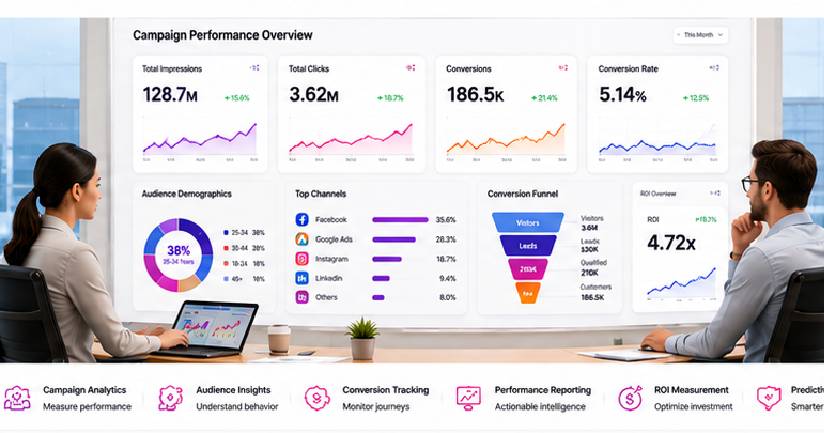
IoT Experience Dashboard
A Brand Messenger dashboard can answer:
What is happening across connected locations?
Which devices are active?
Which experiences are being triggered?
Which spaces receive more interaction?
Which installations require attention?
Which customer experiences generate measurable actions?
This creates a consolidated view of connected physical experiences.
Location Intelligence
IoT can help compare physical environments across:
Stores
Venues
Buildings
Experience Centers
Regions
This can help answer:
Which locations are busiest?
Which experiences receive more interaction?
When does activity change?
Where should experiences be improved?
Real-Time & Near-Real-Time Experience Intelligence
Some IoT environments can update information continuously or at frequent intervals.
However, “real time” depends on:
Device
Connectivity
Platform
Integration
Data Processing
System Architecture
Brand Messenger therefore designs update frequency according to the actual operational requirement.
IoT Alerts
Connected systems can trigger appropriate alerts around:
Device Offline
Abnormal Condition
Experience Failure
Threshold
Maintenance Requirement
The workflow can become:
Event → Rule / Intelligence → Alert → Responsible Team
High-impact safety alerts should rely on appropriately engineered and validated systems.
Intelligent Space Command Views
Large connected environments may benefit from consolidated operational views showing:
Locations
Devices
Experiences
Status
Alerts
Interaction
Environmental Information
Digital Twins can add spatial context to these dashboards.
IoT Experience Architecture
A Brand Messenger connected-experience architecture can conceptually include:
Physical Layer
Devices • Sensors • Displays • Kiosks • Products → Connectivity Layer
Networks • Gateways • IoT Connectivity → Integration Layer
APIs • Data Pipelines • Enterprise Systems → Experience Layer
DXP • Mobile • Kiosks • Smart Screens • XR → Intelligence Layer
AI • Analytics • Face Signatures where appropriate → Business Layer
CRM • CDP • Commerce • Service • Marketing → Measurement Layer
Dashboards • BI • Experience Analytics
This creates an end-to-end physical-digital architecture.
Edge & Local Processing
Some connected experiences may benefit from processing data closer to the physical environment.
Potential reasons include:
Responsiveness
Connectivity Limitations
Data Minimization
Operational Continuity
The appropriate cloud, edge or hybrid architecture depends on the use case.
API & Enterprise Integration
IoT customer experiences can connect with appropriate:
CRM
CDP
DXP
E-Commerce
Marketing Automation
Helpdesk
Booking
Event Platforms
Building Systems
Digital Twins
Analytics
Business Intelligence
The objective is to prevent IoT from becoming another disconnected technology silo.
IoT Data Strategy
Collect Data Because It Has a Purpose—not Because a Sensor Can Produce It
Connected environments can generate enormous volumes of data.
Brand Messenger can help organizations determine:
What data is necessary?
Why is it being collected?
How frequently is it needed?
Where should it be processed?
How long should it be retained?
Who should have access?
What business decision will it support?
The principle becomes:
Useful Data Over Maximum Data.
Privacy by Design for IoT Experiences
IoT environments can potentially process information about:
Devices
Location
Movement
Interactions
Voice
Images
Customer Accounts
Environmental Activity
Relevant deployments should consider:
Data Minimization
Purpose Limitation
Transparency
Appropriate Consent
Controlled Access
Retention
Security
Governance
The fact that a signal can be collected does not automatically mean it should be collected.
IoT + Biometric Governance
Where Face Signatures or another biometric capability is involved, additional considerations may include:
Legal Basis
Necessity
Proportionality
Consent or Authorization where required
Notice
Access Control
Retention
Security
Auditability
Human Oversight
Where individual identity is unnecessary, aggregated intelligence should generally be preferred.
IoT Security
Every Connected Device Can Become Part of the Security Surface
Connected environments should consider:
Device Authentication
Network Segmentation
Encryption
API Security
Access Control
Secure Configuration
Software Updates
Credential Management
Monitoring
Logging
Incident Response
IoT security should be designed from the beginning rather than added after deployment.
For broader enterprise requirements, suitable projects can connect with the cybersecurity capabilities of Messenger2050 Technologies.
Physical Safety
Connected experiences that control physical devices or environmental systems require additional care.
Important considerations can include:
Safe Operating Limits
Manual Override
Fail-Safe Behavior
Human Oversight
Qualified Engineering
Emergency Procedures
Marketing or customer-experience systems should not replace certified safety or industrial-control systems.
Device & Experience Reliability
An intelligent environment depends on the reliability of many connected components.
Brand Messenger can consider:
Device Health
Connectivity
Offline Behavior
Data Quality
Fallback Content
Remote Monitoring
Maintenance
Recovery
A connected experience should degrade gracefully when possible rather than completely fail because one component becomes unavailable.
Data Quality
Poor sensor information can create poor intelligence.
IoT programs should consider:
Calibration
Missing Data
Duplicate Data
Incorrect Readings
Time Synchronization
Device Failure
The principle is simple:
Better Signals Create Better Intelligence.
Intelligent Spaces for Multi-Location Enterprises
Organizations operating many physical locations can create connected experience networks across:
Store 01 → Store 02 → Store 03 → Region → Enterprise
Central teams can understand overall performance while individual locations retain relevant local context.
This can support:
Retail Networks
Hotels
Corporate Offices
Experience Centers
Venues
Branch Networks
Smart Environment Management
Enterprise environments may require centralized management across:
Devices
Content
Experiences
Locations
Data
Alerts
Access
Analytics
This moves IoT from isolated experiments toward a manageable enterprise capability.
IoT Experience Governance
Organizations may establish standards around:
Approved Devices
Connectivity
Data
Security
Privacy
AI
Content
Customer Interaction
Integrations
Maintenance
Measurement
The principle becomes:
Connected Innovation with Enterprise Control.
Complete Brand Messenger IoT Customer Experience Process
A comprehensive engagement can follow:
Business / Customer Experience Objective → Physical Environment → Customer / Visitor Journey → Connected Experience Opportunity Assessment → Device & Sensor Requirements → Smart Environment Architecture → Experience Concept → Interaction Design → IoT & Connectivity Architecture → Enterprise Integration → Face Signatures Integration Where Appropriate → Digital Twin / AI / DXP Integration Where Relevant → Content & Interface Development → Prototype → Technical Testing → Privacy, Security & Governance Review → Pilot Deployment → Measurement → Optimization → Scale Across Locations → Continuous Monitoring & Improvement
The complete lifecycle becomes:
Connect → Sense → Understand → Respond → Interact → Measure → Learn → Optimize
Across the Brand Messenger Connected Experience Ecosystem
IoT Customer Experiences can connect multiple Brand Messenger and Messenger2050 capabilities:
Brand & Customer Experience Strategy
Define the Experience → IoT & Connected Devices
Connect the Physical World → Sensors
Understand Physical Conditions & Interaction → Face Signatures
Add Appropriate Visual / Behavioral Intelligence → Smart Kiosks + Interactive Digital Signage
Create Physical-Digital Interfaces → Conversational AI
Make Interfaces More Natural → Digital Twins
Create Digital Representations → XR + Holographic & Projection Experiences
Visualize and Extend the Environment → DXP + CRM + CDP
Connect the Customer Journey → AI Marketing Intelligence
Understand Customer & Audience Signals → Analytics & BI
Measure Performance
For relevant government and city environments:
IoT + Connected City Systems → SAFE AI → Digital Twin → Government Intelligence & Decision Support
The wider ecosystem becomes:
Physical World → Connected Devices → Sensors → Data → AI → Experience → Customer → Intelligence → Action
Industries & Environments We Serve
Brand Messenger IoT Customer Experiences can support appropriate applications across:
Retail
Shopping Centers
Consumer Products
Connected Products
E-Commerce
Automotive
Real Estate
Property Development
Smart Buildings
Hospitality
Hotels & Resorts
Tourism
Events
Exhibitions
Conferences
Entertainment
Experience Centers
Corporate Offices
Technology
Telecommunications
Manufacturing
Industrial Environments
Logistics
Transportation
Airports
Education
Healthcare
Financial Services
Government
Public-Sector Environments
Smart Cities
Infrastructure
Multi-Location Enterprises
Benefits of IoT Customer Experiences
Brand Messenger can help organizations:
Connect physical and digital customer experiences
Turn products into ongoing digital touchpoints
Build smart retail environments
Create responsive event and exhibition experiences
Develop intelligent Experience Centers
Connect sensors with interactive content
Build sensor-triggered brand activations
Connect smart screens and kiosks
Extend DXP into physical environments
Connect CRM with appropriate physical interactions
Integrate IoT with Digital Twins
Connect XR with physical data
Create context-aware experiences
Build smarter connected spaces
Understand physical-space activity
Integrate appropriate Face Signatures intelligence
Connect IoT with AI Marketing Intelligence
Create IoT analytics dashboards
Manage multi-location connected experiences
Improve device and experience monitoring
Build privacy-aware connected environments
Establish enterprise IoT experience governance
Turn physical environments into measurable digital experience channels
Why Choose Brand Messenger?
Brand Messenger combines Connected Devices, Smart Environments, Sensor-Based Experiences, Intelligent Spaces, Interactive Digital Signage, Smart Kiosks, Digital Experience Platforms, Conversational AI, Digital Twins, XR, Holographic & Projection Experiences, AI Marketing Intelligence, CRM, CDP, MarTech, Analytics and Business Intelligence within one connected physical-digital ecosystem.
Through the wider Messenger2050 Technologies ecosystem, appropriate projects can also connect with Face Signatures, SAFE AI, software, AI, cybersecurity, visualization and enterprise technology capabilities.
We do not approach IoT as simply:
Sensor → Internet → Dashboard
We approach it as:
Person → Place → Device → Sensor → Context → Data → Intelligence → Experience → Business System → Action → Measurement
The distinction matters.
Connected Devices extend the customer relationship into physical products and technology.
Smart Environments connect multiple digital and physical touchpoints within a location.
Sensor-Based Experiences allow physical interactions and environmental conditions to influence digital experiences.
Intelligent Spaces combine devices, data, AI and experiences into connected environments capable of becoming more responsive and measurable.
Face Signatures can add an appropriate visual and behavioral intelligence layer where relevant.
Digital Twins can transform connected physical data into spatial understanding.
SAFE AI can connect appropriate IoT and city-system information with wider government and city intelligence.
And Brand Messenger can connect these technologies with customer experience, CRM, DXP, MarTech, experiential marketing and business intelligence.
A product can become connected.
A display can become responsive.
A store can become measurable.
An event can become intelligent.
A hotel can become a connected guest environment.
An Experience Center can react to visitors.
A factory can connect its physical assets with a Digital Twin.
A city can connect physical infrastructure with government intelligence.
The result is not simply the Internet of Things.
It is an Internet of Experiences connecting people, devices, environments, data and intelligence across the physical and digital worlds.
Connect the Device. Sense the Environment. Understand the Context. Respond Intelligently. Create Experiences That Move with the Physical World.
Connected Devices. Smart Environments. Sensor-Based Experiences. Intelligent Spaces. One Connected Physical-Digital Experience Ecosystem.