







Remarketing & Retargeting
Reconnect with Interested Audiences. Continue the Customer Journey. Recover Lost Opportunities. Turn Previous Engagement into New Conversion Opportunities.
Most customers do not convert during their first interaction with a brand.
They may visit a website, explore a product, read a service page, watch a video, add an item to a cart, begin a form or compare several alternatives and then leave without completing the intended action.
That does not necessarily mean the opportunity has disappeared.
Remarketing & Retargeting helps organizations reconnect with eligible audiences who have already interacted with the business and continue the marketing conversation across appropriate advertising and customer communication channels.
At Brand Messenger, our Remarketing & Retargeting service combines audience strategy, website visitor retargeting, cart recovery, dynamic product advertising, customer re-engagement, cross-platform retargeting, first-party data, CRM/CDP integration, sequential messaging, creative optimization, conversion measurement and revenue-performance intelligence within one connected re-engagement ecosystem.
Our five core capabilities are:
Website Visitor Retargeting
Cart Recovery Ads
Dynamic Product Ads
Customer Re-engagement
Cross-Platform Retargeting
Our wider capabilities can extend across product-view retargeting, category retargeting, content-engagement retargeting, lead-form abandonment, checkout abandonment, search retargeting where supported, video-viewer retargeting, app re-engagement, CRM audience activation, customer-list remarketing, sequential retargeting, lifecycle remarketing, B2B remarketing, account-based retargeting, programmatic retargeting, display remarketing, native remarketing, social retargeting, frequency management, audience suppression, creative personalization, attribution, predictive re-engagement and customer lifetime value optimization.
Our approach connects:
Previous Interaction → Audience Signal → Eligible Retargeting Audience → Relevant Message → Return Visit → Conversion → Customer → Retention → Customer Value
The objective is not simply:
Follow People Around the Internet with More Ads.
It is:
Recognize Meaningful Previous Engagement and Continue the Customer Journey with Relevant, Timely and Responsible Re-Engagement.
What Is Remarketing & Retargeting?
Remarketing and retargeting are commonly used to describe strategies for reconnecting with people who have previously interacted with a business.
These interactions can include:
Website Visits
Product Views
Category Views
Content Engagement
Video Engagement
Cart Activity
Checkout Activity
Lead Form Activity
App Activity
Previous Purchases
CRM Relationships
Where appropriate technology, consent and platform capabilities allow, these interactions can create eligible audience groups for future advertising or marketing communication.
The journey becomes:
Visit → Engage → Leave → Reconnect → Return → Convert
Remarketing vs. Retargeting
The terms are often used interchangeably, but Brand Messenger can distinguish them conceptually.
Retargeting
Usually focuses on paid advertising used to reconnect with previously engaged audiences.
Remarketing
Can represent the wider re-engagement strategy, including advertising and appropriate owned-channel customer communications.
For example:
Retargeting
Display • Social • Native • Programmatic Ads
Remarketing
Advertising + Email + SMS + WhatsApp + Push + CRM Automation where appropriate
Therefore:
Retargeting Can Be One Part of a Wider Remarketing Strategy.
Why Remarketing Matters
A customer journey is rarely:
See Ad → Buy Immediately.
It may instead become:
Discover → Visit → Explore → Leave → Search Again → See Retargeting → Return → Compare → Convert
Remarketing helps maintain continuity across that journey.
This can be particularly valuable where customers require:
Research
Comparison
Internal Approval
Consideration
Multiple Visits
Longer Purchase Cycles
before conversion.
Brand Messenger Remarketing & Retargeting Services
Our capabilities can include:
Remarketing Strategy
Retargeting Strategy
Website Visitor Retargeting
Product Viewer Retargeting
Category Visitor Retargeting
Content Visitor Retargeting
Landing Page Retargeting
Cart Recovery Advertising
Checkout Abandonment Retargeting
Form Abandonment Retargeting
Dynamic Product Advertising
Product Feed Retargeting
Customer Re-engagement
CRM Remarketing
Customer List Activation
Cross-Platform Retargeting
Cross-Device Retargeting where supported
Display Remarketing
Programmatic Retargeting
Native Remarketing
Social Retargeting
Video Remarketing
App Re-engagement
Sequential Retargeting
Lifecycle Remarketing
B2B Remarketing
Account-Based Retargeting
First-Party Audience Activation
Audience Segmentation
Audience Exclusions
Customer Suppression
Frequency Management
Recency Strategy
Creative Personalization
Dynamic Creative
A/B Testing
Landing Page Optimization
Conversion Rate Optimization
Conversion Tracking
Attribution
ROAS Analysis
CAC Analysis
Customer Lifetime Value Analysis
AI-Assisted Re-engagement Intelligence
Predictive Re-engagement
Remarketing Dashboards
Continuous Campaign Optimization
Website Visitor Retargeting
Reconnect with People Who Have Already Shown Interest
A website visitor has already taken an important step:
They discovered the business and chose to visit.
However, website visitors have different levels of intent.
Someone who viewed one article is different from someone who:
Viewed Pricing
Explored Multiple Products
Visited a Contact Page
Started a Form
Added a Product to Cart
Brand Messenger can create segmented retargeting strategies based on meaningful customer behavior.
Website Visitor Segmentation
Instead of creating one generic audience containing every visitor, Brand Messenger can structure audiences around:
General Visitors: Visited the website.
Service Visitors
Viewed particular services.
Product Visitors
Viewed particular products.
High-Engagement Visitors
Explored multiple pages or demonstrated stronger measurable engagement.
Conversion-Intent Visitors
Reached high-intent pages or initiated important actions.
The architecture becomes:
Website Behavior → Audience Segment → Relevant Retargeting Message
Page-Level Retargeting
Different pages can indicate different interests.
For example:
SEO Service Page Visitor: may receive SEO-related messaging.
Programmatic Advertising Visitor
may receive programmatic advertising messaging.
Product A Visitor
may receive Product A advertising.
This creates greater message relevance than sending every previous visitor the same generic advertisement.
Recency-Based Retargeting
The time since the previous interaction can also matter.
A customer who visited yesterday may require a different strategy from someone who visited months ago.
Potential segmentation can include:
Recent Visitors → Short-Term Re-engagement
Earlier Visitors → Different Message / Reintroduction
The exact audience windows depend on platform capabilities, business cycle and customer behavior.
Intent-Based Retargeting
Brand Messenger can combine multiple behavioral signals to identify different levels of measurable engagement.
For example:
Article View → Service Page → Pricing → Form Start
can represent increasing engagement.
The retargeting strategy can change accordingly.
However, observed behavior should not be treated as proof of a person's private intentions.
Cart Recovery Ads
Reconnect with Shoppers Who Started but Did Not Complete the Purchase
Cart abandonment is one of the clearest opportunities for e-commerce remarketing.
The customer journey becomes:
Product → Cart → Exit
Brand Messenger can extend it:
Product → Cart → Exit → Retargeting → Return → Checkout → Purchase
Cart Abandonment Retargeting
Eligible cart abandoners can receive relevant advertising designed to remind them about:
Products Viewed
Products Added to Cart
Brand Value
Relevant Purchase Information
The objective is to continue an interrupted shopping journey.
Cart Recovery Is More Than Advertising
Cart abandonment may indicate problems beyond lack of customer interest.
Potential friction can include:
Unexpected Costs
Complicated Checkout
Poor Mobile Experience
Slow Performance
Payment Issues
Form Friction
Lack of Trust
Delivery Questions
Therefore Brand Messenger can combine:
Cart Recovery Advertising
with:
Conversion Rate Optimization + Checkout Optimization
Rather than only asking:
How do we advertise again?
we also ask:
Why did the customer abandon the checkout in the first place?
Cart Recovery + Marketing Automation
Eligible customers may also be re-engaged through appropriate owned channels.
For example:
Cart Abandonment → Marketing Automation → Email / SMS / WhatsApp / Push where appropriate → Return to Cart → Purchase
This connects Brand Messenger's AdTech and MarTech capabilities.
Dynamic Product Ads
Show Customers Products Relevant to Their Previous Shopping Activity
Dynamic Product Advertising can automatically match eligible users with relevant products from an advertiser's product catalog or feed.
A simplified architecture becomes:
Product Feed
Customer Interaction → Dynamic Creative → Relevant Product Advertisement
Product Feed Integration
A product feed can contain information such as:
Product Name
Product Image
Product URL
Price
Availability
Category
Other Supported Product Attributes
The exact requirements depend on the advertising platform.
Brand Messenger can help coordinate product data with dynamic advertising campaigns.
Product Viewer Retargeting
A customer may:
View Product A → Leave
A dynamic retargeting system may later present:
Product A or another eligible relevant product: depending on platform logic and campaign strategy.
This creates a more personalized advertising experience.
Category Retargeting
If individual-product advertising is unnecessary, audiences can be re-engaged around broader interests.
For example:
Viewed Running Shoes → Running Category Advertising
rather than repeatedly showing one specific product.
This can be useful when customers are still exploring alternatives.
Cross-Sell & Related Product Retargeting
For appropriate customer relationships, remarketing can also support:
Purchased Product A → Relevant Complementary Product B
This moves remarketing beyond abandoned conversion toward customer growth.
Customer Re-Engagement
Reconnect with Existing Customers—not Only Prospects
Remarketing should not end after the first purchase.
Existing customers can represent valuable opportunities for:
Repeat Purchase
Renewal
Replenishment
Upgrade
Cross-Sell
Re-Engagement
Loyalty
The lifecycle becomes:
Prospect → Customer → Repeat Customer → Retained Customer → Customer Growth
Dormant Customer Re-Engagement
Some customers become inactive.
Brand Messenger can use appropriate CRM and customer data to identify eligible dormant segments.
The journey becomes:
Previous Customer → Inactivity → Re-Engagement → Return Opportunity
The message should reflect the existing customer relationship rather than treating the person as a completely new prospect.
Repeat Purchase Remarketing
Businesses with repeat purchase cycles can build campaigns around expected customer needs.
For example:
Purchase → Usage Period → Appropriate Re-engagement → Repeat Purchase
Timing should reflect actual product or customer behavior rather than arbitrary advertising repetition.
Renewal Remarketing
Subscription and contract businesses can use remarketing alongside CRM automation for:
Renewal Awareness
Subscription Continuation
Account Re-engagement
This connects Retargeting with Brand Messenger's Loyalty, Retention & Customer Growth Technology capabilities.
Cross-Sell & Upsell Remarketing
Existing customers may be eligible for:
Complementary Products
Additional Services
Higher-Level Plans
Relevant Upgrades
The objective should be relevance.
Customer Growth Should Come from Additional Value—not Simply Additional Advertising Pressure.
Cross-Platform Retargeting
Continue the Customer Journey Across Multiple Advertising Environments
Customers do not remain on one platform.
A customer may:
Discover through Search → Visit the Website → Later Use Social Media → Read Online Content → Watch Streaming Video → Return through Search
Cross-platform retargeting can help maintain continuity across eligible environments.
Cross-Platform Retargeting Can Include
Depending on available technologies and audience eligibility:
Search-Related Remarketing
Display Retargeting
Social Retargeting
Programmatic Retargeting
Native Retargeting
Video Retargeting
Mobile Retargeting
CTV Re-engagement in appropriate environments
Capabilities differ significantly across advertising platforms.
Cross-Platform Does Not Mean Perfect Identity Everywhere
A customer's identity cannot necessarily be connected perfectly across every:
Browser
Device
Platform
Advertising Environment
Brand Messenger therefore treats cross-platform identity as technology- and data-dependent.
The objective is coordinated advertising—not the assumption of universal customer tracking.
Cross-Device Retargeting
Where supported and appropriately permitted, retargeting can extend across devices.
For example:
Mobile Visit → Desktop Ad → Conversion
or:
Desktop Visit → CTV Exposure → Mobile Return
Cross-device capabilities depend on platform identity systems and available customer data.
Sequential Retargeting
Tell the Next Part of the Story Instead of Repeating the Same Advertisement
One of the weaknesses of basic retargeting is repetition.
A visitor sees:
Ad A → Ad A → Ad A → Ad A
Brand Messenger can instead design sequences.
Stage 01 — Reminder
Reconnect with the original interest.
Stage 02 — Education
Explain benefits or answer questions.
Stage 03 — Proof
Provide appropriate supporting information.
Stage 04 — Conversion
Present the relevant CTA.
The architecture becomes:
Remember → Understand → Consider → Act
Funnel-Based Retargeting
Remarketing can align with Brand Messenger's Marketing Funnel Optimization service.
TOFU
Reconnect content visitors and early-stage audiences.
MOFU
Re-engage service, product and comparison visitors.
BOFU
Reconnect pricing visitors, cart abandoners, checkout abandoners and other high-intent audiences where appropriate.
The strategy becomes:
Behavior → Funnel Stage → Message → CTA
Retargeting by Customer Journey Stage
A broader structure can include:
Awareness Visitor
→ Educational Retargeting
Consideration Visitor
→ Product / Service Value Retargeting
High-Intent Visitor
→ Conversion-Focused Retargeting
Existing Customer
→ Retention / Growth Remarketing
This creates lifecycle-aware re-engagement.
Display Remarketing
Brand Messenger can use eligible display advertising inventory to reconnect with previous audiences.
Potential formats can include:
Banner Ads
Responsive Display Ads
Rich Media
Dynamic Product Ads
This connects directly with our Display Advertising service.
Programmatic Retargeting
Programmatic technology can automate the buying of eligible advertising opportunities for retargeting audiences.
The architecture becomes:
Previous Visitor → Eligible Audience → DSP → Advertising Opportunity → Bid → Retargeting Creative
This connects Remarketing with Brand Messenger's Programmatic Advertising capability.
Native Remarketing
Native advertising can reconnect previous visitors within eligible content-discovery environments.
The relationship becomes:
Previous Interaction → Native Audience → Sponsored Recommendation → Return Journey
This connects with Brand Messenger's dedicated Native Advertising service.
Social Retargeting
Eligible customer or website audiences can be activated across supported social advertising environments.
Potential strategies can include:
Website Visitor Retargeting
Video Engagement Retargeting
Customer Audience Re-engagement
Product Retargeting
Available capabilities depend on the individual platform.
Video Remarketing
Audiences who engage with eligible video content may be used for subsequent advertising where supported.
For example:
Video View → Audience → Follow-Up Creative → Landing Page
This can create a sequential video-to-conversion journey.
App Re-Engagement
For businesses with mobile applications:
App Install → Usage → Inactivity → Re-engagement
can become another remarketing lifecycle.
Potential objectives can include:
Return Usage
Feature Discovery
Purchase
Subscription
Renewal
depending on the application.
B2B Remarketing
Stay Relevant Throughout Longer Enterprise Buying Cycles
B2B customer journeys can involve:
Multiple Visits
Research
Internal Discussions
Procurement
Decision Committees
Long Sales Cycles
Remarketing can help maintain brand visibility during this process.
The journey can become:
Content → Service Page → Case Study → Retargeting → Webinar → Demo → CRM → Opportunity
Account-Based Retargeting
Remarketing can also support appropriate Account-Based Marketing (ABM) strategies.
The architecture can become:
Target Account → Website Engagement → Audience / Account Signal → Relevant Advertising → Sales Alignment
Individual targeting and identity use should reflect applicable privacy requirements and platform capabilities.
Lead Form Abandonment Retargeting
A customer may begin a form but not complete it.
The journey becomes:
Landing Page → Form Start → Abandonment
Brand Messenger can combine:
Retargeting + Form Optimization + CRO: to address both re-engagement and the underlying conversion friction.
Checkout Abandonment Retargeting
Checkout abandonment represents an advanced stage of customer intent.
Rather than simply increasing ad frequency, Brand Messenger can investigate:
Checkout Complexity
Payment Friction
Delivery Information
Form Length
Mobile Experience
Technical Performance
Retargeting can then become one component of the recovery strategy.
Remarketing + Conversion Rate Optimization
Fix the Experience as Well as Recover the Visitor
Brand Messenger's CRO capabilities can help determine why previously interested audiences did not convert.
CRO can include:
User Behavior Analysis
Heatmaps
A/B Testing
Funnel Optimization
Checkout Optimization
Form Optimization
The architecture becomes:
Visitor → Drop-Off → Behavioral Analysis → CRO Improvement + Retargeting → Return → Conversion
This is stronger than simply increasing advertising frequency.
Remarketing + Landing Page Optimization
The returning visitor should encounter an experience aligned with the retargeting message.
Brand Messenger can connect:
Audience Segment → Retargeting Creative → Relevant Landing Page → CTA
This creates message continuity.
Dynamic Creative Optimization
Remarketing can become significantly more relevant when creative reflects the customer's previous interaction.
Dynamic elements may include:
Product
Category
Message
Offer
Image
CTA
where supported.
The architecture becomes:
Audience Signal → Creative Decision → Relevant Variation → Advertising Delivery
Remarketing Creative Strategy
Brand Messenger can develop creative around:
Reminder
Education
Product Benefit
Social Proof where appropriate
Objection Handling
New Information
Re-Engagement
Conversion
The objective is not to make the customer feel watched.
It is to provide a relevant continuation of the brand experience.
Avoid Over-Retargeting
Repeatedly showing the same advertisement can create:
Ad Fatigue
Irritation
Wasted Spend
Poor Brand Experience
Brand Messenger can use available:
Frequency Caps
Audience Windows
Creative Rotation
Audience Suppression
Sequential Messaging
to manage repetition.
Our principle is:
Re-Engage with Relevance not Relentless Repetition.
Frequency Management
Frequency asks:
How often should an eligible audience see the campaign?
There is no universal ideal number.
The appropriate level depends on:
Customer Journey
Purchase Cycle
Campaign Objective
Creative
Channel
Audience
Brand Messenger can monitor frequency alongside conversion and customer experience.
Audience Suppression
Know Who Should Not Receive the Advertisement
Good remarketing is partly about targeting.
It is also about exclusion.
Brand Messenger can create appropriate suppression logic for audiences such as:
Already Converted Customers
Recent Purchasers
Existing Customers where acquisition advertising is irrelevant
Ineligible Audiences
Audiences Outside Campaign Requirements
This can reduce wasted advertising investment.
Post-Purchase Suppression
A common poor customer experience is:
Customer Purchases Product → Continues Seeing “Buy This Product” Ads
Where data and platform capabilities support it, Brand Messenger can suppress recent purchasers from inappropriate acquisition campaigns.
They may instead enter:
Customer Onboarding → Retention → Cross-Sell / Loyalty
journeys.
First-Party Data Strategy
Remarketing increasingly depends on a strong first-party data foundation.
Brand Messenger can connect:
Website + CRM + CDP + Customer Interactions → First-Party Data → Eligible Audience → Remarketing
This can create stronger customer intelligence while reducing unnecessary dependence on external audience data.
CRM Remarketing
CRM data can support eligible audience strategies based on:
Leads
Customers
Lifecycle Stage
Purchase History
Engagement
The architecture becomes:
CRM → Customer Segment → Eligible Advertising Audience → Re-engagement
Activation should follow appropriate consent, privacy and platform requirements.
CDP + Remarketing
A Customer Data Platform can help connect customer information across:
Website
App
CRM
Commerce
Marketing
Customer Service
This can support more structured audience activation.
The architecture becomes:
Customer Data → Unified Profile / Segment → Audience Activation → Remarketing
Consent-Based Remarketing
Customer Permissions Should Travel with Customer Data
Brand Messenger can connect remarketing with its First-Party Data Strategy and consent-management approach.
Relevant considerations can include:
Consent
Marketing Preferences
Purpose
Audience Eligibility
Data Retention
Platform Requirements
The fact that customer data exists does not automatically mean it should be used for every advertising purpose.
Remarketing + Marketing Automation
Remarketing does not have to operate independently from owned-channel marketing.
The ecosystem can become:
Customer Signal → Audience / CRM Segment → Advertising Retargeting
SMS
Push
where appropriate.
This creates coordinated re-engagement rather than disconnected communication.
Omnichannel Re-Engagement
A customer may respond better to different channels at different stages.
The architecture can become:
Customer Behavior → Journey Stage → Appropriate Channel → Message → Response
Brand Messenger's Omnichannel Marketing Technology can coordinate these wider experiences.
Remarketing + Customer Journey Analytics
Remarketing should be understood within the complete customer journey.
For example:
Paid Search → Website → Exit → Display Retargeting → Return → Email → Search → Purchase
Customer Journey Analytics can help identify how these touchpoints interact.
Remarketing + Attribution
A conversion may involve several re-engagement interactions.
Brand Messenger can evaluate:
Original Acquisition → Retargeting → Return → Conversion
within an appropriate attribution framework.
The goal is to understand whether retargeting is contributing meaningfully rather than simply appearing near conversions.
Remarketing Can Over-Claim Credit
Retargeting frequently reaches people who already demonstrated purchase intent.
For example:
Customer Already Intends to Purchase → Sees Retargeting Ad → Purchases
A last-click model might give the retargeting campaign substantial credit even though the customer may have converted anyway.
Therefore:
Retargeting Attribution Requires Careful Interpretation.
Attribution vs. Incrementality
Attribution asks:
Which touchpoints receive conversion credit?
Incrementality asks:
What additional outcome occurred because the advertising was shown?
This distinction can be particularly important for remarketing.
Where appropriate testing methods are available, Brand Messenger can use incrementality thinking to evaluate the genuine additional effect of re-engagement campaigns.
Remarketing + Predictive Analytics
Brand Messenger can use predictive models to assist with questions such as:
Which eligible visitors may be more likely to return?
Which customers may be at risk of becoming inactive?
Which audiences may have greater conversion propensity?
Which customers may have stronger repeat-purchase probability?
The architecture becomes:
Historical Behavior + Current Signals → Predictive Model → Re-engagement Opportunity
Predictions remain estimates rather than guarantees.
Predictive Re-Engagement
Instead of treating every previous visitor equally, predictive intelligence can help prioritize eligible audiences.
For example:
Low Estimated Relevance: may receive limited investment.
Higher Estimated Conversion Opportunity
may justify different bidding or messaging.
The exact implementation depends on data quality and available advertising technology.
Remarketing + AI Audience Intelligence
AI-assisted analysis can evaluate patterns across:
Website Behavior
Product Interest
Cart Activity
Customer History
Campaign Engagement
Conversion Outcomes
This can support more informed audience segmentation and campaign optimization.
Remarketing + Budget & Bid Optimization
Not every retargeting audience has the same commercial value.
Brand Messenger can connect:
Audience → Estimated Opportunity → Bid → Budget → Conversion → Revenue
through its Budget & Bid Optimization capabilities.
Remarketing Budget Allocation
Investment can be evaluated across segments such as:
General Visitors
Product Visitors
Cart Abandoners
High-Intent Visitors
Previous Customers
according to measurable performance.
The objective is not automatically to spend the most on the largest audience.
It is to understand which re-engagement opportunities create meaningful business value.
Remarketing + Revenue Performance Marketing
Move from Return Visits to Revenue Economics
Brand Messenger can connect remarketing performance with:
Revenue
ROAS
CAC
Profitability
Customer Value
where reliable data is available.
The architecture becomes:
Previous Engagement → Retargeting Investment → Return Visit → Conversion → Customer → Revenue
Remarketing ROAS
A simplified relationship can be:
Revenue Associated with Remarketing ÷ Remarketing Spend: However, because remarketing targets audiences who already interacted with the brand, ROAS should be interpreted alongside attribution and incrementality considerations.
A high reported ROAS does not automatically prove that every attributed conversion was created by remarketing.
Cart Recovery Revenue
For e-commerce businesses, Brand Messenger can measure:
Abandoned Cart → Recovery Campaign → Returned Checkout → Recovered Purchase
This can help estimate recovered revenue.
Again, appropriate attribution methodology should distinguish correlation from incremental impact where possible.
Remarketing + CAC
Remarketing can support customer acquisition efficiency by reconnecting with already-engaged prospects.
The relationship becomes:
Acquisition Traffic → Initial Engagement → Retargeting → Customer → CAC
This should be evaluated across the entire acquisition journey rather than treating retargeting as an isolated customer-acquisition source.
Remarketing + Customer Lifetime Value
Remarketing can extend beyond acquisition into customer retention.
The architecture becomes:
Customer → Inactivity / Opportunity → Re-engagement → Repeat Purchase → Retention → CLV
This connects Remarketing with Brand Messenger's Customer Lifetime Value Optimization service.
Retention Remarketing
Existing customers may be re-engaged around:
Repeat Purchase
Renewal
Product Discovery
Customer Education
Loyalty
where appropriate.
This transforms remarketing from a short-term conversion tactic into a broader customer-growth capability.
Remarketing Performance Measurement
Brand Messenger can measure performance across several levels.
Audience
Audience Size
Eligibility
Recency
Segment
Delivery
Spend
Impressions
Reach where available
Frequency
Engagement
Clicks
CTR
Landing-Page Engagement
Conversion
Leads
Purchases
Cart Recoveries
Registrations
Other Defined Actions
Customer
New Customers
Returning Customers
Repeat Customers
Economics
CPA
CAC
Revenue
ROAS
CLV where measurable
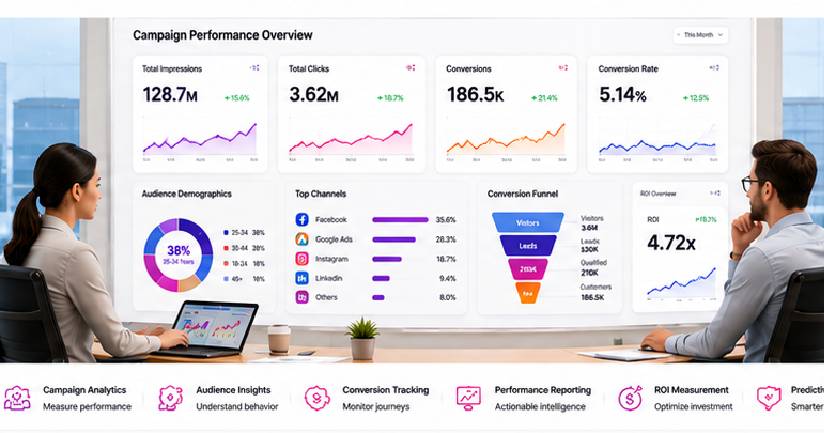
Remarketing Dashboard
A Brand Messenger Remarketing Dashboard can include:
Audience
Website Visitors • Product Viewers • Cart Abandoners • Customers
Channel
Display • Programmatic • Native • Social • Video
Creative
Static • Dynamic • Product • Sequential
Delivery
Spend • Impressions • Reach • Frequency
Conversion
Leads • Purchases • Recoveries
Economics
CPA • CAC • Revenue • ROAS
Customer Value
Repeat Purchase • Retention • CLV
This provides management with a connected view of re-engagement performance.
Remarketing Data Architecture
An enterprise remarketing ecosystem can connect:
Website / App
Analytics
CRM
CDP
Commerce
Product Feed
Marketing Automation
Advertising Platforms → Audience Signals → Segmentation → Eligible Audience Activation → Retargeting / Remarketing → Return Journey → Conversion → Customer → Revenue → Measurement & Learning
Privacy-Aware Remarketing
Remarketing can involve customer and behavioral data.
Brand Messenger can structure campaigns around appropriate:
Consent
Customer Preferences
Data Minimization
Purpose Limitation
Retention
Security
Platform Requirements
Applicable Privacy Requirements
The objective is effective re-engagement without unnecessary collection or use of customer data.
Sensitive Audience Considerations
Certain customer information or inferred characteristics can be sensitive.
Remarketing strategies should therefore avoid inappropriate targeting or messaging based on sensitive personal characteristics and should follow applicable legal, platform and industry requirements.
Remarketing Should Not Feel Like Surveillance
A technically possible advertising strategy is not automatically a good customer experience.
Brand Messenger's principle is:
Use Previous Engagement to Improve Relevance not to Make Customers Feel Watched.
This means carefully managing:
Frequency
Creative
Personalization
Audience Duration
Customer Data
Cross-Platform Activation
Remarketing Does Not Guarantee Conversion
A previous visitor is not automatically a future customer.
Customers may leave because:
They changed their mind
They found another solution
The price was unsuitable
The product was unavailable
The experience was poor
They were only researching
Retargeting can create another opportunity, but it cannot guarantee a conversion.
Remarketing Maturity Model
Level 01 — Basic Website Retargeting
Website Visitor → Retargeting Ad → Website
Level 02 — Behavioral Retargeting
Page / Product / Cart Behavior → Segmented Audience → Relevant Creative
Level 03 — Cross-Platform Remarketing
Display + Programmatic + Native + Social + Video
Level 04 — Customer Data Remarketing
CRM + CDP + First-Party Data + Dynamic Creative + Marketing Automation
Level 05 — Revenue & Customer Value Remarketing
Re-engagement → Conversion → Revenue → Retention → CLV
Level 06 — AI-Powered Re-engagement Intelligence
Customer Data + Behavioral Signals + Predictive Analytics + Dynamic Creative + Budget Optimization + Revenue Intelligence + Executive BI
The objective is not to build the largest retargeting audience.
It is:
Build the Most Relevant Re-engagement Journey.
Complete Brand Messenger Remarketing & Retargeting Process
A comprehensive engagement can follow:
Business Objective → Customer Journey Analysis → Tracking & Data Assessment → Consent / Audience Eligibility → Website & App Interaction Mapping → Audience Segmentation → Website Visitor Audiences → Product / Category Audiences → Cart / Checkout Audiences → CRM / Customer Audiences → Audience Exclusions → Channel Strategy → Display / Programmatic / Native / Social / Video → Creative Strategy → Dynamic Product Advertising → Sequential Messaging → Landing Experience → Campaign Launch → Frequency Management → Budget & Bid Optimization → Conversion Rate Optimization → Cart / Checkout / Form Optimization → Attribution → Incrementality Analysis where appropriate → Revenue & CAC Measurement → Customer Retention & CLV → Predictive Re-engagement → Executive Dashboard → Continuous Optimization
The lifecycle becomes:
Engage → Leave → Recognize the Opportunity → Reconnect → Return → Convert → Retain → Grow
Across the Brand Messenger Remarketing & Retargeting Ecosystem
Remarketing connects with Brand Messenger's wider AdTech and MarTech capabilities:
Audience Targeting & Advertising Intelligence
Understand Previous Engagement → First-Party Data Strategy
Build the Customer Data Foundation → Remarketing & Retargeting
Website Visitors • Cart Recovery • Dynamic Products • Customer Re-Engagement • Cross-Platform Retargeting → Programmatic Advertising
Automate Eligible Retargeting Media → Display Advertising
Deliver Visual Remarketing → Native Advertising
Reconnect Through Content Discovery → Dynamic Creative Optimization
Personalize Eligible Creative → Landing Page Optimization
Create Relevant Return Experiences → Conversion Rate Optimization
Fix Conversion Friction → CRM + CDP
Connect Re-engagement with Customer Data → Marketing Automation
Coordinate Owned-Channel Remarketing → Customer Journey Analytics
Understand the Complete Return Journey → Budget & Bid Optimization
Allocate Re-engagement Investment → Advertising Measurement & Attribution
Evaluate Campaign Contribution → Predictive Analytics
Identify Future Re-engagement Opportunities → Revenue Performance Marketing
Connect Retargeting with Revenue, ROAS & CAC → Loyalty, Retention & Customer Growth
Continue the Relationship After Conversion → Customer Lifetime Value Optimization
Measure Long-Term Customer Value → Marketing Dashboard & KPI Reporting
Turn Re-engagement Data into Executive Intelligence
The complete architecture becomes:
Previous Interaction → Audience → Relevant Message → Retargeting → Return Journey → Conversion → Customer → Retention → Revenue → Lifetime Value
Industries & Business Models We Serve
Brand Messenger Remarketing & Retargeting can support appropriate applications across:
E-Commerce
Retail
B2B
SaaS
Technology
Professional Services
Financial Services
Real Estate
Automotive
Hospitality
Travel & Tourism
Telecommunications
Media
Entertainment
Education
Events
Subscription Businesses
Lead Generation Businesses
Multi-Location Businesses
International Brands
Enterprise Organizations
Startups & Scale-Ups
The appropriate audience, channel, duration, frequency and personalization strategy should reflect each organization's customer journey and data environment.
Benefits of Remarketing & Retargeting
Brand Messenger can help organizations:
Reconnect with previous website visitors
Recover abandoned shopping journeys
Build cart recovery campaigns
Run dynamic product advertising
Re-engage previous customers
Develop cross-platform retargeting
Build programmatic retargeting
Run display remarketing
Develop native remarketing
Coordinate social retargeting
Build video re-engagement campaigns
Develop sequential advertising journeys
Segment audiences by behavior and intent signals
Activate appropriate first-party audiences
Integrate CRM and CDP data
Suppress irrelevant audiences
Manage advertising frequency
Reduce repetitive creative
Personalize dynamic advertising
Optimize landing pages
Improve cart, checkout and form experiences
Connect retargeting with CRO
Coordinate advertising with marketing automation
Measure conversions
Analyze attribution and incrementality
Optimize budgets and bids
Connect remarketing with revenue and ROAS
Analyze customer acquisition economics
Support retention and repeat purchase
Connect re-engagement with CLV
Use AI-assisted predictive intelligence
Build executive remarketing dashboards
Why Choose Brand Messenger?
Brand Messenger combines Website Visitor Retargeting, Cart Recovery Ads, Dynamic Product Ads, Customer Re-engagement, Cross-Platform Retargeting, Programmatic Advertising, Display Advertising, Native Advertising, First-Party Data, CRM, CDP, Marketing Automation, Dynamic Creative, CRO, Budget & Bid Optimization, Attribution, Predictive Analytics, Revenue Performance Marketing and Customer Lifetime Value Optimization within one connected re-engagement ecosystem.
We do not approach retargeting as:
Someone Visited the Website → Show Them the Same Advertisement Everywhere for Weeks.
We approach it as:
Understand the Previous Interaction → Identify the Customer Journey Stage → Build an Eligible Audience → Choose the Appropriate Channel → Deliver a Relevant Message → Control Frequency → Optimize the Return Experience → Measure Conversion → Connect Revenue → Continue the Customer Relationship.
The distinction matters.
Website Visitor Retargeting reconnects audiences who have already demonstrated measurable interest.
Cart Recovery Ads help continue interrupted e-commerce journeys.
Dynamic Product Ads connect previous product interactions with relevant product creative.
Customer Re-engagement extends marketing beyond acquisition into repeat purchase, renewal and retention.
Cross-Platform Retargeting helps coordinate re-engagement across multiple eligible advertising environments.
Audience Suppression and Frequency Management prevent remarketing from becoming unnecessary repetition.
CRO addresses the underlying reasons customers may have failed to convert.
CRM, CDP and First-Party Data connect advertising with real customer relationships.
Predictive Analytics can help prioritize future re-engagement opportunities.
Revenue Performance Marketing connects remarketing investment with revenue, ROAS and customer acquisition economics.
And Customer Lifetime Value Optimization extends the measurement from immediate conversion to the long-term customer relationship.
The result is not simply another advertisement.
It is a strategically designed continuation of an existing customer journey.
Reconnect with Interest. Recover the Opportunity. Continue the Journey. Convert with Relevance. Grow the Customer Relationship.
Website Visitor Retargeting. Cart Recovery. Dynamic Product Ads. Customer Re-Engagement. Cross-Platform Retargeting. One Connected Remarketing & Retargeting Ecosystem.