





AdTech Integration & Infrastructure
Connect Advertising Platforms. Unify Marketing Data. Build the Technology Foundation for Smarter Advertising.
Modern advertising depends on far more than individual campaigns. Behind every effective advertising operation is a connected technology infrastructure linking media platforms, advertising systems, customer data, CRM, CDP, analytics, APIs, automation, and campaign data pipelines.
At Brand Messenger, our AdTech Integration & Infrastructure services help organizations connect fragmented advertising technologies into a more unified, scalable, and measurable ecosystem.
From Google Ads, Meta, LinkedIn, and TikTok advertising integrations to DSPs, Ad Servers, CRM, CDP, APIs, Webhooks, and Campaign Data Pipelines, we help create the technical connections that allow advertising data and workflows to move across platforms.
Our objective is to connect:
Advertising Platforms → Audience Data → Customer Systems → Campaign Delivery → Conversion Data → Analytics → Optimization
so marketing and advertising teams can operate with stronger automation, better data visibility, and more coordinated technology.
Our AdTech Integration & Infrastructure Services
Brand Messenger provides comprehensive AdTech integration and infrastructure capabilities, including:
⦁ Google Ads Integration
⦁ Meta Advertising Integration
⦁ LinkedIn Ads Integration
⦁ TikTok Ads Integration
⦁ DSP Integration
⦁ Ad Server Integration
⦁ CRM Integration
⦁ Customer Data Platform (CDP) Integration
⦁ API Integration
⦁ Webhook Integration
⦁ Campaign Data Pipelines
⦁ Advertising Platform Connectivity
⦁ Audience Data Synchronization
⦁ Conversion Data Integration
⦁ Campaign Performance Data Integration
⦁ First-Party Data Activation Infrastructure
⦁ Marketing Automation Integration
⦁ Analytics & Business Intelligence Integration
⦁ Cross-Platform Advertising Data Architecture
⦁ AdTech Infrastructure Consulting
Google Ads Integration
Connect Search, Display, Video and Advertising Data
Brand Messenger helps organizations connect appropriate Google advertising environments with wider marketing, customer, analytics, and business systems.
Integration strategies can support areas such as:
⦁ Campaign Data
⦁ Audience Data
⦁ Conversion Data
⦁ Customer Match Workflows
⦁ Campaign Performance
⦁ Budget & Spend Data
⦁ Search Advertising
⦁ Display Advertising
⦁ Video Advertising
⦁ Remarketing
⦁ Conversion Measurement
⦁ Reporting & Dashboards
⦁ Marketing Automation
⦁ Business Intelligence
The objective is to make advertising information more useful beyond the advertising interface itself—connecting campaign activity with wider customer and business intelligence.
Meta Advertising Integration
Connect Social Advertising with Customer and Marketing Systems
Social advertising can become more powerful when campaign activity is connected with customer data, CRM workflows, conversion information, analytics, and marketing automation.
Brand Messenger can help organizations design integrations between Meta advertising environments and relevant internal marketing systems.
Integration can support:
⦁ Advertising Audiences
⦁ First-Party Audience Activation
⦁ Customer Lists
⦁ Campaign Performance Data
⦁ Lead Generation Data
⦁ Conversion Events
⦁ Remarketing Audiences
⦁ Product Catalogs
⦁ Dynamic Product Advertising
⦁ CRM Workflows
⦁ Campaign Reporting
⦁ Performance Dashboards
This creates a stronger connection between social advertising and the wider customer lifecycle.
LinkedIn Ads Integration
Connect B2B Advertising with Sales and Customer Intelligence
LinkedIn advertising can play an important role in B2B marketing, account-based marketing, professional services, enterprise sales, recruitment, and thought leadership.
Brand Messenger can connect supported LinkedIn advertising workflows with relevant CRM, lead management, analytics, and marketing systems.
Integration strategies can support:
⦁ Lead Generation Campaigns
⦁ B2B Audience Activation
⦁ Account-Based Marketing
⦁ Campaign Lead Synchronization
⦁ CRM Lead Routing
⦁ Campaign Performance Data
⦁ Conversion Tracking
⦁ Audience Segmentation
⦁ Sales Follow-Up
⦁ Marketing Automation
⦁ Campaign Reporting
⦁ Executive Dashboards
This can help connect advertising → lead generation → CRM → sales engagement → conversion measurement within a more coordinated B2B marketing process.
TikTok Ads Integration
Connect Short-Form Advertising with Wider Campaign Intelligence
Short-form video advertising can generate significant audience engagement, product discovery, traffic, and customer acquisition opportunities.
Brand Messenger can help connect supported TikTok advertising activity with wider campaign and customer systems.
Integration can support:
⦁ Campaign Data
⦁ Audience Information
⦁ Conversion Events
⦁ Website Activity
⦁ Product Advertising
⦁ Lead Generation
⦁ Remarketing
⦁ Campaign Performance
⦁ Creative Performance
⦁ CRM Workflows
⦁ Analytics
⦁ Performance Dashboards
This enables TikTok advertising to operate as part of a wider Brand Messenger paid media and AdTech ecosystem rather than as an isolated campaign channel.
DSP Integration
Connect Programmatic Media Buying with the Wider Advertising Stack
Demand-Side Platforms are an important component of programmatic advertising technology.
Brand Messenger can help organizations connect appropriate DSP environments with relevant advertising, audience, data, measurement, and reporting systems.
DSP integration can support:
⦁ Audience Activation
⦁ Programmatic Media Buying
⦁ Campaign Data
⦁ Creative Delivery
⦁ First-Party Audiences
⦁ Conversion Data
⦁ Campaign Performance
⦁ Bid & Budget Information
⦁ Attribution
⦁ Reporting
⦁ Data Pipelines
⦁ Business Intelligence
This creates a stronger technology foundation for Brand Messenger's Programmatic Advertising Technology services.
Ad Server Integration
Connect Campaign Delivery with Measurement and Optimization
Ad servers help manage advertising creative, placements, delivery, tracking, and campaign measurement.
Brand Messenger can integrate supported ad-serving environments with wider advertising infrastructure to connect:
⦁ Campaign Trafficking
⦁ Creative Assets
⦁ Media Placements
⦁ Ad Tags
⦁ Impression Tracking
⦁ Click Tracking
⦁ Conversion Measurement
⦁ Frequency Management
⦁ Campaign Scheduling
⦁ Creative Rotation
⦁ Campaign Reporting
⦁ Attribution Systems
⦁ Analytics Platforms
This helps create a more connected relationship between campaign setup, advertising delivery, measurement, and optimization.
CRM Integration
Connect Advertising with Customer Relationships
CRM integration is one of the most important bridges between AdTech and the customer lifecycle.
Brand Messenger helps organizations connect advertising activity with appropriate CRM workflows so campaign-generated leads and customer information can move more efficiently between marketing and sales systems.
CRM integration can support:
⦁ Lead Capture
⦁ Lead Synchronization
⦁ Customer Audience Creation
⦁ CRM Audience Activation
⦁ Lead Source Tracking
⦁ Customer Segmentation
⦁ Retargeting Audiences
⦁ Customer Exclusions
⦁ Sales Follow-Up
⦁ Conversion Feedback
⦁ Customer Lifecycle Campaigns
⦁ Campaign Attribution
A connected CRM environment allows advertising to become part of a broader customer acquisition, nurturing, conversion, retention, and re-engagement process.
Customer Data Platform (CDP) Integration
Connect Unified Customer Data with Advertising Activation
Customer Data Platforms can help organizations organize customer information from multiple systems into more usable profiles and audience segments.
Brand Messenger can connect appropriate CDP capabilities with advertising technology to support:
⦁ Unified Customer Profiles
⦁ Audience Segmentation
⦁ Behavioral Audiences
⦁ Customer Lifecycle Audiences
⦁ First-Party Audience Activation
⦁ Audience Synchronization
⦁ Customer Journey Intelligence
⦁ Personalization
⦁ Audience Suppression
⦁ Cross-Channel Activation
⦁ Conversion Data
⦁ Advertising Measurement
CDP integration provides an important connection between customer intelligence, MarTech, and AdTech.
API Integration
Build Direct Connections Between Advertising Technologies
APIs enable software platforms to exchange information and trigger supported actions programmatically.
Brand Messenger can design API-based integrations between appropriate advertising and marketing technologies.
API integration can support:
⦁ Campaign Data Retrieval
⦁ Campaign Creation Workflows
⦁ Audience Synchronization
⦁ Conversion Data
⦁ Performance Metrics
⦁ CRM Data Exchange
⦁ Product Feeds
⦁ Reporting
⦁ Dashboard Data
⦁ Marketing Automation
⦁ Business Intelligence
⦁ Custom Advertising Applications
API integration can reduce repetitive manual processes while creating more scalable connections between technology systems.
Webhook Integration
Respond to Marketing and Advertising Events Faster
While APIs are often used to request information, webhooks can allow supported systems to send information when specified events occur.
Brand Messenger can use webhook-based architecture where supported to connect events such as:
⦁ New Leads
⦁ Form Submissions
⦁ Customer Registrations
⦁ Purchases
⦁ Subscription Events
⦁ CRM Updates
⦁ Campaign Events
⦁ Customer Status Changes
⦁ Conversion Events
⦁ Other Relevant Business Actions
These events can then support appropriate downstream workflows such as CRM updates, marketing automation, audience changes, reporting, or campaign processes.
Campaign Data Pipelines
Move Advertising Data from Platforms to Decision-Making Systems
Large advertising operations can generate campaign data across numerous platforms.
Brand Messenger helps organizations design Campaign Data Pipelines that move relevant advertising information between systems in a structured way.
A campaign data pipeline can connect:
Advertising Platforms → Data Collection → Transformation → Storage → Analytics → Dashboards → Business Intelligence → Optimization
Campaign data can include:
⦁ Campaign Information
⦁ Media Spend
⦁ Impressions
⦁ Reach
⦁ Clicks
⦁ Engagement
⦁ Leads
⦁ Conversions
⦁ Revenue
⦁ Audience Performance
⦁ Creative Performance
⦁ Placement Performance
⦁ Channel Performance
⦁ Geographic Performance
⦁ ROAS
Centralizing relevant information can reduce fragmented reporting and improve cross-platform analysis.
Audience Data Synchronization
Keep Advertising Audiences Connected Across Systems
Audience information can change continuously as customers subscribe, purchase, become leads, convert, become inactive, or move between lifecycle stages.
Brand Messenger can design audience synchronization workflows connecting appropriate systems such as:
CRM ↔ CDP ↔ Marketing Automation ↔ Advertising Platforms
This can support:
⦁ New Prospect Audiences
⦁ Customer Audiences
⦁ High-Value Audiences
⦁ Retargeting Audiences
⦁ Loyalty Audiences
⦁ Inactive Customer Audiences
⦁ Customer Exclusions
⦁ Product Interest Audiences
⦁ Geographic Segments
⦁ Customer Lifecycle Segments
Where supported, synchronization can reduce repetitive manual audience management and improve campaign consistency.
Conversion Data Integration
Bring Business Outcomes Back into Advertising Systems
Advertising optimization becomes more meaningful when advertising platforms receive appropriate information about relevant business outcomes.
Brand Messenger can help connect supported conversion signals such as:
⦁ Online Purchases
⦁ Qualified Leads
⦁ Sales
⦁ Bookings
⦁ Subscriptions
⦁ Registrations
⦁ Quote Requests
⦁ Demo Requests
⦁ Customer Acquisitions
⦁ Other Defined Conversion Events
Conversion information can support campaign measurement, attribution, bidding, audience optimization, and performance analysis.
First-Party Data Activation Infrastructure
As organizations place greater emphasis on their own customer relationships, infrastructure is required to move eligible first-party information securely and appropriately between business and advertising systems.
Brand Messenger can help design workflows connecting:
Website → CRM → CDP → Customer Identity → Audience Segmentation → Advertising Platform → Campaign → Conversion → CRM
This infrastructure can support first-party audience activation, customer match, remarketing, suppression, customer lifecycle advertising, and measurement.
Marketing Automation Integration
Connect Advertising with Automated Customer Journeys
Advertising does not need to end when a lead clicks an advertisement or submits a form.
Brand Messenger can connect advertising workflows with marketing automation so customer journeys can continue through appropriate channels.
For example:
Paid Ad → Landing Page → Lead Capture → CRM → Email / SMS / WhatsApp Nurturing → Sales Follow-Up → Conversion
Marketing automation integration can support:
⦁ Lead Nurturing
⦁ Customer Onboarding
⦁ Follow-Up Campaigns
⦁ Lead Scoring
⦁ Customer Segmentation
⦁ Retention Campaigns
⦁ Re-Engagement
⦁ Cross-Sell & Upsell
⦁ Customer Lifecycle Marketing
This creates a direct bridge between Brand Messenger AdTech and MarTech.
Analytics & Business Intelligence Integration
Turn Connected Advertising Data into Decision Intelligence
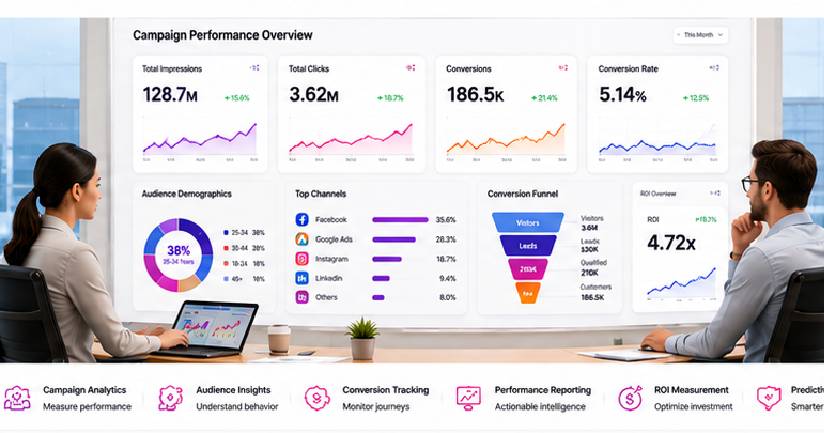
Integrated advertising infrastructure creates an opportunity to consolidate performance information for deeper analysis.
Brand Messenger can connect advertising data with analytics and business intelligence environments to support:
⦁ Campaign Dashboards
⦁ Cross-Channel Reporting
⦁ Media Spend Analysis
⦁ Conversion Reporting
⦁ ROAS Reporting
⦁ Audience Performance
⦁ Creative Performance
⦁ Attribution Analysis
⦁ Customer Acquisition Reporting
⦁ Revenue Analysis
⦁ Executive Advertising Reports
⦁ Performance Forecasting
The goal is to move from fragmented platform reporting toward a more connected view of advertising performance.
Cross-Platform Advertising Data Architecture
Build a Connected Foundation Instead of Isolated Integrations
Connecting individual platforms solves immediate integration problems. Building a coherent architecture creates longer-term value.
Brand Messenger can help organizations design advertising data architecture around:
⦁ Advertising Platforms
⦁ DSPs
⦁ Ad Servers
⦁ CRM
⦁ CDP
⦁ Websites
⦁ Mobile Applications
⦁ E-Commerce Systems
⦁ Marketing Automation
⦁ Analytics
⦁ Data Storage
⦁ Business Intelligence
⦁ APIs & Webhooks
The architecture can be designed around the organization's technology environment, data requirements, campaign scale, operational workflows, and reporting needs.
Automation & Workflow Orchestration
Connected AdTech infrastructure can automate repetitive operational tasks and improve information flow between systems.
Automation can support workflows such as:
New Lead → CRM → Audience Update → Marketing Automation
Customer Purchase → Conversion Recorded → Acquisition Audience Suppressed → Loyalty Audience Added
Campaign Data → Data Pipeline → Dashboard → Performance Analysis
CRM Status Change → Audience Segment Update → Advertising Strategy Adjustment
This helps advertising and marketing systems respond more efficiently to customer and campaign events.
AdTech Infrastructure Monitoring
Keep Critical Advertising Connections Visible
Integrations need ongoing monitoring because APIs, permissions, authentication, data structures, campaign requirements, and platform environments can change.
Brand Messenger can help organizations establish monitoring around areas such as:
⦁ Data Synchronization
⦁ Integration Status
⦁ API Connectivity
⦁ Data Pipeline Health
⦁ Conversion Data Flow
⦁ Audience Synchronization
⦁ Campaign Data Availability
⦁ Reporting Data
⦁ Integration Errors
⦁ Workflow Failures
This can help identify infrastructure issues before they create larger campaign or reporting problems.
Security, Privacy & Data Governance
Advertising infrastructure can involve customer information, campaign data, access credentials, platform permissions, and business information.
Brand Messenger's integration approach can incorporate appropriate controls around:
⦁ Access Management
⦁ Platform Permissions
⦁ Data Minimization
⦁ Consent Considerations
⦁ Secure Data Transfer
⦁ API Authentication
⦁ Data Governance
⦁ Audience Eligibility
⦁ Data Retention Requirements
⦁ Monitoring & Logging
⦁ Internal Responsibilities
Technical and governance requirements should be aligned with the organization's applicable policies, platforms, jurisdictions, and data-processing obligations.
Scalable AdTech Infrastructure
Build for Today's Campaigns and Tomorrow's Growth
Advertising technology requirements often become more complex as organizations add markets, brands, products, channels, agencies, customer systems, and data sources.
Brand Messenger can design infrastructure with scalability in mind, supporting:
⦁ Multiple Advertising Platforms
⦁ Multiple Brands
⦁ Multiple Markets
⦁ Multiple Business Units
⦁ Multiple Customer Databases
⦁ Cross-Channel Campaigns
⦁ Large Audience Volumes
⦁ Expanding Data Pipelines
⦁ Additional APIs
⦁ New Marketing Technologies
⦁ New Advertising Technologies
A modular architecture allows organizations to expand capabilities without unnecessarily rebuilding the entire advertising technology environment.
AdTech Integration Across Brand Messenger AdTech
AdTech Integration & Infrastructure acts as the technology connection layer across the wider Brand Messenger AdTech ecosystem, including:
⦁ Programmatic Advertising Technology
⦁ Audience Targeting & Advertising Intelligence
⦁ Ad Serving & Campaign Delivery
⦁ Paid Media Technology
⦁ Dynamic Creative & Creative Optimization
⦁ Remarketing & Retargeting Technology
⦁ Ad Performance & Bid Optimization
⦁ Advertising Measurement & Attribution
⦁ Advertising Data & Identity
⦁ AI-Powered Media Buying
⦁ Campaign Analytics
⦁ Marketing Automation
Together, these technologies can create a connected advertising infrastructure:
Platforms → Data → Audiences → Campaigns → Delivery → Conversions → Measurement → Intelligence → Optimization
Connecting Brand Messenger AdTech & MarTech
AdTech Integration & Infrastructure is one of the most important technical bridges between Brand Messenger's Advertising Technology and Marketing Technology services.
The connected ecosystem can bring together:
Ad Platforms ↔ DSP ↔ Ad Server ↔ Website/App ↔ CRM ↔ CDP ↔ Marketing Automation ↔ Analytics ↔ Business Intelligence
This creates a foundation for more coordinated customer acquisition, campaign activation, personalization, lead nurturing, attribution, retention, and performance optimization.
Industries We Serve
Brand Messenger AdTech Integration & Infrastructure can support organizations across industries including:
⦁ Retail & E-Commerce
⦁ FMCG & Consumer Products
⦁ Financial Services
⦁ Technology
⦁ Telecommunications
⦁ Automotive
⦁ Real Estate
⦁ Travel & Tourism
⦁ Hospitality
⦁ Healthcare
⦁ Education
⦁ Entertainment & Media
⦁ Film & Streaming
⦁ Fashion & Lifestyle
⦁ Sports
⦁ Professional Services
⦁ B2B & Enterprise
⦁ Subscription Businesses
⦁ Events & Exhibitions
⦁ Franchise & Multi-Location Businesses
⦁ Government & Public Sector
Benefits of AdTech Integration & Infrastructure
Brand Messenger helps organizations:
⦁ Connect fragmented advertising technologies
⦁ Integrate major advertising platforms with business systems
⦁ Connect DSP and ad-serving environments
⦁ Connect CRM and CDP data with advertising
⦁ Automate audience synchronization
⦁ Improve conversion data flows
⦁ Build structured campaign data pipelines
⦁ Reduce repetitive manual processes
⦁ Improve cross-platform campaign visibility
⦁ Centralize advertising performance information
⦁ Connect first-party data with advertising activation
⦁ Improve campaign measurement
⦁ Support marketing automation
⦁ Build executive advertising dashboards
⦁ Strengthen AdTech and MarTech interoperability
⦁ Improve data governance
⦁ Monitor critical advertising integrations
⦁ Build more scalable advertising infrastructure
⦁ Prepare technology architecture for future channels and platforms
⦁ Turn disconnected advertising systems into a more unified ecosystem
Why Choose Brand Messenger?
Brand Messenger combines AdTech strategy, advertising platforms, programmatic technology, CRM, CDP, APIs, webhooks, data integration, marketing automation, analytics, business intelligence, and campaign operations to help organizations build connected advertising infrastructure.
Rather than treating Google Ads, Meta, LinkedIn, TikTok, DSPs, ad servers, CRM, CDP, analytics, and marketing automation as isolated technologies, we help design the connections between them.
Our AdTech Integration & Infrastructure capabilities cover Google Ads Integration, Meta Advertising Integration, LinkedIn Ads Integration, TikTok Ads Integration, DSP Integration, Ad Server Integration, CRM Integration, CDP Integration, API & Webhook Integration, Campaign Data Pipelines, audience synchronization, conversion data integration, automation, analytics, and infrastructure monitoring.
Because this service sits at the technical center of the Brand Messenger AdTech ecosystem, it can connect:
Advertising → Customer Data → Marketing → Sales → Measurement → Business Intelligence
The result is not simply a collection of advertising integrations. It is a connected technology foundation designed to help data move more efficiently, campaigns operate more intelligently, teams gain better visibility, and advertising technology scale with the organization.
Connect Every Platform. Unify Every Signal. Build Advertising Technology That Works Together.