



Digital Strategy Consulting

Plan Smarter Content. Manage Every Asset. Personalize Every Experience. Measure What Performs.

Content sits at the center of modern marketing. Websites, campaigns, social media, email, advertising, customer journeys, sales enablement, mobile applications, events, and digital experiences all depend on a continuous flow of relevant and consistent content. As organizations grow, however, content operations become increasingly complex. Ideas may live in spreadsheets, assets across multiple storage systems, approvals inside email threads, publishing schedules across separate platforms, and performance data inside disconnected analytics tools.

At Brand Messenger, our Content Marketing Technology services help organizations create a connected technology environment for planning, creating, organizing, approving, personalizing, distributing, governing, and measuring content.

From Content Management Systems and Digital Asset Management to Content Planning, Content Calendars, AI Content Generation, Content Personalization, Content Distribution, Approval Workflows, Performance Analytics, and Brand Asset Management, we help organizations transform content from a collection of individual assets into a structured marketing capability.

Our approach connects:

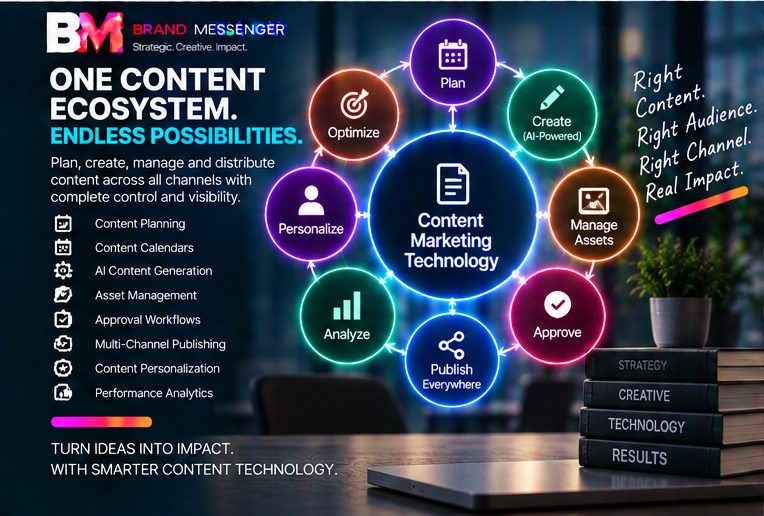
Strategy → Planning → Creation → Assets → Approval → Personalization → Distribution → Engagement → Measurement → Optimization

Create with Purpose. Manage with Control. Distribute Everywhere. Turn Content into Performance.
Content Marketing Technology

Our Content Marketing Technology Services

Brand Messenger provides comprehensive Content Marketing Technology capabilities, including:

Content Management Systems

Digital Asset Management

Content Planning

Content Calendars

AI Content Generation

Content Personalization

Content Distribution

Content Approval Workflows

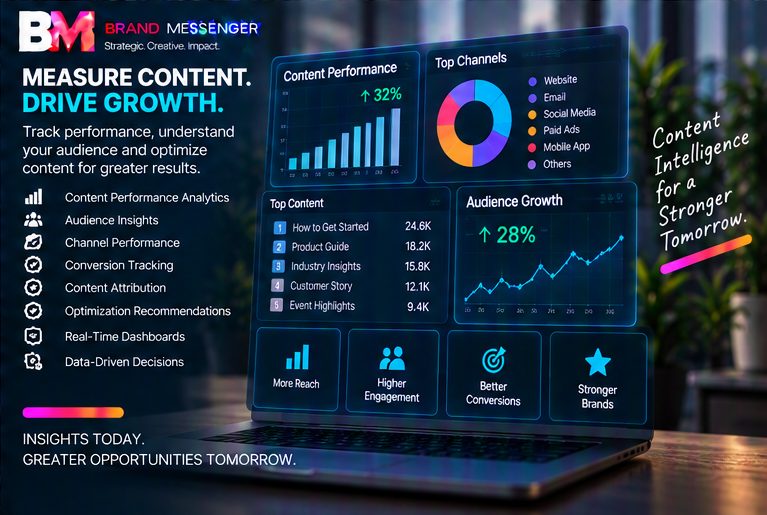
Content Performance Analytics

Brand Asset Management

Content Workflow Management

Content Production Management

Content Repository Management

Content Taxonomy & Classification

Content Version Management

Content Templates

Content Localization

Multi-Channel Content Management

Content Scheduling

Content Lifecycle Management

Content Governance

Content Rights & Usage Management

Content Search & Discovery

Marketing Automation Integration

Campaign Content Integration

Customer Journey Content Integration

AI-Assisted Content Intelligence

Content Dashboards & Reporting

Content Management Systems

Build the Technology Foundation for Digital Content

A Content Management System provides the operational foundation for creating, managing, updating, organizing, and publishing digital content. Brand Messenger helps organizations structure CMS environments around their marketing, business, publishing, and customer experience requirements. CMS capabilities can support:

Website Content

Landing Pages

Articles

News

Blogs

Product Content

Service Content

Campaign Pages

Resource Centers

Multimedia

Customer Content

Marketing Pages

Multi-Language Content

Structured Content

Reusable Content Components

The objective is to make content easier to manage while creating a stronger foundation for campaigns, personalization, customer journeys, SEO, and digital experiences.

Headless & Omnichannel Content Architecture

Create Once. Deliver Across Multiple Experiences.

Modern organizations may need content across more than a traditional website. Content can be required for: Website → Mobile App → Customer Portal → Campaign → Digital Display → Email → Other Digital Experiences Where appropriate, Brand Messenger can help organizations structure headless or API-driven content environments that separate content management from presentation. This allows reusable content components to support multiple customer-facing experiences without rebuilding the same information for every channel.

Digital Asset Management

Organize Your Entire Digital Content Library

Organizations accumulate thousands of digital assets over time. These may include:

Images

Videos

Logos

Brand Graphics

Advertising Creative

Social Media Assets

Presentations

Documents

Product Images

Campaign Assets

Event Media

Animation

Audio

Templates

Design Files

Marketing Materials

Brand Messenger can help organizations establish Digital Asset Management environments where assets can be organized, categorized, searched, accessed, reviewed, and reused more effectively. The goal is to create a structured single environment for digital marketing assets rather than allowing valuable content to remain fragmented across folders, drives, emails, and individual devices.

Digital Asset Organization & Metadata

Make Every Asset Easier to Find and Use

A digital asset library becomes valuable when teams can quickly locate the correct content. Brand Messenger can structure asset organization using:

Asset Categories

Campaign

Brand

Product

Service

Market

Region

Language

Content Type

Channel

Audience

Publication Status

Approval Status

Usage Information

Keywords

Tags

Metadata

This improves content discovery and reduces unnecessary duplication.

Content Planning

Turn Marketing Strategy into a Structured Content Program

Content should begin with business and marketing objectives rather than isolated production requests. Brand Messenger helps organizations structure Content Planning around:

Marketing Objectives

Target Audiences

Customer Needs

Customer Journey Stages

Campaign Objectives

Products & Services

Content Themes

Content Pillars

Channels

Formats

Publishing Frequency

SEO Requirements

Campaign Requirements

Conversion Objectives

Performance KPIs

The process can connect:

Business Objective → Audience → Customer Need → Content Theme → Format → Channel → Action → Measurement

This creates stronger alignment between content production and marketing strategy.

Content Strategy & Content Pillars

Build a Sustainable Framework for Ongoing Content

Rather than producing unrelated content continuously, Brand Messenger can help organizations organize content around strategic themes or content pillars. Content pillars may relate to:

Brand

Products

Services

Customer Education

Thought Leadership

Industry Insights

Customer Stories

Innovation

Research

Events

Community

Campaign Themes

These pillars provide structure for content planning while allowing individual campaigns and channels to maintain creative flexibility.

Content Calendars

See What Is Being Created, Published and Promoted

Brand Messenger can create centralized Content Calendars that provide visibility across upcoming marketing activity. Content Calendars can include:

Content Title

Campaign

Content Type

Audience

Channel

Author or Owner

Production Status

Approval Status

Publication Date

Promotion Date

Associated Assets

Customer Journey Stage

Target Market

Performance Goals

Calendars can cover:

Website + Blog + Social + Email + Campaigns + Video + Events + Advertising + Customer Communications

This gives marketing teams a clearer view of their complete content operation.

Content Workflow Management

Coordinate Content from Idea to Publication

Content production frequently involves multiple people and stages. Brand Messenger can structure workflows such as: Idea → Brief → Research → Creation → Design → Review → Revision → Approval → Publish → Distribute → Measure Workflow Management can support:

Content Requests

Task Assignment

Responsibilities

Deadlines

Production Stages

Reviews

Revisions

Approvals

Notifications

Publication Status

Distribution Status

Performance Review

This helps reduce fragmented communication between marketing, creative, editorial, digital, and management teams.

AI Content Generation

Accelerate Content Production with Human-Guided AI

AI can support marketing teams by accelerating selected stages of content ideation, development, adaptation, and optimization. Brand Messenger can integrate AI-assisted content capabilities for areas such as:

Content Ideas

Campaign Concepts

Draft Copy

Headlines

Social Content

Email Content

Product Descriptions

Marketing Copy

Content Summaries

Content Variations

Calls to Action

Audience-Specific Variations

SEO-Assisted Content Development

Content Classification

The objective is not simply to generate more content.

AI should help organizations create more efficient content workflows while maintaining appropriate brand, editorial, factual, legal, and human review controls.

AI-Assisted Content Ideation

Turn Marketing Intelligence into New Content Opportunities

Brand Messenger can use AI-assisted analysis to help identify potential content opportunities based on relevant information such as:

Customer Questions

Search Themes

Campaign Performance

Content Performance

Customer Interests

Product Interests

Industry Topics

Audience Segments

Customer Journey Needs

Previous Engagement

This can help teams move from random content production toward more informed content planning.

Content Personalization

Deliver More Relevant Content to Different Customers

Not every customer should necessarily receive the same content experience. Brand Messenger can connect content with CRM, CDP, customer behavior, audience segmentation, and customer journey information to support personalization. Content can be personalized according to appropriate factors such as:

Customer Segment

Customer Lifecycle Stage

Product Interest

Previous Engagement

Purchase History

Geographic Context

Customer Value

Account Type

Content Interest

Customer Journey

Campaign Response

Personalization can be applied across:

Websites

Landing Pages

Email

Mobile Apps

Customer Portals

Campaigns

Product Recommendations

Content Recommendations

The model becomes:

Customer Context → Content Decision → Relevant Experience

Dynamic Content

Allow Content to Adapt to Customer Context

Where supported by the technology environment, content components can change dynamically according to customer information or behavior. For example:

New Visitor → Brand Introduction Returning Prospect → Product-Specific Content Existing Customer → Customer Resources High-Value Customer → Relevant Loyalty Experience Customer Interested in Product A → Related Content & Recommendations

Dynamic content can help create more responsive customer experiences without requiring entirely separate websites or campaigns for every audience.

Content Distribution

Get the Right Content into the Right Channels

Creating content is only part of the process. Brand Messenger helps organizations distribute and activate content across appropriate channels such as:

Websites

Blogs

Email

Social Media

Mobile Applications

Customer Portals

Marketing Automation

CRM Campaigns

Advertising

Landing Pages

Events

Sales Enablement

Digital Displays

Partner Channels

A connected content distribution environment can help reduce repetitive publishing work and maintain greater consistency across customer touchpoints.

Multi-Channel Content Management

One Content Ecosystem. Multiple Customer Experiences.

Brand Messenger can help organizations manage content across multiple channels while adapting it for different formats and customer contexts. For example: Core Campaign Idea ↓ Website Article + Email + Social Content + Video + Advertising Creative + Landing Page + Sales Material Rather than treating each piece as an unrelated asset, Brand Messenger can connect them to the same campaign, audience, content theme, and performance objective.

Content Repurposing

Extend the Value of Every Strong Content Asset

A single high-value content asset can often support multiple formats. For example: Research Report → Article → Social Posts → Infographic → Video → Email → Presentation → Campaign Creative Brand Messenger can create structured workflows for identifying, adapting, approving, and distributing reusable content. This can improve content efficiency while maintaining consistency across channels.

Content Approval Workflows

Maintain Quality and Control Before Publication

Content may require review by multiple stakeholders before it becomes public. Brand Messenger can create approval workflows such as: Draft → Editorial Review → Brand Review → Required Business/Compliance Review → Final Approval → Publication Approval processes can support:

Copy Approval

Creative Approval

Brand Approval

Product Approval

Management Approval

Legal or Compliance Review where required

Revision Requests

Approval Status

Publication Authorization

Approval History

This provides greater control without relying entirely on email threads and manual follow-up.

Content Version Management

Know Which Content Is Current

Marketing content frequently evolves. Brand Messenger can help organizations maintain structured content versions: Draft → Revision → Approved → Published → Updated → Archived Version Management can provide visibility into:

Current Version

Previous Versions

Content Owner

Revision History

Approval Status

Publication Status

Associated Campaign

Associated Channels

This reduces the risk of outdated or incorrect content being reused.

Brand Asset Management

Protect Brand Consistency Across Every Marketing Touchpoint

Brand assets represent an organization's visual and communication identity. Brand Messenger can create centralized Brand Asset Management environments for:

Logos

Logo Variations

Brand Guidelines

Typography Guidance

Approved Graphics

Corporate Templates

Presentation Templates

Campaign Templates

Photography

Video Assets

Advertising Creative

Social Templates

Document Templates

Brand Messaging

Approved Marketing Materials

This provides teams, agencies, partners, and approved stakeholders with easier access to current brand resources.

Brand Guidelines & Asset Control

Make the Correct Brand Resources Easy to Use

Brand Asset Management can help define:

Approved Assets

Deprecated Assets

Asset Versions

Brand Usage

Markets

Languages

Campaign Associations

Channels

Permissions

Expiration or Review Dates

Usage Notes

The objective is to make brand consistency easier to maintain across large organizations and distributed marketing teams.

Content Templates

Scale Production Without Losing Consistency

Brand Messenger can create reusable templates for:

Campaign Pages

Landing Pages

Emails

Social Posts

Articles

News Product Pages

Case Studies

Presentations

Campaign Briefs

Promotional Materials

Reports

Templates can improve production speed while maintaining structural and brand consistency.

Content Localization & Market Adaptation

Adapt Content for Different Markets and Audiences

Organizations operating across multiple markets may need content adapted for language, geography, culture, products, offers, or local requirements. Brand Messenger can help structure localization workflows covering:

Language Versions

Regional Content

Local Campaigns

Market-Specific Offers

Product Availability

Local Assets

Local Reviews

Approval Processes

Publishing Schedules

This helps organizations maintain global brand consistency while supporting appropriate local adaptation.

Content Taxonomy & Classification

Create Structure Across Large Content Libraries

As content libraries grow, classification becomes essential. Brand Messenger can develop content taxonomies based on:

Topic

Product

Service

Audience

Industry

Customer Journey Stage

Content Format

Campaign

Market

Language

Channel

Lifecycle Status

A structured taxonomy improves search, reuse, personalization, automation, analytics, and content governance.

Content Search & Discovery

Help Teams Find Existing Content Before Creating More

Large organizations often recreate content simply because existing assets are difficult to locate. Brand Messenger can improve content discovery through:

Search

Metadata

Tags

Categories

Campaign Relationships

Asset Types

Content Status

Brand

Product

Market

This can increase the useful life of existing content and reduce unnecessary duplication.

Content Lifecycle Management

Manage Content from Creation to Retirement

Content should have a lifecycle just like campaigns and customer journeys. Brand Messenger can structure: Plan → Create → Review → Approve → Publish → Promote → Measure → Update → Reuse → Archive Content Lifecycle Management can help identify:

Active Content

Expired Content

Outdated Content

High-Performing Content

Underperforming Content

Content Requiring Review

Repurposing Opportunities

Content Ready for Archive

This helps keep digital experiences more current and manageable.

Content Governance

Create Clear Rules Around Content Operations

Organizations with many teams, brands, markets, and channels need structured content governance. Brand Messenger can help establish frameworks around:

Content Ownership

User Roles

Creation Rights

Review Responsibilities

Approval Authority

Publishing Permissions

Brand Standards

Content Classification

Asset Management

Version Control

Content Retention

Content Review

AI Content Usage

Content Quality

Governance helps organizations scale content operations without losing control.

Content Performance Analytics

Understand Which Content Creates Meaningful Engagement Content should be measured according to its purpose not simply page views. Brand Messenger can analyze content performance across:

Reach

Views

Engagement

Time on Content

Click-Through

Downloads

Leads

Conversions

Customer Journey Progression

Product Interest

Campaign Contribution

Revenue Contribution where measurable

Customer Retention

Content-Assisted Conversions

This can help organizations understand which content supports different marketing and customer objectives.

Content Engagement Intelligence

Understand What Audiences Actually Respond To Brand Messenger can connect Content Marketing Technology with Customer Intelligence & Behavioral Analytics to understand:

Most Engaging Topics

High-Interest Products

Content Preferences

Audience Differences

Repeat Content Engagement

Customer Journey Influence

Content Consumption Patterns

Conversion-Related Content

Underperforming Content

Emerging Audience Interests

This transforms content analytics from simple traffic reporting into broader audience intelligence.

Content Attribution

Understand Content's Role Across the Customer Journey A customer may interact with several pieces of content before converting. For example: Article → Video → Email → Product Guide → Landing Page → Conversion Brand Messenger can help organizations analyze how content contributes to customer journeys and business outcomes. Content attribution can examine:

First Content Interaction

Assisted Content

Pre-Conversion Content

Customer Journey Content

Lead-Generating Content

Conversion-Influencing Content

Retention Content

This creates a clearer connection between content activity and marketing performance.

AI-Assisted Content Performance Intelligence

Learn What to Create, Improve and Promote Next

AI-assisted analysis can help identify patterns across content performance. Brand Messenger can use AI-assisted intelligence to support:

Content Performance Trends

Audience Interest Patterns

Topic Performance

Content Recommendations

Content Gap Identification

High-Performing Formats

Customer Segment Preferences

Content Journey Analysis

Repurposing Opportunities

Content Optimization Opportunities

The intelligence cycle becomes:

Content → Audience Response → Analytics → AI-Assisted Insight → Optimization → New Content

Content & Marketing Automation

Put Content Inside Automated Customer Journeys

Brand Messenger can connect content directly with Marketing Automation. For example: New Lead → Educational Content → Engagement → Product Content → Qualification or:

New Customer → Welcome Content → Product Education → Adoption Content → Customer Engagement

Automation can determine which content is delivered according to:

Customer Segment

Lifecycle Stage

Behavior

Product Interest

Campaign

Previous Engagement

Journey Stage

This transforms content into an active component of automated customer engagement.

Content & Customer Journey Orchestration

Deliver Content According to Where the Customer Is in the Journey

Different customer stages require different information.

Awareness Educational Content • Brand Stories • Thought Leadership

Consideration Product Information • Comparisons • Case Studies • Demonstrations

Conversion Offers • Product Details • Sales Content • Decision Support

Onboarding Welcome Content • Training • Tutorials • Resources

Engagement Updates • Recommendations • Educational Content

Retention Customer Resources • Loyalty Content • Value Communication

Re-Engagement New Content • Personalized Recommendations • Relevant Offers

Brand Messenger can connect content with Customer Journey Orchestration so the customer's journey helps determine what information should appear next.

Content & AI Marketing Personalization

Brand Messenger's AI Marketing & Personalization capabilities can help determine which content may be more relevant for different customers. The process can operate as: Customer Data → Customer Intelligence → AI Analysis → Content Recommendation → Personalized Experience This can support:

Personalized Articles

Product Recommendations

Content Recommendations

Personalized Landing Pages

Personalized Email Content

Customer Portal Content

Next-Best Content

Customer Journey Personalization

This creates a stronger relationship between customer intelligence and content delivery.

Content & Customer Data Platform

A Customer Data Platform can provide customer context behind content personalization. Brand Messenger can connect: First-Party Data → CDP → Unified Customer Profile → Segment → Content Experience → Customer Response Customer engagement with content can then return to the customer profile: Content Interaction → Behavioral Data → Updated Customer Profile → New Segment / Journey This creates a continuous content intelligence loop.

Content & Campaign Management Technology

Campaigns depend on content. Brand Messenger can connect Content Marketing Technology directly with Campaign Management Technology. The workflow can become: Campaign Brief → Content Requirements → Production → Asset Management → Approval → Campaign Activation → Performance Measurement Campaign teams can understand:

Which content belongs to which campaign

Which assets are approved

Which versions are current

Where content is being distributed

Which audiences receive it

How the content performs

This creates stronger coordination between campaign operations and content operations.

Content Across Omnichannel Marketing

Brand Messenger can distribute content across its wider Omnichannel Marketing Technology environment: Email → SMS → WhatsApp → Web → Mobile App → Push → Social → CRM → Customer Portal Content can be adapted according to channel requirements while remaining connected to the same customer, campaign, and journey. The objective is to create consistent brand communication without forcing identical content into every channel.

Connecting Content MarTech with AdTech

Content Marketing Technology can also connect with Brand Messenger's AdTech ecosystem. Creative and content assets can support:

Display Advertising

Native Advertising

Social Advertising

Video Advertising

Programmatic Campaigns

Dynamic Creative

Retargeting

Paid Media Landing Pages

Performance information can then provide insight into which content, messages, creative concepts, and audience combinations generate stronger advertising outcomes.

This creates a connection between: Content → Creative → Audience → Advertising → Engagement → Conversion → Performance Intelligence

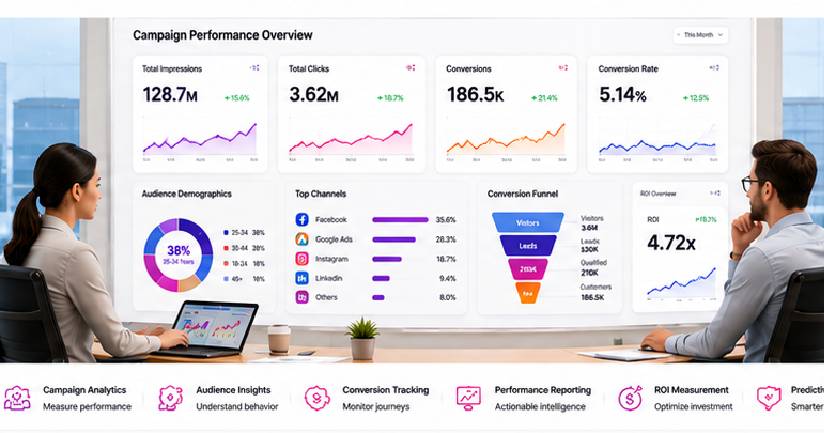
Content Marketing Dashboards

See Content Operations and Performance in One Environment Brand Messenger can develop dashboards for content teams, marketing managers, brand teams, and executives.

Content Operations Planned • In Production • In Review • Approved • Scheduled • Published

Content Calendar Upcoming Content • Campaigns • Publication Dates • Channels • Owners

Asset Intelligence Assets • Versions • Usage • Approval Status • Categories

Content Performance Views • Engagement • Leads • Conversions • Journey Contribution

Audience Intelligence Topics • Interests • Customer Segments • Engagement Patterns

Channel Performance Website • Email • Social • Mobile • Campaigns • Customer Portals

Executive Content Intelligence Content Output • Engagement • Lead Contribution • Conversion • High-Performing Content • Emerging Trends

This creates visibility across both content operations and content performance.

Content Marketing Technology Across Brand Messenger MarTech

Content Marketing Technology can operate as the content and digital asset layer across the wider Brand Messenger MarTech ecosystem. It can connect with:

Marketing Automation

CRM & Customer Management Technology

Customer Data Platform & First-Party Data

Omnichannel Marketing Technology

Customer Journey Orchestration

AI Marketing & Personalization

Customer Intelligence & Behavioral Analytics

Campaign Management Technology

Personalization Technology

Customer Experience Technology

Marketing Analytics

Marketing Dashboards & Business Intelligence

MarTech Integration & Data Infrastructure

Brand Messenger AdTech

Together:

Customer Intelligence → Content Strategy → Creation → Asset Management → Personalization → Distribution → Engagement → Analytics → Optimization

Content Across the Complete Customer Lifecycle

Brand Messenger can help organizations use content throughout the entire customer relationship.

Discover Brand Content • Search Content • Social Content • Thought Leadership

Engage Articles • Video • Interactive Content • Educational Resources

Consider Product Content • Case Studies • Comparisons • Guides

Convert Landing Pages • Offers • Sales Content • Decision Support

Onboard Welcome Content • Training • Tutorials • Customer Resources

Grow Recommendations • Product Education • Cross-Sell Content

Retain Customer Content • Loyalty Communication • Value Education

Re-Engage Personalized Content • New Offers • Relevant Recommendations

Advocate Customer Stories • Community Content • Referral Communication

Content therefore becomes a continuous part of customer relationship management rather than only a top-of-funnel marketing activity.

Industries We Serve

Brand Messenger Content Marketing Technology can support:

Retail & E-Commerce FMCG & Consumer Brands B2B & Enterprise Technology & SaaS Financial Services Telecommunications Automotive Real Estate Travel & Tourism Hospitality Healthcare Education Entertainment & Media Professional Services Events & Exhibitions Subscription Businesses Franchise & Multi-Location Businesses Membership Organizations Non-Profit Organizations Government & Public Sector Startups & Scale-Ups

Benefits of Content Marketing Technology

Brand Messenger helps organizations:

Centralize content operations Build structured content management environments Organize digital assets Improve content planning Coordinate content calendars Accelerate selected workflows with AI Personalize content experiences Distribute content across multiple channels Establish structured approval workflows Improve brand asset management Maintain content version control Improve content search and discovery Reduce unnecessary content duplication Create reusable content templates Support localization Establish stronger content governance Connect content with customer data Integrate content with marketing automation Connect content with customer journeys Support campaign management Measure content performance Understand audience content interests Improve content using behavioral analytics Connect MarTech content with AdTech creative Build a scalable content technology ecosystem

Why Choose Brand Messenger?

Brand Messenger combines MarTech, customer data, first-party data, CDP, CRM, customer behavior analytics, journey analytics, audience intelligence, predictive analytics, AI Marketing & Personalization, customer experience intelligence, Marketing Automation, omnichannel technology, AdTech, and business intelligence within one connected customer intelligence framework.

We do not view customer analytics simply as charts showing visits, clicks, and conversions. Our approach is designed to answer increasingly valuable questions:

What happened?

Who did it?

How did they behave?

Why might it matter?

What patterns are emerging?

What may happen next?

What should the organization do next?

The intelligence cycle becomes:

Observe → Connect → Understand → Analyze → Predict → Decide → Act → Measure → Learn

Our Customer Intelligence & Behavioral Analytics capabilities span Customer Behavior Analytics, Audience Intelligence, Customer Journey Analytics, Consumer Insights, Visitor Analytics, Engagement Analytics, Customer Lifetime Value Analysis, Churn Prediction, Retention Analytics, Customer Experience Intelligence, behavioral segmentation, predictive intelligence, and customer dashboards.

Where relevant, integration with Face Signatures by Messenger2050 Technologies can extend this intelligence into physical environments, helping connect appropriate visual and visitor behavioral signals with the wider customer and marketing intelligence ecosystem.


The result is more than analytics.

It is a connected customer intelligence environment designed to help organizations understand behavior, discover opportunities, identify risk, improve experiences, strengthen customer relationships, and make better marketing and business decisions.

Understand Every Signal. Discover Every Pattern. Predict What Matters. Turn Customer Intelligence into Growth.

Explore More: Link to Face Signature