




Turn Business Events into Demand Generation Engines. Connect Decision-Makers. Build Relationships. Create Pipeline.
B2B events are not only about organizing conferences, booking venues, or managing logistics.They are strategic marketing environments where brands can reach decision-makers, executives, industry professionals, buyers, partners, customers, and high-value prospects through structured conversations, thought leadership, networking, product education, and account engagement.
B2B Events & Conferences Marketing focuses specifically on using business events to generate demand, strengthen relationships, accelerate opportunities, support account-based marketing, and create measurable commercial outcomes.
At Brand Messenger, we help organizations plan, promote, activate, and measure B2B event programs across:
Executive Roundtables
Industry Conferences
Business Summits
Networking Events
Customer Forums
Executive Briefings
Our approach connects B2B Marketing, Demand Generation, Account-Based Marketing, Event Marketing, Lead Generation, CRM, Marketing Automation, Content, Media, Executive Communications, and Revenue Analytics into one coordinated event-marketing framework.
We do not treat B2B events as isolated one-day activities.
We build them as complete demand-generation journeys:
Target Accounts → Audience Strategy → Event Proposition → Promotion → Registration → Engagement → Conversation → Lead → Opportunity → Follow-Up → Pipeline
Create the Room. Bring the Right People Together. Turn Business Conversations into Growth.
Our B2B Events & Conferences Marketing Services
Brand Messenger provides capabilities across:
Executive Roundtables
Industry Conferences
Business Summits
Networking Events
Customer Forums
Executive Briefings
Leadership Forums
C-Suite Events
Industry Panels
Business Breakfasts
Business Dinners
Private Executive Events
Thought Leadership Events
Partner Conferences
Channel Events
Customer Advisory Forums
User Conferences
Client Forums
Investor & Stakeholder Events
Product Education Events
Solution Briefings
Technology Briefings
B2B Workshops
Masterclasses
B2B Webinars
Hybrid Business Events
Virtual Executive Sessions
Account-Based Events
Prospect Events
Customer Retention Events
Partner Networking Events
Lead Generation Events
Demand Generation Campaigns
Event Audience Acquisition
Executive Invitations
Registration Campaigns
Event Content Strategy
Speaker Marketing
Event Media Campaigns
Event Lead Capture
CRM Integration
Marketing Automation
Event Follow-Up
Lead Nurturing
Opportunity Tracking
Event Attribution
Event ROI Measurement
B2B Event Analytics
B2B Event Strategy
Start with the Business Objective
A B2B event should begin with a clear commercial purpose.
Brand Messenger can develop event strategies around objectives such as:
Generate Qualified Leads
Reach Target Accounts
Build Executive Relationships
Accelerate Sales Opportunities
Educate Prospects
Strengthen Customer Relationships
Launch Products or Solutions
Establish Thought Leadership
Build Partner Ecosystems
Support Market Entry
Develop Industry Authority
The strategy becomes:
Business Objective → Audience → Event Format → Content → Engagement → Commercial Outcome
This helps ensure the event is built around business value rather than attendance alone.
Demand Generation Through Events
Turn Event Participation into Revenue Opportunity
B2B events can create concentrated access to relevant buyers and decision-makers.
Brand Messenger can connect events with Demand Generation through:
Target Account Campaigns
Prospect Identification
Audience Segmentation
Paid Media
Email Marketing
LinkedIn Campaigns
Partner Promotion
Content Marketing
Registration Journeys
Lead Capture
Lead Qualification
Follow-Up Nurturing
The demand-generation journey can become:
Awareness → Invitation → Registration → Attendance → Engagement → Lead → MQL → SQL → Opportunity → Revenue
The objective is not simply:
How many people attended?
It is:
Which target audiences attended, what did they engage with, and what happened next?
Executive Roundtables
Create High-Value Conversations with Senior Decision-Makers
Executive Roundtables are small, focused business discussions designed for senior professionals and decision-makers.
They can be particularly effective when the objective is to:
Build Executive Relationships
Discuss Strategic Industry Issues
Understand Customer Priorities
Engage High-Value Prospects
Develop Thought Leadership
Support Account-Based Marketing
Brand Messenger can support:
Topic Development
Executive Audience Selection
Invitation Strategy
Moderator Planning
Discussion Framework
Executive Content
Registration
Event Communications
Follow-Up
The format is generally designed around:
Focused Topic + Selected Participants + Peer Discussion + Strategic Relationship Building
C-Suite Roundtables
Engage Senior Leadership Around Strategic Issues
For enterprise B2B campaigns, Brand Messenger can develop C-suite events targeting roles such as:
CEOs
CIOs
CTOs
CMOs
CFOs
CHROs
COOs
Business Unit Leaders
The subject should reflect executive priorities rather than general product messaging.
Examples may include:
Digital Transformation
AI Strategy
Cybersecurity
Customer Experience
Operational Efficiency
Business Growth
Future of Industry
Risk
Innovation
The brand can participate as:
Convener + Expert + Facilitator
rather than relying on aggressive sales presentation.
Industry Conferences
Build Authority and Reach at Scale
Industry Conferences bring larger groups together around:
Market Developments
Innovation
Technology
Regulation
Business Challenges
Industry Transformation
Brand Messenger can develop conference marketing across:
Conference Positioning
Audience Development
Speaker Promotion
Agenda Marketing
Sponsorship
Exhibitor Marketing
Registration Campaigns
Social Media
PR
Paid Media
The objective is to build both:
Attendance + Commercial Relevance
Conference Audience Development
Attract the Right Delegates, Not Just More Delegates
Brand Messenger can segment conference audiences across:
Senior Executives
Buyers
Technical Decision-Makers
Business Leaders
Partners
Industry Professionals
Existing Customers
Prospective Customers
Audience acquisition can use:
CRM
Digital Advertising
Native Advertising
Media Partnerships
Industry Communities
Partner Databases
Direct Invitations
The priority is:
Audience Quality before Registration Volume.
Business Summits
Position the Brand Around Leadership and Market Conversation
Business Summits can bring together decision-makers around high-level topics such as:
Industry Transformation
Innovation
AI
Sustainability
Growth
Investment
Future Markets
Leadership
Brand Messenger can support:
Summit Branding
Program Strategy
Executive Speakers
Content
Audience Acquisition
Partnerships
Sponsorship
Media
Registration
Lead Management
The summit can become a platform for:
Thought Leadership + Relationships + Demand Generation
Leadership Forums
Leadership Forums can provide a recurring platform for executive engagement.
They can be structured around:
Quarterly Sessions
Industry Themes
Regional Markets
Leadership Challenges
Innovation Topics
A recurring format allows organizations to build a long-term executive community instead of relying on one event.
Networking Events
Create Structured Opportunities for Business Relationships
Networking events should do more than place people in the same room.
Brand Messenger can structure networking around:
Industry
Role
Account
Business Interest
Partnership Opportunity
Customer Segment
Formats may include:
Business Mixers
Hosted Networking
Speed Networking
Matchmaking
VIP Networking
Partner Networking
The objective is to increase the probability of useful business conversations.
Business Networking Campaigns
A networking event can be supported by:
Target Audience → Invitation → Profile → Matching → Meeting → Follow-Up
This turns networking into a more intentional B2B marketing process.
Customer Forums
Strengthen Relationships with Existing Customers
Customer Forums can help organizations engage current customers around:
Product Updates
Strategy
Best Practices
Innovation
Customer Feedback
Peer Networking
Roadmaps
Brand Messenger can develop customer forums that support:
Retention
Loyalty
Customer Expansion
Advocacy
Cross-Sell
Upsell
The relationship becomes:
Customer → Engagement → Value → Loyalty → Growth
Customer Advisory Forums
Bring Important Customers into Strategic Conversation
Customer Advisory Forums can provide organizations with structured input from selected clients.
They may focus on:
Product Direction
Customer Experience
Market Trends
Service Improvement
Innovation
These forums can strengthen relationships while providing useful customer intelligence.
The purpose should remain collaborative rather than purely promotional.
User Conferences
Build Communities Around Products and Platforms
Technology and platform companies can use user conferences for:
Customer Education
Product Announcements
Training
Networking
Product Feedback
Partner Engagement
Brand Messenger can connect user conferences with:
Customer Marketing
Loyalty
Community Marketing
Product Marketing
Lead Generation
User conferences can become important annual relationship-building platforms.
Executive Briefings
Create Focused Business Conversations Around Complex Solutions
Executive Briefings are highly targeted sessions designed to help prospects or customers understand:
Business Challenges
Market Change
Technology
Solutions
Strategic Opportunities
Brand Messenger can structure executive briefings as:
Business Context → Challenge → Insight → Solution → Discussion → Next Step
These sessions can be particularly effective for:
Technology
Enterprise Software
Cybersecurity
Financial Services
Consulting
Industrial Solutions
They can support complex B2B sales cycles where buyers need deeper understanding before progressing.
Executive Briefing Centers
Organizations with ongoing enterprise sales programs may develop recurring briefing environments for:
Major Customers
Strategic Prospects
Partners
Brand Messenger can help structure:
Executive Content
Presentation Flow
Demonstration Experiences
Discussion Sessions
Follow-Up Journeys
The goal is to create a premium, consultative buyer experience.
Product & Solution Briefings
Educate Buyers Without Turning the Event into a Sales Pitch
Product briefings can explain:
New Technology
Product Capabilities
Business Applications
Use Cases
Integration
Implementation
A strong briefing balances:
Education + Demonstration + Commercial Relevance
rather than relying entirely on promotional claims.
Thought Leadership Events
Build Demand Through Expertise
Thought Leadership events can help brands become part of important industry conversations.
Formats may include:
Panels
Fireside Chats
Executive Interviews
Research Presentations
Roundtables
Keynotes
Topics should begin with audience priorities rather than product features.
The model becomes:
Industry Issue → Insight → Discussion → Brand Authority → Commercial Interest
B2B Event Content Strategy
Content Is the Reason the Audience Attends
Brand Messenger can develop event content around:
Industry Trends
Customer Challenges
Research
Market Data
Innovation
Technology
Case Studies
Future Predictions
Best Practices
Event content can be structured through:
Keynotes
Panels
Workshops
Roundtables
Interviews
Demonstrations
The strongest content should answer:
What will the audience learn that makes attending worth their time?
Speaker Strategy
Use the Right Voices to Build Credibility
Brand Messenger can support speaker programs involving:
Executives
Industry Experts
Customers
Partners
Analysts
Technical Specialists
Thought Leaders
Speaker selection should consider:
Expertise
Audience Relevance
Credibility
Content Quality
Market Recognition
Strong speakers can significantly improve audience acquisition.
Speaker Marketing
Once speakers are confirmed, Brand Messenger can build campaigns around:
Speaker Announcements
Quotes
Video Invitations
Interviews
Social Content
Email Campaigns
Paid Media
Each speaker can become an audience-acquisition asset.
Event Branding
Build a Strong B2B Event Identity
Brand Messenger can create event branding across:
Event Name
Logo
Visual Identity
Key Message
Website
Registration
Presentation Templates
Digital Screens
Signage
Social Media
The event should have its own recognizable identity while remaining connected to the parent brand.
Event Value Proposition
Potential attendees need a clear reason to participate.
Brand Messenger can develop event messaging around:
What They Will Learn
Who They Will Meet
Why the Topic Matters
Which Business Challenges Will Be Discussed
What Makes the Event Different
The proposition becomes:
Right Topic + Right People + Right Value
B2B Event Audience Strategy
Brand Messenger can segment audiences by:
Company
Industry
Revenue
Geography
Business Role
Seniority
Customer Status
Account Priority
Product Interest
Sales Stage
This creates more targeted event marketing than mass invitations.
Account-Based Events
Build Events Around High-Value Accounts
Account-Based Events combine ABM with event marketing.
Instead of promoting the event broadly, Brand Messenger can target:
Named Accounts
Buying Committees
Existing Strategic Customers
Priority Prospects
The process becomes:
Target Account → Stakeholder → Personalized Invitation → Event → Engagement → Sales Follow-Up
This can be particularly valuable for enterprise sales.
ABM Event Personalization
Priority accounts can receive different event journeys.
For example:
Tier 1 Accounts
Personal Executive Invitation
Tier 2 Accounts
Targeted Invitation
Existing Customers
VIP Customer Experience
Strategic Prospects
Executive Briefing or Hosted Meeting
This helps align event investment with account value.
Event Invitation Strategy
Make the Invitation Part of the Campaign
Brand Messenger can develop:
Executive Invitations
Email Invitations
Personalized Invitations
LinkedIn Outreach
Partner Invitations
VIP Invitations
Direct Sales Invitations
An invitation should communicate:
Why This Event + Why This Topic + Why This Audience + Why Attend
Executive Outreach
For senior audiences, mass email alone may not be enough.
Brand Messenger can coordinate executive outreach through:
Personalized Email
Direct Invitation
Sales Teams
Partner Introductions
Executive-to-Executive Outreach
This can be particularly important for roundtables and private briefings.
Event Registration Campaigns
Turn Interest into Confirmed Attendance
Brand Messenger can optimize registration journeys across:
Landing Pages
Registration Forms
Paid Media
Social Media
Partner Promotion
The objective is to reduce unnecessary friction between:
Interest → Registration
Registration pages can clearly communicate:
Event Value
Agenda
Speakers
Audience
Venue
Timing
CTA
Registration Optimization
Brand Messenger can improve registration performance through:
Clear Forms
Mobile Optimization
A/B Testing
Reminder Campaigns
Confirmation Emails
Different audience groups may receive different messaging.
Event Audience Acquisition
Build a Multi-Channel Demand Generation Campaign
Brand Messenger can use:
Email Marketing
LinkedIn Marketing
Search
Display Advertising
Programmatic Advertising
Native Advertising
Social Media
PR
Media Partnerships
Partner Marketing
The audience-acquisition model becomes:
Target Audience → Multi-Channel Promotion → Registration → Attendance
LinkedIn Event Marketing
LinkedIn can play an important role in B2B audience development.
Brand Messenger can use LinkedIn for:
Executive Targeting
Industry Targeting
Job-Role Targeting
Content Promotion
Speaker Promotion
Registration Campaigns
LinkedIn activity can be connected with broader B2B demand generation.
Email Event Marketing
Email can support the full event lifecycle.
Invitation
Event Introduction
Education
Agenda • Speakers • Value
Conversion
Registration Reminder
Attendance
Event Information
Follow-Up
Content • Next Step • Sales
This makes email one of the central components of B2B event marketing.
Paid Media for B2B Events
Brand Messenger can connect events with:
Search Ads
LinkedIn Advertising
Display Advertising
Programmatic Advertising
Native Advertising
Retargeting
Paid media can target both:
New Prospects + Existing Interested Audiences
Event Retargeting
Not everyone who visits the event page registers immediately.
Brand Messenger can structure retargeting journeys such as:
Event Visitor → Display / Social Reminder → Registration
After the event:
Attendee → Relevant Content → Follow-Up
Retargeting can therefore support both acquisition and nurturing.
Media Partnerships for Conferences
Reach Established Industry Audiences
Brand Messenger can develop conference partnerships with:
Industry Publications
Business Media
Trade Media
Digital Publishers
Professional Communities
Partnerships can include:
Event Promotion
Sponsored Content
Interviews
Newsletter Promotion
Media Coverage
This can help reach relevant audiences more efficiently.
Event Sponsorship Marketing
B2B conferences may also generate commercial opportunities through sponsorship.
Brand Messenger can help structure sponsorship around:
Title Partnerships
Session Sponsorships
Exhibition Packages
Networking Sponsorship
Digital Sponsorship
Content Sponsorship
This connects directly with Brand Messenger's Sponsorship & Partnership Marketing service.
Exhibitor Marketing
Help Exhibitors Generate Business from the Event
Brand Messenger can support exhibitors with:
Pre-Event Promotion
Booth Marketing
Meeting Booking
Lead Capture
Content
Product Demonstration
Post-Event Follow-Up
The exhibitor journey becomes:
Promote → Attract → Engage → Capture → Nurture → Sell
Meeting Booking Campaigns
For B2B events, scheduled meetings can be more valuable than general booth traffic.
Brand Messenger can build pre-event meeting campaigns targeting:
Existing Customers
Target Accounts
Prospects
Partners
The objective is:
Book the Right Conversations Before the Event Begins.
Business Matchmaking
Brand Messenger can help structure matchmaking based on:
Industry
Business Role
Buyer Interest
Seller Capability
Partnership Need
This is useful for:
Business Summits
Trade Conferences
Investment Forums
B2B Networking Events
Matchmaking turns attendance into more structured commercial interaction.
Event Lead Capture
Turn Conversations into Structured Marketing Data
Brand Messenger can help establish lead-capture processes using:
Registration Data
Badge Scanning
QR Codes
Forms
Meeting Records
Session Participation
Product Interest
Digital Engagement
The objective is to move from:
Business Card Collection
to:
Structured Lead Intelligence
Event Lead Qualification
Not every attendee should be treated as an immediate sales opportunity.
Brand Messenger can classify event leads according to:
Company
Role
Need
Interest
Engagement
Account Priority
Sales Readiness
The lead journey can become:
Attendee → Lead → Qualified Lead → MQL → SQL → Opportunity
This connects event marketing with revenue marketing.
Event Lead Scoring
Lead scoring can include available indicators such as:
Registered
Attended
Joined Executive Session
Requested Meeting
Visited Product Demonstration
Downloaded Content
Requested Follow-Up
Higher engagement can contribute to higher lead priority, subject to the organization's qualification rules.
CRM Integration
Connect Event Engagement with Sales and Customer Data
Brand Messenger can connect event processes with CRM.
The flow becomes:
Registration → Event Engagement → Lead → CRM → Sales
CRM records can capture:
Event Source
Attendance
Interest
Meeting
Follow-Up
Opportunity
This helps sales teams understand the event context behind each lead.
Marketing Automation
Continue the Conversation After the Event
Events should not end when attendees leave.
Brand Messenger can connect event activity with automated follow-up journeys.
For example:
Attendee → Thank You → Session Content → Relevant Guide → Sales Follow-Up
or:
No-Show → Recorded Content → Next Event Invitation
or:
High-Intent Lead → Immediate Sales Notification
This creates different follow-up journeys according to audience behavior.
Post-Event Nurturing
Turn Event Engagement into Long-Term Demand
Brand Messenger can develop post-event nurturing around:
Session Recordings
Reports
Presentations
White Papers
Case Studies
Product Information
Webinars
Executive Content
The nurturing process can become:
Event Interest → Continued Education → Commercial Interest → Opportunity
This can be particularly important for long B2B buying cycles.
Sales Handoff
Connect Marketing Engagement with the Sales Team
High-value event leads should move into clear sales workflows.
Brand Messenger can help define:
Lead Priority
Handoff Criteria
Sales Notification
Follow-Up Timing
Required Context
The objective is to prevent strong event leads from disappearing after the campaign.
Event-to-Pipeline Strategy
Connect Every Stage with Revenue
A full B2B event demand-generation process can operate as:
Target Account
↓
Invitation
↓
Registration
↓
Attendance
↓
Engagement
↓
Lead
↓
MQL
↓
SQL
↓
Opportunity
↓
Pipeline
↓
Revenue
This is what distinguishes B2B Events & Conferences Marketing from general event management.
Event Content Repurposing
Turn One Event into Months of Marketing Content
A business event can generate:
Keynote Videos
Panel Clips
Executive Interviews
Quotes
Articles
Social Posts
Reports
Short Videos
Podcasts
Case Studies
Brand Messenger can turn event content into ongoing marketing assets.
The model becomes:
One Event → Multiple Content Assets → Continued Audience Engagement
Executive Content
Executive roundtables and summits can generate thought leadership material such as:
Key Insights
Leadership Quotes
Industry Observations
Executive Interviews
Post-Event Reports
This allows the event to continue influencing audiences who did not attend.
Event Reports & Insight Papers
A conference or roundtable can be converted into:
Executive Summary
Key Findings
Industry Report
Trend Report
Recommendations
These assets can then support:
Lead Generation
Native Advertising
Email Marketing
Thought Leadership
Sales Conversations
Virtual B2B Events
Brand Messenger can also develop virtual formats such as:
Webinars
Executive Roundtables
Product Briefings
Virtual Conferences
Customer Forums
Virtual events can help reach geographically distributed audiences while maintaining:
Registration
Engagement
Lead Capture
Follow-Up
Analytics
Hybrid B2B Events
Hybrid formats connect:
Physical Audience + Remote Audience
Brand Messenger can develop separate engagement journeys for each.
A hybrid strategy may include:
Physical Sessions
Live Streaming
Virtual Networking
Digital Q&A
On-Demand Content
CRM Integration
The remote audience should be treated as a distinct experience rather than simply watching a camera feed.
Recurring Event Programs
Build an Ongoing Demand Generation Engine
B2B event marketing can operate as a recurring program rather than occasional activity.
For example:
Monthly
Executive Briefing
Quarterly
Leadership Roundtable
Biannual
Customer Forum
Annual
Industry Summit
The audience journey can continue across the entire year.
This can support:
Relationship Development
Account Engagement
Thought Leadership
Pipeline Development
Regional B2B Event Programs
Organizations operating across multiple markets can run:
Regional Roundtables
City-Based Executive Briefings
Country Conferences
Industry Roadshows
Brand Messenger can maintain:
Central Strategy + Local Market Execution
This allows content and branding to remain consistent while adapting audience and messaging to each market.
B2B Event Roadshows
Take the Business Conversation to Multiple Markets
A roadshow can repeat a successful event format across:
Cities
Regions
Countries
Brand Messenger can coordinate:
Audience
Content
Creative
Promotion
Registration
Lead Capture
CRM
Reporting
Roadshows can be effective for:
Market Expansion
Product Launches
Enterprise Sales
Partner Development
B2B Events & Account-Based Marketing
B2B Events can become an important ABM channel.
For example:
Target Account → Personalized Invitation → Executive Event → Meeting → Sales Follow-Up
Brand Messenger can align event campaigns with:
Account Tiers
Buying Committees
Account Engagement
Sales Priorities
The event becomes part of the account strategy rather than a separate marketing activity.
B2B Events & Lead Generation
Events can generate both:
Direct Leads
People who register, attend, request meetings, or inquire.
Influenced Leads
Prospects whose event interaction contributes to a later commercial journey.
Brand Messenger can connect event activity with lead management and attribution.
B2B Events & Content Marketing
Content drives event attendance and the event produces more content.
The cycle becomes:
Content → Event → New Content → Continued Marketing
Brand Messenger can connect events with:
Thought Leadership
Reports
Videos
Podcasts
Case Studies
Social Content
This creates a sustainable content engine.
B2B Events & Social Media
Brand Messenger can develop social campaigns across:
Before
Speakers • Topics • Registration
During
Live Updates • Quotes • Clips
After
Highlights • Insights • Content
Social media can extend the event beyond the people physically attending.
B2B Events & PR
High-value business events can generate PR around:
Major Speakers
Research
Industry Announcements
Product Launches
Partnerships
Executive Commentary
Brand Messenger can integrate PR into the wider event marketing strategy.
B2B Events & Sponsorship
Events can connect with Brand Messenger's dedicated Sponsorship & Partnership Marketing capabilities through:
Sponsorship Packages
Strategic Partners
Media Partners
Technology Partners
Exhibition Partners
Partnerships can expand:
Audience + Revenue + Credibility + Distribution
B2B Events & Media Planning & Buying
Brand Messenger can support event acquisition through:
Search
Display
Programmatic
Native Advertising
Industry Media
Paid media can be structured according to:
Registration Goals
Audience Priority
Geography
Event Timeline
This connects event marketing with the wider Media Planning & Buying discipline.
B2B Events & Brand Messenger AdTech
B2B event campaigns can use Brand Messenger AdTech capabilities including:
Audience Targeting
Programmatic Advertising
Display Advertising
Retargeting
Campaign Delivery
Advertising Measurement
For example:
Target Account Audience → Event Ad → Registration → Retargeting → Attendance
This creates a connected paid-media acquisition journey.
B2B Events & Brand Messenger MarTech
B2B event marketing can connect directly with:
CRM
CDP
Marketing Automation
Lead Management
Campaign Management
Customer Journey Orchestration
Marketing Analytics
The architecture can become:
Event Campaign → Registration → Engagement → CRM → Lead Scoring → Nurturing → Sales → Revenue
This is one of the most important differences between B2B event marketing and ordinary event promotion.
B2B Events & Revenue Marketing
Measure Events Through the Commercial Funnel
Brand Messenger can connect event engagement to:
Leads
MQLs
SQLs
Opportunities
Pipeline
Revenue
The objective is to answer:
Did this event create or influence business opportunity?
This brings event activity into the wider Revenue Marketing framework.
Event Attribution
A business opportunity may involve multiple interactions:
LinkedIn Ad → Conference Registration → Roundtable → Follow-Up Email → Sales Meeting → Opportunity
Brand Messenger can use appropriate attribution frameworks to evaluate event contribution alongside other marketing channels.
The precise attribution depends on the available CRM and marketing data.
Event Performance Measurement
Measure More Than Attendance
Brand Messenger can monitor available indicators across:
Audience
Invited • Registered • Attended
Account Quality
Target Accounts • Seniority • Decision-Makers
Engagement
Sessions • Meetings • Downloads • Interactions
Leads
Leads • MQLs • SQLs
Sales
Meetings • Opportunities
Pipeline
Pipeline Created • Pipeline Influenced where measurable
Revenue
Closed Business where attributable
A successful B2B event is not necessarily the one with the biggest room.
It is the one that creates the strongest business impact relative to its objective.
Event Conversion Funnel
A B2B event funnel can be structured as:
Invited
↓
Registered
↓
Attended
↓
Engaged
↓
Qualified
↓
Sales Meeting
↓
Opportunity
↓
Revenue
Brand Messenger can monitor conversion between each stage.
B2B Event Dashboards
Brand Messenger can create dashboards covering:
Campaign
Invitations • Media • Registrations
Audience
Companies • Roles • Industries • Accounts
Attendance
Registered • Attended • No-Show
Engagement
Sessions • Meetings • Content
Leads
Leads • MQL • SQL
Sales
Meetings • Opportunities
Pipeline
Created • Influenced
ROI
Cost • Pipeline • Revenue where measurable
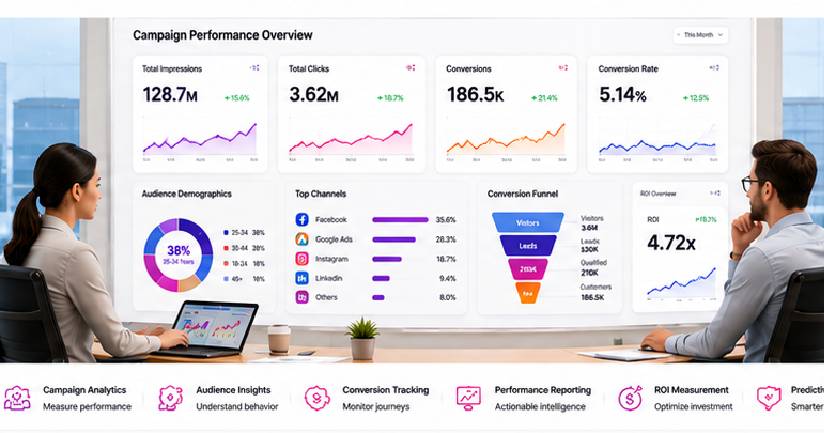
This gives marketing and leadership teams a consolidated commercial view of the event.
Executive Event Intelligence
Leadership may need a simpler view covering:
Event Investment
Priority Accounts Attending
Senior Decision-Makers
Meetings
Opportunities
Pipeline
Revenue
This helps management evaluate which event programs should be:
Continued
Expanded
Changed
Discontinued
AI-Assisted B2B Event Intelligence
Brand Messenger can use AI-assisted analysis to support:
Audience Segmentation
Registration Patterns
Account Prioritization
Lead Scoring
Engagement Analysis
Content Performance
Follow-Up Prioritization
Event Performance Comparison
Where sufficient data exists, predictive models may also support:
Attendance Forecasting
Lead Prioritization
Opportunity Identification
AI should support marketing and sales decision-making rather than be treated as a guarantee of commercial outcomes.
Complete B2B Event Demand Generation Workflow
Brand Messenger can manage the marketing journey as:
Business Goal
↓
Target Market
↓
Target Accounts
↓
Event Concept
↓
Content & Speakers
↓
Audience Campaign
↓
Registration
↓
Event Experience
↓
Lead Capture
↓
Qualification
↓
CRM
↓
Marketing Automation
↓
Sales Handoff
↓
Opportunity
↓
Pipeline
↓
Revenue
↓
Measurement & Optimization
This transforms the event from an isolated activity into a measurable B2B growth channel.
B2B Events & Conferences Marketing vs. Event Management
Brand Messenger positions these as related but separate services.
Event Management
Focuses on planning and executing the event itself, including:
Venue
Logistics
Technology
Production
Registration Operations
On-Site Management
B2B Events & Conferences Marketing
Focuses on the commercial marketing engine around the event:
Target Accounts
Demand Generation
Audience Acquisition
Executive Outreach
Registration
Lead Generation
CRM
Lead Nurturing
Pipeline
Attribution
Revenue
The two disciplines can work together, but they solve different problems.
Event Management asks:
"Was the event delivered successfully?"
B2B Event Marketing asks:
"Did the event reach the right business audience and create measurable commercial opportunity?"
Industries We Serve
Brand Messenger B2B Events & Conferences Marketing can support:
Technology & SaaS
AI & Automation
Cybersecurity
Telecommunications
Financial Services
Banking
Insurance
Professional Services
Consulting
Legal Services
Healthcare
Pharmaceutical
Industrial & Manufacturing
Engineering
Energy
Infrastructure
Construction
Real Estate
Logistics
Automotive
Education
Media
Government Technology
Enterprise Services
B2B Startups & Scale-Ups
Benefits of B2B Events & Conferences Marketing
Brand Messenger helps organizations:
Reach senior decision-makers
Engage target accounts
Generate B2B demand
Build qualified lead pipelines
Create executive relationships
Position executives as thought leaders
Build industry authority
Educate complex buying groups
Accelerate existing opportunities
Support account-based marketing
Strengthen customer relationships
Build partner ecosystems
Improve event registration
Increase audience quality
Capture structured lead data
Connect events with CRM
Automate post-event nurturing
Improve sales handoff
Turn event content into ongoing marketing assets
Measure MQLs, SQLs, opportunities, and pipeline
Connect event investment with revenue where measurable
Why Choose Brand Messenger?
Brand Messenger combines B2B Marketing, Demand Generation, Account-Based Marketing, Event Marketing, Executive Engagement, Content, Media Planning, AdTech, MarTech, CRM, Marketing Automation, Lead Management, Revenue Marketing, and Business Intelligence within one connected B2B event framework.
We do not approach business events as simply:
Book Venue → Invite People → Hold Event → Send Thank You Email
We approach them as:
Target Accounts → Audience Strategy → Event Proposition → Content → Promotion → Registration → Engagement → Lead Intelligence → Nurturing → Sales → Pipeline → Revenue
Our B2B Events & Conferences Marketing capabilities span Executive Roundtables, Industry Conferences, Business Summits, Networking Events, Customer Forums, Executive Briefings, ABM Events, audience acquisition, lead generation, CRM integration, post-event nurturing, sales handoff, attribution, and event ROI measurement.
Because this service operates across the wider Brand Messenger B2B Marketing, Event, Media, AdTech, MarTech, Content, Sales Enablement, and Analytics ecosystem, organizations can connect every business event with their larger commercial growth strategy.
The result is not simply a professionally promoted conference.
It is a B2B demand-generation environment designed to attract the right companies, engage the right decision-makers, create meaningful business conversations, strengthen customer relationships, generate qualified opportunities, and turn events into measurable pipeline growth.
Bring the Right People Together. Start the Right Conversations. Build the Right Relationships. Turn Every B2B Event into Business Growth.