




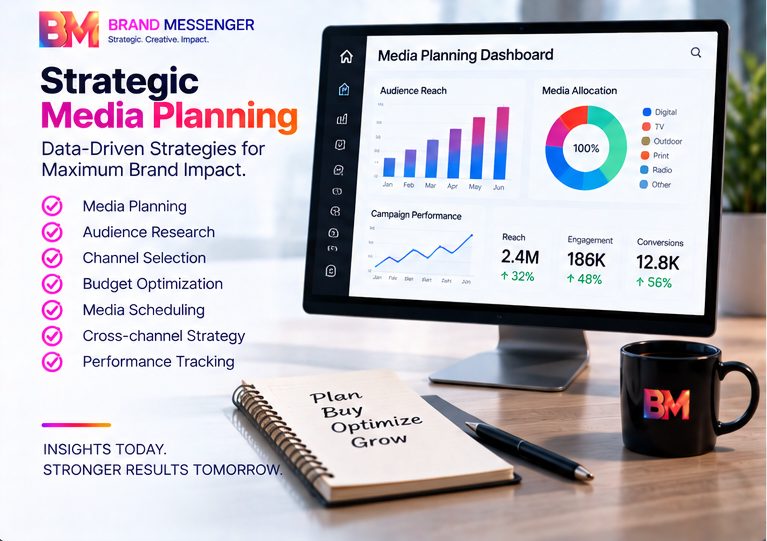
Put the Right Message in the Right Place. Reach the Right Audience. Make Every Media Investment Work Harder.
Strong advertising is not only about great creative.A powerful campaign can still underperform if the media strategy is weak, the audience is poorly defined, the budget is allocated incorrectly, placements are poorly selected, timing is wrong, or different channels are not coordinated.
That is why Media Planning & Buying should operate as a dedicated advertising discipline.
At Brand Messenger, our Media Planning & Buying services help organizations determine where to advertise, who to reach, how much to invest, when campaigns should run, which channels should work together, and how media performance should be measured and optimized.
We separate the creative function from the media function while making sure both remain strategically connected.
Creative answers:
What should the brand say?
Media Planning & Buying answers:
Who should see it? Where should they see it? When should they see it? How often? At what cost? And through which combination of channels?
Our capabilities cover Media Planning, Media Buying, Budget Planning, Audience Planning, Media Scheduling, Cross-Channel Planning, media negotiations, placement strategy, campaign pacing, performance monitoring, and media optimization.
Our approach connects:
Business Objective → Audience → Media Strategy → Budget → Channel → Placement → Schedule → Buying → Delivery → Measurement → Optimization
Plan Smarter. Buy Better. Reach the Right Audience. Maximize Every Media Investment.
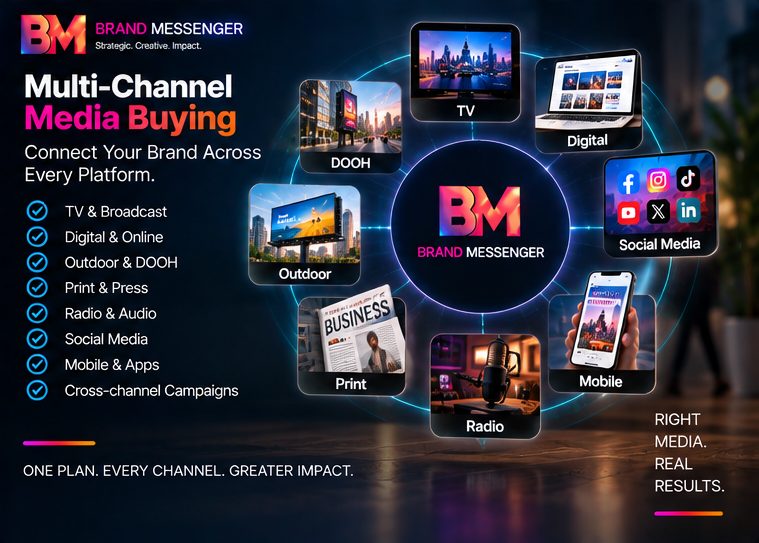
Our Media Planning & Buying Services
Brand Messenger provides comprehensive media capabilities across:
Media Planning
Media Buying
Budget Planning
Audience Planning
Media Scheduling
Cross-Channel Planning
Media Strategy
Channel Selection
Media Mix Planning
Reach & Frequency Planning
Geographic Media Planning
Local Media Planning
Regional Media Planning
National Media Planning
International Media Planning
Campaign Flighting
Daypart Planning
Placement Planning
Publisher Selection
Platform Selection
Media Inventory Evaluation
Media Rate Evaluation
Media Negotiation Support
Media Booking Coordination
Programmatic Media Buying
Digital Media Buying
Social Media Buying
Search Media Planning
Display Media Buying
Video Advertising Planning
Cinema Media Planning
DOOH Media Planning
Outdoor Media Buying
Print Media Planning
Broadcast Media Planning
Sponsorship Media Planning
Retail Media Planning
Native Media Planning
Mobile Media Planning
Connected TV & OTT Planning
Digital Audio Planning
Campaign Pacing
Media Performance Monitoring
Media Optimization
Media Attribution
Media Reporting
Media Investment Analysis
Media Planning
Build the Media Strategy Before Spending the Budget
Media Planning determines how advertising investment should be structured to support the campaign objective.
Brand Messenger develops Media Plans around:
Business Objectives
Marketing Objectives
Campaign Objectives
Target Audience
Customer Journey
Market
Geography
Media Consumption
Campaign Timing
Creative Formats
Budget
Measurement Requirements
The planning process can operate as:
Objective → Audience → Market → Channel → Placement → Schedule → Budget → Measurement
A strong media plan provides the foundation for disciplined media buying.
Media Strategy
Turn Business Objectives into a Media Investment Framework
Before choosing individual platforms or publishers, Brand Messenger establishes the wider media strategy.
A media strategy can define:
Campaign Purpose
Primary Audience
Secondary Audiences
Geographic Priorities
Channel Roles
Customer Journey Stage
Media Mix
Campaign Duration
Reach Requirements
Frequency Requirements
Investment Priorities
Measurement Framework
For example, a product-launch campaign may require:
High-Reach Media → Awareness
Video & Social → Storytelling
Display & Programmatic → Consideration
Search → Intent Capture
Remarketing → Conversion
Each channel should have a specific role rather than being included simply because it is available.
Media Buying
Turn Media Strategy into Real Advertising Placements
Media Buying is the process of acquiring advertising inventory across selected media channels.
Brand Messenger can coordinate buying across appropriate environments such as:
Digital Advertising
Search
Social Media
Display
Programmatic
Video
Native Advertising
Retail Media
Connected TV
OTT
Digital Audio
DOOH
Outdoor
Cinema
Broadcast
Sponsorships
Events
Publisher Networks
Media Buying can involve:
Platform-Based Buying
Programmatic Buying
Publisher Direct Buying
Network Buying
Media Owner Coordination
Negotiated Placements
Reserved Inventory
Auction-Based Buying
The buying method depends on the media channel, market, campaign, inventory, and objectives.
Media Buying Strategy
Buy for Business Outcomes, Not Simply for Available Inventory
Not every available placement is valuable.
Brand Messenger evaluates media according to factors such as:
Audience Fit
Geographic Relevance
Placement Quality
Media Environment
Estimated Reach
Frequency
Cost
Format
Campaign Objective
Historical Performance
Brand Suitability
Conversion Potential where measurable
The objective is to identify the most appropriate combination of:
Audience + Inventory + Cost + Context + Performance
rather than simply maximizing impression volume.
Media Budget Planning
Allocate Investment According to Strategy and Opportunity
Budget Planning determines how available advertising investment should be distributed.
Brand Messenger can structure budgets across:
Channels
Platforms
Markets
Campaign Phases
Audience Segments
Creative Formats
Geographic Regions
Prospecting
Remarketing
Brand Activity
Performance Activity
A campaign budget might be divided according to:
Awareness → Consideration → Conversion → Retention
or:
Digital → Outdoor → Cinema → Social → Search
depending on campaign requirements.
Budget Planning helps ensure that investment supports the wider marketing objective rather than being divided arbitrarily.
Media Investment Allocation
Put More Budget Where It Can Create More Value
Brand Messenger can analyze investment allocation across channels and campaign stages.
This may involve evaluating:
Cost per Thousand Impressions
Cost per Click
Cost per View
Cost per Lead
Cost per Acquisition
ROAS
Reach
Frequency
Audience Quality
Conversion
Revenue Contribution
The objective is to balance:
Reach + Efficiency + Performance + Strategic Importance
rather than judging every media channel according to one metric.
Fixed vs. Flexible Media Budgets
Some campaigns require fixed channel allocations.
Others benefit from more flexible budget movement.
Brand Messenger can structure media investment as:
Fixed Allocation
Defined budget per channel or market.
Performance-Based Allocation
Budget adjusted according to results.
Hybrid Allocation
Core channel investment remains fixed while part of the budget remains flexible for optimization.
This allows media strategy to remain disciplined while still responding to performance.
Audience Planning
Start with the People You Need to Reach
Media should be planned around audiences rather than simply around platforms.
Brand Messenger can develop Audience Planning using appropriate factors such as:
Demographics
Geography
Interests
Behavior
Purchase Intent
Business Role
Industry
Customer Lifecycle
Existing Customers
Prospects
Website Visitors
CRM Segments
First-Party Audiences
Contextual Audiences
Audience Planning can answer:
Who are we trying to reach?
Where can we reach them?
Which media environments are most relevant?
Which message should each audience receive?
Primary & Secondary Audience Planning
Campaigns often have more than one audience.
Brand Messenger can structure:
Primary Audience
The most important audience for the campaign objective.
Secondary Audience
Additional audiences who may influence or contribute to the campaign outcome.
Existing Customers
Audiences requiring retention, upsell, or cross-sell.
High-Value Audiences
Segments requiring prioritized investment.
Excluded Audiences
Customers or segments that should not receive particular campaigns.
This improves media efficiency and customer relevance.
First-Party Audience Planning
Use Customer Data to Improve Media Decisions
Where appropriate data and permissions are available, Brand Messenger can connect media planning with first-party customer information.
Sources may include:
CRM
CDP
Website
Customer Portal
Purchase Data
Marketing Automation
Loyalty Systems
First-party audiences can support:
Customer Match
Remarketing
Customer Exclusion
High-Value Audiences
Win-Back Audiences
Cross-Sell Audiences
Lookalike Audience Development where supported
This connects Media Planning with the wider Brand Messenger MarTech ecosystem.
Customer Journey Media Planning
Use Different Media for Different Stages of the Journey
A single media channel rarely performs every marketing role equally well.
Brand Messenger can plan media around the customer journey.
Awareness
Video • DOOH • Display • Social • Cinema • Broadcast
Consideration
Display • Native • Social • Content • Video
Intent
Search • Retail Media • Comparison Environments
Conversion
Search • Retargeting • Paid Social • Display
Retention
CRM Audiences • Social • Display • Customer Media
Win-Back
Retargeting • Display • Social • Email-connected audiences
The objective is to assign each channel a defined role.
Media Mix Planning
Build the Right Combination of Channels
Media Mix Planning determines how different advertising channels should work together.
Brand Messenger can plan combinations involving:
Search
Social
Display
Programmatic
Video
Mobile
Native
Retail Media
Connected TV
OTT
Digital Audio
DOOH
Outdoor
Cinema
Broadcast
Sponsorship
Events
A strong media mix considers both:
What each channel does well
and:
How the channels reinforce one another
Cross-Channel Planning
Make Every Channel Work as Part of One Campaign
Cross-Channel Planning connects multiple media channels under one campaign strategy.
For example:
DOOH → Builds Awareness
Video → Tells the Story
Social → Creates Engagement
Display → Maintains Visibility
Search → Captures Intent
Remarketing → Brings Audiences Back
CRM → Continues the Relationship
This creates a coordinated customer experience instead of isolated campaigns.
Integrated Media Journey
A connected media campaign can operate as:
Outdoor / Video
↓
Brand Awareness
↓
Social / Display
↓
Engagement
↓
Search / Website
↓
Intent
↓
Remarketing
↓
Conversion
↓
CRM / Marketing Automation
↓
Customer Growth
This connects Media Planning with the entire marketing lifecycle.
Channel Selection
Choose Channels According to Purpose, Not Popularity
A channel should not be selected simply because competitors use it or because it is currently popular.
Brand Messenger evaluates potential channels according to:
Campaign Objective
Audience
Customer Journey
Market
Creative Requirements
Reach
Frequency
Cost
Measurement
Brand Environment
Conversion Opportunity
For example:
Search
High-intent demand capture.
Social
Audience targeting and engagement.
Display
Visual reach and remarketing.
Programmatic
Automated media access and audience-driven buying.
DOOH
Location-based public visibility.
Cinema
Immersive big-screen impact.
Video
Storytelling and awareness.
Retail Media
Purchase-proximate advertising.
Each channel should earn its place in the media plan.
Digital Media Planning & Buying
Brand Messenger can plan and coordinate media across digital channels including:
Google Ads
Meta Advertising
LinkedIn Advertising
TikTok Advertising
Search
Display
Programmatic
Video
Mobile
Native
Retail Media
Digital Audio
Connected TV
OTT
Digital media enables greater flexibility in:
Audience Targeting
Budget Adjustment
Campaign Pacing
Creative Testing
Conversion Tracking
Optimization
Digital Buying can operate alongside traditional and physical media as part of a wider integrated plan.
Search Media Planning
Capture Active Demand
Search advertising can play a different role from awareness-oriented channels.
Brand Messenger can plan Search Media around:
Branded Search
Non-Branded Search
Product Search
Service Search
Competitor Context where appropriate
Geographic Intent
Commercial Intent
Search investment can be coordinated with broader awareness activity.
For example:
DOOH / Video / Social → Increased Interest → Search Demand → Conversion
This helps connect brand-building media with demand capture.
Social Media Buying
Reach Audiences Inside Social Environments
Brand Messenger can plan paid social media according to:
Audience
Platform
Creative Format
Funnel Stage
Campaign Objective
Market
Budget
Paid social can support:
Awareness
Engagement
Traffic
Leads
Conversion
Remarketing
App Promotion
Customer Growth
Social media buying can be coordinated with Brand Messenger's Social & Community Marketing Technology services.
Display Media Buying
Display media can support:
Awareness
Prospecting
Retargeting
Product Promotion
Lead Generation
Conversion Support
Brand Messenger can plan display inventory across:
Advertising Networks
Publishers
Websites
Apps
Programmatic Exchanges
Google Display Network
Display buying can connect with creative formats such as Banner Ads, Rich Media, HTML5 Ads, and Responsive Ads.
Programmatic Media Buying
Use Technology to Automate Eligible Media Transactions
Brand Messenger can connect Media Buying with its Programmatic Advertising Technology capabilities.
Programmatic environments may use:
Demand-Side Platforms
Ad Exchanges
Private Marketplaces
Programmatic Direct
Real-Time Bidding
Programmatic Guaranteed arrangements where available
The workflow can become:
Audience → Inventory → Bid → Impression → Engagement → Measurement → Optimization
Programmatic buying can support Display, Video, Mobile, CTV, DOOH, Audio, and other eligible inventory depending on platform and market.
Video Media Planning
Use Video Where Storytelling Matters
Brand Messenger can plan video media across:
Online Video
Social Video
Connected TV
OTT
Publisher Video
Streaming Environments
Cinema
Other Eligible Video Inventory
Video planning can consider:
Audience
Content Environment
Duration
Device
Completion Rates
Reach
Frequency
Creative Storytelling
Video may play a particularly important role in brand-awareness and product-launch campaigns.
Connected TV & OTT Planning
Bring Digital Media Strategy into Television-Like Environments
Connected TV and OTT advertising can combine large-screen viewing with digital media technology.
Brand Messenger can plan campaigns according to available:
Streaming Inventory
Audience Options
Geographic Markets
Content Environments
Programmatic Buying Opportunities
Measurement Capabilities
These channels can form part of broader:
Video + Digital + TV + Cross-Channel Media Plans
Digital Audio Media Planning
Brand Messenger can also incorporate digital audio where relevant.
Potential environments may include:
Music Streaming
Podcasts
Digital Radio
Audio Networks
Digital Audio can support:
Reach
Brand Awareness
Contextual Advertising
Audience-Based Campaigns
Frequency Extension
It can complement video, display, social, and outdoor campaigns.
Digital Out-of-Home Media Planning
Connect Public-Space Advertising with Digital Media Strategy
Brand Messenger can plan DOOH campaigns across:
LED Billboards
Digital Billboards
Smart Screens
Digital Signage
Transit Displays
Airport Screens
Shopping Mall Screens
Venue Displays
Programmatic DOOH
Planning can consider:
Location + Audience + Time + Context + Creative
DOOH can also be integrated with mobile, social, search, and digital retargeting strategies.
Cinema Media Planning
Use Cinema as a Dedicated Advertising Environment
Brand Messenger treats Cinema Advertising as a specialist media channel.
Cinema media planning can consider:
Cinema Locations
Theatre Networks
Film Environment
Campaign Period
Geographic Market
Audience Relevance
Pre-Roll Inventory
Movie Promotion Opportunities
Cinema can complement:
DOOH
Social
Video
Entertainment Marketing
Product Launch Campaigns
Outdoor Media Planning & Buying
Traditional outdoor remains valuable for continuous public visibility.
Brand Messenger can plan:
Billboards
Transit Advertising
Street Furniture
Building Media
Airport Advertising
Venue Advertising
Vehicle Advertising
Outdoor planning can consider:
Traffic
Location
Market
Visibility
Campaign Duration
Audience Environment
Creative Requirements
Traditional outdoor can operate alongside DOOH within one Out-of-Home media strategy.
Print Media Planning
Where appropriate, Brand Messenger can plan advertising across:
Newspapers
Magazines
Trade Publications
Industry Journals
Local Publications
Specialist Publications
Print can be particularly relevant for:
Corporate Campaigns
B2B Audiences
Industry Marketing
Luxury
Local Campaigns
Public Notices
Specialist Audience Reach
Print planning should consider readership, circulation, audience relevance, placement, format, and campaign objective.
Broadcast Media Planning
Brand Messenger can plan media across appropriate broadcast environments such as:
Television
Radio
Broadcast can support:
Large-Scale Awareness
Product Launches
Consumer Campaigns
Local Campaigns
Public Awareness
Broadcast planning may consider:
Audience
Program
Time
Market
Frequency
Creative Format
Campaign Duration
It can also operate alongside digital media through integrated campaign planning.
Retail Media Planning
Reach Customers Closer to Purchase
Retail Media can support product brands across environments where audiences are already shopping.
Brand Messenger can plan media across suitable:
Retail Websites
Marketplaces
Retail Apps
Sponsored Product Environments
Retail Display Networks
In-Store Digital Media
Retail media can support:
Product Discovery
Purchase Intent
Product Launches
Promotions
Conversion
It can form an important layer between brand advertising and commerce.
Native Media Planning
Native Advertising integrates promotional content into relevant publishing environments.
Brand Messenger can plan native campaigns across:
Publisher Networks
Sponsored Content
Content Recommendation Platforms
Branded Articles
Content-Led Promotions
Native campaigns can be useful for:
Thought Leadership
Content Marketing
Product Education
B2B Marketing
Consideration
Native media should be clearly presented according to appropriate advertising and publisher requirements.
Sponsorship Media Planning
Build Visibility Through Strategic Associations
Sponsorship can form part of the wider media plan.
Brand Messenger can evaluate opportunities involving:
Events
Conferences
Sports
Entertainment
Awards
Festivals
Content
Publications
Communities
Sponsorship planning can consider:
Audience Fit
Brand Relevance
Visibility
Engagement Opportunities
Content Opportunities
Media Value
This extends Media Planning beyond conventional ad placements.
Geographic Media Planning
Allocate Media According to Market Opportunity
Campaigns may require different levels of investment across different markets.
Brand Messenger can plan:
Local
City, district, or location-specific.
Regional
Multiple cities or regional markets.
National
Broad country-level media.
International
Multiple countries or global markets.
Media investment can be adapted according to:
Market Size
Audience
Product Availability
Business Priority
Media Cost
Campaign Opportunity
Media Scheduling
Deliver Advertising at the Right Time
Media Scheduling determines when campaigns should run.
Brand Messenger can plan around:
Campaign Launch
Product Availability
Seasonal Demand
Events
Customer Behavior
Market Conditions
Promotional Periods
Media Availability
Budget
Scheduling can involve:
Continuous Campaigns
Flighted Campaigns
Pulsing Campaigns
Launch Bursts
Seasonal Campaigns
Event-Driven Campaigns
The schedule should reflect the campaign objective rather than simply divide the budget evenly across time.
Campaign Flighting
Concentrate Media When Greater Impact Is Needed
Flighting allows advertising activity to increase or decrease across different periods.
For example:
Teaser → Launch Burst → Sustained Campaign → Final Push
This is useful for:
Product Launches
Entertainment Releases
Events
Seasonal Sales
Property Launches
Promotional Campaigns
Brand Messenger can allocate budget according to the importance of each campaign stage.
Daypart Planning
Reach Audiences at Relevant Times of Day
Some media channels allow campaigns to run more heavily during specific times.
Brand Messenger can plan dayparts such as:
Morning
Business Hours
Afternoon
Evening
Late Night
Weekdays
Weekends
The appropriate schedule depends on:
Audience Behavior
Product
Media Channel
Location
Customer Context
This can improve both relevance and media efficiency.
Reach & Frequency Planning
Balance Audience Scale with Repetition
Two important media questions are:
How many relevant people should the campaign reach?
and:
How often should they see the message?
Brand Messenger can structure media plans around:
Reach
The size of the audience exposed to advertising.
Frequency
How often the audience may be exposed.
Campaigns with too little frequency may be forgotten.
Campaigns with excessive frequency may create waste or audience fatigue.
Media Planning seeks an appropriate balance based on campaign objectives and available data.
Media Placement Strategy
Evaluate the Environment Around the Advertisement
Where an ad appears can influence how audiences perceive it.
Brand Messenger can consider:
Publisher
Platform
Website
Program
Content
Cinema
Physical Location
Venue
Social Environment
Advertising Format
Placement strategy can help improve:
Relevance
Visibility
Brand Context
Audience Fit
Campaign Performance
Media Inventory Evaluation
Understand What You Are Actually Buying
Brand Messenger can evaluate media inventory according to available information such as:
Format
Audience
Placement
Location
Estimated Reach
Cost
Availability
Campaign Period
Historical Performance
Brand Suitability
This supports better buying decisions and reduces unnecessary media fragmentation.
Media Rates & Negotiation
Improve the Value of Media Investment
Depending on the media environment and buying method, Brand Messenger can help evaluate:
Rate Cards
Media Packages
Inventory Costs
Placement Options
Added Value Opportunities
Volume Opportunities
Campaign Bundles
Negotiated Rates
Some digital inventory is purchased through auctions and automated platforms, while other channels may involve direct negotiation.
Our objective is to improve overall media value---not simply achieve the lowest unit price.
Media Booking & Coordination
Brand Messenger can coordinate the operational side of media activation across relevant partners, publishers, platforms, and media owners.
This can include:
Booking Confirmation
Campaign Dates
Placement Confirmation
Asset Requirements
Creative Deadlines
Technical Specifications
Tracking Requirements
Launch Coordination
Campaign Status
Reporting
This helps connect Media Planning with actual execution.
Creative + Media Alignment
Great Creative Needs the Right Media Environment
Although Brand Messenger keeps Creative Services and Media Planning & Buying as separate specialist disciplines, the two should work closely together.
Media Planning influences:
Ad Format
Duration
Dimensions
Messaging
Audience
Content
CTA
Placement
Creative should therefore be developed with actual media requirements in mind.
The relationship becomes:
Media Strategy ↔ Creative Strategy
not:
Creative First → Find Somewhere to Place It Later
Media Brief to Creative Brief
The media strategy can help inform the creative team about:
Audience
Channel
Format
Placement
Viewing Environment
Customer Journey Stage
Campaign Objective
For example:
DOOH requires fast visual comprehension.
Cinema supports immersive storytelling.
Display requires compact visual messaging.
Social requires platform-appropriate creative.
Search requires intent-driven messaging.
This improves creative relevance across channels.
Cross-Channel Creative Planning
A single campaign idea may require multiple creative executions.
Brand Messenger can coordinate:
Master Campaign Idea
↓
Video Version
Social Version
Display Version
DOOH Version
Cinema Version
Search Copy
Native Content
This preserves brand consistency while adapting creative to the media environment.
Media Buying & Brand Messenger AdTech
Media Planning & Buying connects directly with the Brand Messenger AdTech ecosystem.
AdTech capabilities can support:
Programmatic Advertising
Audience Targeting
Ad Serving
Paid Media Technology
Dynamic Creative
Remarketing
Bid Optimization
Advertising Measurement
Attribution
Advertising Data
Platform Integration
The connected process can become:
Media Plan → Audience → Platform → Buying → Ad Delivery → Measurement → Optimization
This allows the media strategy to move from planning into technology-enabled execution.
Media Planning & Brand Messenger MarTech
MarTech can also improve media planning.
Brand Messenger can connect:
CRM
CDP
Customer Intelligence
Marketing Automation
Customer Journey
Lead Management
Loyalty Data
Marketing Analytics
with Media Planning where appropriate.
For example:
CRM / CDP → Customer Segment → Media Audience → Campaign → Response → CRM
This closes the loop between media investment and customer relationships.
First-Party Data + Media Buying
First-party customer data can help improve paid-media decision-making where supported and appropriately permissioned.
Potential applications include:
Customer Audience Activation
High-Value Customer Segments
Remarketing
Win-Back
Cross-Sell
Customer Suppression
Prospect Modeling
The model becomes:
Customer Data → Audience Intelligence → Media Buying → Advertising → Customer Response → Updated Customer Data
Media Scheduling + Customer Journey
Timing can also be coordinated with customer lifecycle activity.
For example:
Product Launch → Awareness Media
Product Interest → Display / Social
Website Visit → Remarketing
Lead → Marketing Automation
Customer → Loyalty / Expansion Marketing
The media schedule can therefore support the wider customer journey rather than operate independently.
Media Performance Monitoring
Know What Is Happening While the Campaign Is Running
Brand Messenger can monitor available indicators across active media campaigns.
Depending on the channel, metrics may include:
Spend
Impressions
Reach
Frequency
Clicks
Video Views
Engagement
Leads
Conversions
CPA
ROAS
Revenue
Audience Performance
Placement Performance
Media monitoring helps identify:
Underperforming Channels
Strong Audiences
Strong Placements
Budget Pacing Issues
Creative Fatigue
Conversion Opportunities
Media Pacing
Spend the Budget According to the Plan
Campaign budgets should not be exhausted too quickly or remain significantly underused without strategic reason.
Brand Messenger can monitor:
Daily Spend
Weekly Spend
Campaign Spend
Channel Spend
Planned vs. Actual Spend
Campaign Duration
Performance
Pacing decisions can help keep media investment aligned with both schedule and campaign objectives.
Media Optimization
Move from Planned Investment to Smarter Investment
A media plan should not necessarily remain unchanged throughout the campaign.
Where channels allow optimization, Brand Messenger can adjust:
Budget
Audience
Placement
Bids
Geography
Schedule
Frequency
Creative
Channel Mix
Optimization can follow:
Launch → Measure → Compare → Learn → Reallocate → Improve
The goal is to improve performance while maintaining strategic discipline.
Budget Reallocation
If one channel, audience, or placement materially outperforms another, Brand Messenger can evaluate whether part of the budget should be reallocated.
For example:
Channel A → Strong Performance
Channel B → Weak Performance
↓
Performance Review
↓
Budget Reallocation where appropriate
This enables investment to respond to real campaign performance rather than remain rigidly fixed.
Media Attribution
Understand How Different Channels Contribute to Results
Cross-channel campaigns often involve multiple customer touchpoints.
A journey may look like:
DOOH → Social → Display → Search → Website → Conversion
If the final conversion is attributed only to Search, the role of earlier channels may be overlooked.
Brand Messenger can connect Media Planning & Buying with attribution approaches such as:
First-Touch
Last-Touch
Multi-Touch
Campaign Attribution
Channel Attribution
Conversion Path Analysis
Revenue Attribution
The appropriate approach depends on available data and tracking.
Cross-Channel Media Measurement
Compare Channels Within One Performance Framework
Brand Messenger can combine available media data across:
Search
Social
Display
Programmatic
Video
DOOH
Cinema
Outdoor
Retail Media
Native
Other Media
This can help answer:
Which channels create reach?
Which create engagement?
Which generate intent?
Which support conversion?
Which contribute to revenue?
This provides a more meaningful comparison than expecting every media channel to perform the same job.
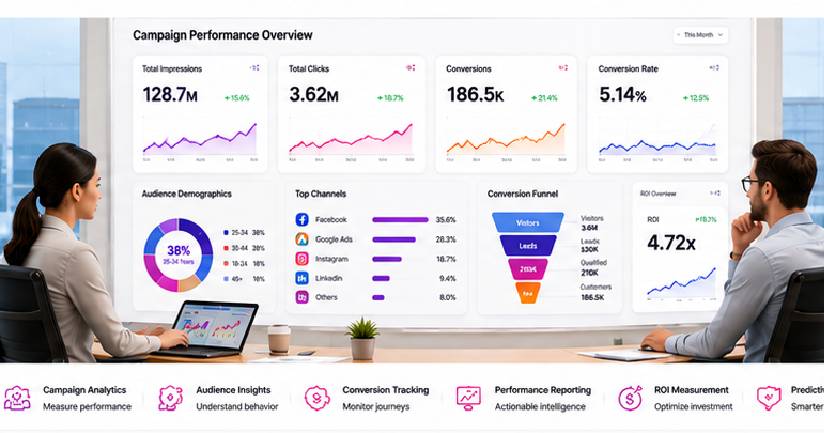
Media Performance Dashboards
Brand Messenger can develop Media Planning & Buying dashboards covering:
Media Investment
Budget • Actual Spend • Remaining Budget
Channel Mix
Search • Social • Display • Video • DOOH • Other Media
Audience
Segments • Reach • Frequency • Geography
Delivery
Impressions • Views • Placements • Inventory
Performance
Clicks • Engagement • Leads • Conversions
Efficiency
CPM • CPC • CPL • CPA
Revenue
ROAS • Revenue Contribution where measurable
Optimization
Best Channels • Best Audiences • Best Placements
This provides marketing teams and management with a more connected view of media investment.
Executive Media Intelligence
Give Leadership a Clear View of Where Advertising Money Goes
Senior management often needs simpler answers than platform-level campaign reports provide.
Brand Messenger can structure Executive Media Intelligence around:
Total Media Investment
Channel Allocation
Market Allocation
Audience Reach
Campaign Performance
Customer Acquisition
Revenue Contribution
Return on Advertising Spend
Media Efficiency
Forecast
Optimization Opportunities
The objective is to translate media data into business decisions.
AI-Assisted Media Planning
Use Intelligence to Support Better Media Decisions
Brand Messenger can apply AI-assisted analysis to areas such as:
Audience Patterns
Historical Campaign Performance
Channel Performance
Budget Allocation
Media Forecasting
Placement Analysis
Creative Performance
Campaign Pacing
Conversion Patterns
AI-assisted systems can help identify patterns and recommendations while strategic decisions remain under human oversight.
Predictive Media Planning
Where sufficient historical data exists, predictive analytics can help estimate potential:
Demand
Campaign Performance
Audience Response
Budget Requirements
Channel Contribution
Conversion Trends
Seasonal Patterns
Predictive outputs should be treated as decision-support tools rather than guaranteed outcomes.
Media Forecasting
Brand Messenger can structure forecasting around:
Budget → Estimated Delivery → Estimated Response → Expected Performance Range
Forecasting may consider:
Historical Data
Audience Size
Media Rates
Market
Campaign Duration
Channel Mix
Seasonal Patterns
The objective is to help organizations understand potential scenarios before committing larger media budgets.
Brand Safety & Media Suitability
Consider the Environment Around the Brand
Media Buying should consider more than cost and reach.
Brand Messenger can incorporate available controls and review processes relating to:
Publisher Quality
Placement Context
Content Environment
Brand Suitability
Exclusion Lists
Platform Controls
Capabilities vary by media channel and platform, but the objective is to reduce avoidable placements that conflict with brand requirements.
Media Planning for Product Launches
A product-launch media strategy can operate across:
Pre-Launch
Teaser • Awareness • Audience Building
Launch
High-Reach Media • Video • Social • Search • DOOH
Conversion
Search • Display • Paid Social • Retail Media
Remarketing
Display • Social • Programmatic
Retention
CRM • Marketing Automation • Customer Media
This creates a structured media lifecycle around the launch.
Media Planning for Brand Awareness
Brand-building campaigns may emphasize:
Reach
Frequency
Visibility
Share of Voice
Video
Outdoor
DOOH
Cinema
Display
Social
The objective is to build stronger mental availability and brand recognition rather than optimize only for immediate clicks.
Media Planning for Performance Campaigns
Performance campaigns may emphasize:
Search
Paid Social
Display
Programmatic
Retargeting
Retail Media
Lead Generation
Performance planning can prioritize:
Conversion
CPA
CPL
ROAS
Revenue
This creates a different media structure from a pure awareness campaign.
Media Planning for B2B Campaigns
B2B Media Planning may involve:
Search
Industry Publications
Native Content
Programmatic
Display
Trade Media
Events
Thought Leadership
Account-Based Media
The campaign can focus on:
Decision-Makers
Industries
Companies
Job Functions
Accounts
Buying Committees
This connects Media Planning with Brand Messenger's B2B and Account-Based Marketing capabilities.
Media Planning for Local Businesses
Brand Messenger can develop geographically focused media plans involving:
Local Search
Paid Social
Local Display
Outdoor
DOOH
Cinema
Local Publications
Local Sponsorship
Geographic Mobile Campaigns
This allows smaller or multi-location organizations to concentrate investment around the markets that matter most.
Global & Multi-Market Media Planning
Organizations operating across countries need media strategies that account for market differences.
Brand Messenger can coordinate:
Global Media Strategy
Country Media Plans
Regional Media Plans
Local Platform Mix
Currency and Budget Allocation
Language Requirements
Market Timing
Creative Adaptation
Local Media Availability
The structure can become:
Global Strategy → Regional Planning → Local Execution
This preserves strategic consistency while allowing market-level flexibility.
Media Operations
Build an Organized Process Around Media Investment
Brand Messenger can connect Media Planning & Buying with MarTech Integration & Marketing Operations.
Media Operations can include:
Media Briefs
Budget Approvals
Campaign Setup
Media Booking
Asset Coordination
Tracking
Launch Approval
Performance Monitoring
Invoice / Spend Reconciliation Support
Reporting
Optimization Reviews
This creates greater operational control over media investment.
Media Planning & Buying Workflow
A complete Brand Messenger media workflow can operate as:
Business Objective
↓
Campaign Objective
↓
Audience Planning
↓
Media Strategy
↓
Channel Selection
↓
Budget Planning
↓
Media Schedule
↓
Creative Requirements
↓
Media Buying
↓
Campaign Activation
↓
Performance Monitoring
↓
Attribution
↓
Optimization
↓
Business Intelligence
This creates one connected process from strategy through performance.
Media Planning & Buying Across Brand Messenger
Media Planning & Buying can connect with:
Brand Strategy
Advertising Strategy
Integrated Advertising
Creative Campaign Development
Digital Advertising
Search Advertising
Social Advertising
Display Advertising
Programmatic Advertising
Native Advertising
Video Advertising
Digital Out-of-Home
Outdoor Advertising
Cinema Advertising
Retail Media
Influencer Marketing
Event & Experiential Marketing
Brand Messenger AdTech
Brand Messenger MarTech
Marketing Analytics & Business Intelligence
Together:
Strategy → Audience → Media → Creative → Buying → Delivery → Measurement → Optimization
Why Media Planning & Buying Should Be Separate from Creative
Creative and Media are closely connected---but they are not the same discipline.
Creative asks:
What is the campaign idea?
What should we say?
How should the brand look?
Which story should we tell?
Which content should we produce?
Media asks:
Who should receive the message?
Which channels should we use?
Where should we buy media?
How much should we spend?
When should campaigns run?
What reach and frequency do we need?
How should budget move between channels?
How should performance be measured?
Brand Messenger therefore maintains clear specialist capabilities for both areas while connecting them through one campaign strategy.
The relationship is:
Creative Excellence + Media Intelligence = Stronger Advertising Performance
Industries We Serve
Brand Messenger Media Planning & Buying can support:
Retail & E-Commerce
Consumer Brands & FMCG
B2B & Enterprise
Technology & SaaS
Telecommunications
Automotive
Financial Services
Real Estate
Travel & Tourism
Airlines
Hospitality
Restaurants
Entertainment & Film
Gaming
Sports
Fashion
Beauty & Lifestyle
Luxury Brands
Healthcare
Education
Professional Services
Events & Exhibitions
Manufacturing & Industrial
Government & Public Awareness Campaigns
Non-Profit Organizations
Startups & Scale-Ups
Benefits of Media Planning & Buying
Brand Messenger helps organizations:
Build media strategies around clear business objectives
Define target audiences before spending
Select the right advertising channels
Create balanced media mixes
Plan cross-channel campaigns
Allocate advertising budgets more strategically
Improve reach and frequency planning
Structure campaign schedules
Coordinate media buying
Evaluate publishers, platforms, and placements
Support media negotiations where applicable
Plan digital and traditional media together
Connect media with customer journeys
Use first-party audiences where appropriate
Integrate media buying with AdTech
Connect media with CRM and CDP
Monitor campaign pacing
Measure channel performance
Reallocate budget according to opportunity
Compare media efficiency
Connect advertising spend with conversion and revenue
Improve media accountability
Give executives clearer visibility into advertising investment
Why Choose Brand Messenger?
Brand Messenger combines Media Strategy, Media Planning, Media Buying, Budget Planning, Audience Planning, Media Scheduling, Cross-Channel Planning, AdTech, MarTech, creative production, campaign management, analytics, attribution, and business intelligence within one connected advertising environment.
We do not approach Media Buying as simply:
Buy Ads → Spend Budget → Report Impressions
We approach media as an investment system:
Objective → Audience → Channel → Budget → Placement → Schedule → Creative → Buying → Delivery → Measurement → Attribution → Optimization
Our Media Planning & Buying capabilities span audience strategy, media mix planning, budget allocation, campaign scheduling, media buying, platform and publisher selection, programmatic buying, cross-channel planning, media monitoring, attribution, and investment optimization.
At the same time, we maintain an important distinction between Creative and Media.
Creative determines how the brand communicates.
Media determines how that communication reaches the market.
By bringing both disciplines together without confusing their roles, Brand Messenger can create campaigns in which creative strategy, audience strategy, media investment, technology, and measurement reinforce one another.
The result is not simply more advertising.
It is a disciplined Media Planning & Buying environment designed to place the right message in the right media, reach the right audience at the right time, control advertising investment, coordinate channels, and continuously improve media performance.
Plan the Audience. Plan the Investment. Buy the Right Media. Measure the Impact. Optimize for Growth.