




Marketing Funnel Optimization
Turn Awareness into Interest. Turn Interest into Opportunity. Turn Opportunity into Conversion. Build a Marketing Funnel Designed for Continuous Growth.
Marketing does not end when an audience sees an advertisement, visits a website or submits a form.
Those interactions are stages within a larger process that moves potential customers from initial awareness through consideration, evaluation, conversion and ultimately an ongoing customer relationship.
The challenge for many organizations is that these stages operate separately. Advertising generates traffic. Content creates engagement. Marketing captures leads. Sales manages opportunities. CRM stores customer information. Automation sends communications. Analytics reports conversions but the complete funnel is not always managed as one connected growth system.
At Brand Messenger, our Marketing Funnel Optimization service connects strategy, audiences, content, campaigns, customer journeys, lead management, CRM, marketing automation, sales pipeline, conversion optimization, analytics and AI-assisted intelligence to improve how customers and prospects progress through the marketing and revenue funnel.
Our five core capabilities are:
TOFU — Top of Funnel
MOFU — Middle of Funnel
BOFU — Bottom of Funnel
Funnel Analysis
Pipeline Optimization
Our wider capabilities can extend across funnel strategy, funnel architecture, audience acquisition, demand generation, lead capture, lead nurturing, lead scoring, lifecycle marketing, conversion paths, funnel drop-off, stage conversion, MQL/SQL management, sales handoff, opportunity progression, CRM integration, marketing automation, personalization, customer journey analytics, conversion optimization, revenue marketing, AI funnel intelligence and executive funnel dashboards.
Our approach connects:
Audience → Awareness → Discovery → Engagement → Consideration → Lead → Qualification → Opportunity → Conversion → Customer → Retention → Growth
The objective is not simply to fill the top of the funnel.
It is:
Build a Connected Path from Market Attention to Measurable Business Outcomes.
What Is Marketing Funnel Optimization?
Marketing Funnel Optimization is the systematic analysis and improvement of how prospects move through defined stages of the marketing and commercial journey.
A simplified funnel may be:
TOFU — Awareness → MOFU — Consideration → BOFU — Decision & Conversion
For B2B and revenue-focused organizations, the funnel may extend further:
Audience → Visitor → Lead → MQL → SQL → Opportunity → Customer → Revenue
And for businesses focused on long-term customer economics:
Acquisition → Customer → Repeat Purchase → Retention → Loyalty → Customer Lifetime Value
Brand Messenger can connect these stages into one broader growth architecture.
TOFU, MOFU & BOFU
The TOFU–MOFU–BOFU framework organizes marketing according to the prospect's general stage of progression.
TOFU
Top of Funnel
Build awareness and attract relevant audiences.
MOFU
Middle of Funnel
Develop interest, engagement and consideration.
BOFU
Bottom of Funnel
Support evaluation, decision and conversion.
The complete progression becomes:
Discover → Understand → Consider → Evaluate → Decide → Convert
Marketing Funnel Optimization Is Not Just Lead Generation
Lead generation focuses on creating leads.
Funnel Optimization examines what happens:
Before the Lead
and
After the Lead
The architecture becomes:
Audience → Traffic → Engagement → Lead → Qualification → Opportunity → Conversion
Therefore:
Lead Generation Creates Opportunities to Enter the Revenue Process.
Funnel Optimization Improves Movement Across the Entire Process.
Brand Messenger Marketing Funnel Optimization Services
Our capabilities can include:
Marketing Funnel Strategy
Funnel Architecture
TOFU Strategy
MOFU Strategy
BOFU Strategy
Full-Funnel Marketing
Audience Acquisition
Awareness Strategy
Demand Generation
Traffic Generation
Content Funnel Strategy
Paid Media Funnel Strategy
Organic Funnel Strategy
Social Funnel Strategy
Lead Capture
Landing Page Strategy
Lead Generation
Lead Qualification
Lead Scoring
Lead Nurturing
MQL Management
SQL Management
Sales Handoff
Opportunity Management
Pipeline Optimization
Funnel Analysis
Funnel Visualization
Funnel Conversion Analysis
Stage Conversion Analysis
Drop-Off Analysis
Funnel Leakage Analysis
Funnel Velocity Analysis
Time-in-Stage Analysis
Conversion Path Analysis
Customer Journey Integration
Funnel Segmentation
Audience Funnel Analysis
Channel Funnel Analysis
Campaign Funnel Analysis
Content Funnel Analysis
Product Funnel Analysis
B2B Funnel Optimization
E-Commerce Funnel Optimization
SaaS Funnel Optimization
Subscription Funnel Optimization
CRM Integration
CDP Integration
Marketing Automation
Customer Journey Orchestration
Personalization
Conversion Rate Optimization
A/B Testing
AI Funnel Intelligence
Predictive Lead Intelligence
Pipeline Analytics
Revenue Marketing
Marketing & Sales Alignment
Funnel KPI Reporting
Executive Funnel Dashboards
Continuous Funnel Optimization
TOFU - Top of Funnel
Build Awareness. Reach Relevant Audiences. Create the Beginning of Demand.
The Top of Funnel represents the earliest stages of the relationship.
Many people at this stage may:
Not know the brand
Not know the product
Be researching a problem
Be discovering possible solutions
Not yet be ready to buy
The objective is therefore not to force immediate conversion from every interaction.
TOFU focuses on:
Awareness → Discovery → Attention → Initial Engagement
TOFU Strategy
Brand Messenger can develop Top-of-Funnel strategies around:
Audience Identification
Market Awareness
Brand Discovery
Demand Generation
Educational Content
Thought Leadership
Search Visibility
Social Discovery
Paid Advertising
Video
Programmatic Advertising
Display Advertising
Native Advertising
Events
PR
Influencer Marketing
Content Distribution
The specific mix depends on the audience and business model.
TOFU Audience Strategy
Before creating awareness, the organization should understand:
Who are we trying to reach?
Brand Messenger can connect TOFU with its Audience Segmentation and Audience Targeting & Advertising Intelligence capabilities.
The architecture becomes:
Market → Audience → Segment → Message → Channel → Awareness
TOFU Content
Top-of-Funnel content can help audiences understand:
A Problem
A Need
A Category
A Trend
An Opportunity
A Brand Perspective
Potential content can include:
Articles
Videos
Social Content
Educational Guides
Research
Thought Leadership
Infographics
Podcasts
Short-Form Content
The objective is to create useful discovery rather than immediately presenting every interaction as a sales pitch.
TOFU Paid Media
Brand Messenger can connect TOFU with:
Programmatic Advertising
Paid Social
Display
Video
CTV / OTT
Native
Search
Digital Audio
DOOH
These channels can help create relevant reach and awareness.
TOFU KPIs
Depending on the objective, potential TOFU indicators can include:
Relevant Reach
Impressions
Website Traffic
New Visitors
Content Engagement
Video Engagement
Audience Growth
Branded Search Trends
Qualified Traffic
TOFU should not automatically be judged solely by immediate purchases.
MOFU - Middle of Funnel
Turn Awareness into Engagement, Understanding and Consideration.
Once a prospect becomes aware of the brand or solution, the next challenge is to deepen the relationship.
MOFU focuses on people who may be:
Researching
Comparing
Learning
Evaluating
Returning to the website
Consuming content
Considering options
The progression becomes:
Awareness → Interest → Engagement → Consideration
MOFU Strategy
Brand Messenger can develop Middle-of-Funnel strategies around:
Lead Capture
Educational Content
Product Education
Solution Content
Case Studies
Webinars
Email Nurturing
Retargeting
CRM Campaigns
Marketing Automation
Customer Journey Orchestration
Personalized Experiences
Comparison Content
Interactive Experiences
Lead Scoring
MOFU should help the prospect make a more informed evaluation.
MOFU Lead Capture
Not every website visitor needs to become a lead immediately.
But where appropriate, Brand Messenger can create lead-capture opportunities through:
Forms
Newsletter Registration
Webinar Registration
Content Downloads
Demo Interest
Event Registration
Consultation Requests
The objective is to create a useful value exchange.
MOFU Lead Nurturing
A captured lead may not be ready to buy.
The relationship may become:
Lead → Educational Content → Engagement → Product Information → Consideration
Brand Messenger can connect this process with Marketing Automation.
MOFU Marketing Automation
Potential automated journeys can include:
Lead Captured → Welcome → Educational Content → Relevant Solution → Case Study → Conversion Opportunity
Automation should respond to customer context rather than simply send more messages.
MOFU Retargeting
Prospects who have already shown appropriate interest may be eligible for retargeting strategies.
Examples can include:
Website Visitors
Product Viewers
Content Engagers
Video Viewers
This connects MOFU with Brand Messenger's Remarketing & Retargeting Technology.
MOFU Lead Scoring
Brand Messenger can help organizations evaluate lead signals such as:
Engagement
Content Interaction
Product Interest
Website Behavior
CRM Information
Business Fit
The architecture becomes:
Lead Data + Behavior + Fit → Lead Score → Qualification Priority
Lead scores should support human and business judgment rather than be treated as unquestionable assessments.
MOFU KPIs
Potential Middle-of-Funnel indicators can include:
Leads
Engaged Leads
Content Engagement
Return Visits
Lead Nurture Progression
MQLs
Demo Interest
Product Exploration
Lead-to-MQL Conversion
The appropriate metrics depend on the funnel design.
BOFU - Bottom of Funnel
Turn Consideration into Decision, Conversion and Revenue.
The Bottom of Funnel contains prospects closer to a defined commercial decision.
They may be:
Comparing Vendors
Reviewing Pricing
Requesting a Demo
Requesting a Proposal
Speaking with Sales
Evaluating Terms
Preparing to Purchase
BOFU focuses on:
Evaluation → Decision → Conversion
BOFU Strategy
Brand Messenger can develop Bottom-of-Funnel strategies around:
Conversion Pages
Product / Service Pages
Pricing Experiences
Demo Requests
Proposal Requests
Consultation
Sales Enablement
Customer Proof
Case Studies
Testimonials
Retargeting
Lead Routing
CRM
Sales Handoff
Conversion Optimization
The goal is to make the decision process clear and reduce unnecessary friction.
BOFU Conversion Experience
A prospect may be ready to convert but still encounter friction.
Potential conversion points include:
Purchase
Checkout
Demo Request
Quote Request
Consultation Booking
Registration
Subscription
Application
Brand Messenger can connect BOFU with Conversion & Experience Optimization.
BOFU Lead Routing
When a prospect becomes sales-ready, speed and context can matter.
The architecture can become:
Qualified Lead → Routing Rules → Appropriate Sales Team → CRM → Follow-Up
This helps reduce leads being lost between marketing and sales.
BOFU Sales Enablement
Marketing can support sales with:
Product Information
Case Studies
Sales Presentations
Proposal Content
Competitive Context
Customer Proof
Relevant Content
This creates stronger continuity between marketing and sales.
BOFU KPIs
Potential indicators can include:
SQLs
Opportunities
Demo Requests
Proposal Requests
Opportunity Conversion
Purchases
Customers
Revenue
Cost per Acquisition
These metrics move closer to commercial outcomes.
Full-Funnel Marketing
Connect TOFU, MOFU and BOFU into One Growth System
Many organizations operate funnel stages independently.
For example:
Advertising Team → TOFU
Content Team → MOFU
Sales Team → BOFU
Brand Messenger can connect them:
TOFU → MOFU → BOFU → Customer
This allows information and strategy to move across the complete funnel.
Full-Funnel Architecture
A broader Brand Messenger architecture can become:
Market → Audience Segmentation → TOFU
Awareness → Discovery → Traffic
↓
MOFU
Engagement → Lead → Consideration → Qualification
↓
BOFU
Evaluation → Opportunity → Conversion
↓
CUSTOMER
Onboarding → Retention → Loyalty → CLV
This extends funnel thinking beyond customer acquisition.
Funnel Analysis
Measure How Prospects Progress from One Stage to the Next
Funnel Analysis examines:
Stage Volume
Stage Conversion
Drop-Off
Progression
Time
Segment Differences
Channel Differences
For example:
100,000 Visitors → 10,000 Leads → 3,000 MQLs → 1,200 SQLs → 500 Opportunities → 200 Customers
The objective is not simply to measure the final 200 customers.
It is to understand what happened throughout the funnel.
Funnel Conversion Rate
Each stage can have its own conversion rate.
For example:
Visitors → Leads
Leads → MQLs
MQLs → SQLs
SQLs → Opportunities
Opportunities → Customers
This helps identify where progression is strong or weak.
Funnel Drop-Off Analysis
Discover Where Potential Customers Stop Progressing
A funnel may show:
10,000 Leads → 5,000 Engaged Leads → 1,000 Qualified Leads
A significant reduction at a particular stage creates a question:
What is happening here?
Analytics identifies the drop-off.
Further investigation is needed to determine why.
Funnel Leakage Analysis
Funnel leakage refers to prospects who disappear from an expected progression.
Potential causes may include:
Poor Follow-Up
Irrelevant Communication
Weak Qualification
Technical Friction
Pricing Concerns
Product Fit
Sales Delays
The data may identify where leakage occurs, but it should not automatically assume the cause.
Funnel Friction Analysis
Brand Messenger can connect Funnel Analysis with Customer Journey Analytics and Conversion Optimization to investigate:
Landing Page Friction
Form Abandonment
Registration Drop-Off
Pricing Page Exits
Checkout Abandonment
Sales Handoff Delays
This creates a broader view of funnel performance.
Funnel Velocity
Understand How Quickly Prospects Move Through the Funnel
Volume alone does not tell the full story.
Two organizations may generate the same number of customers, but one may require:
20 Days
while another requires:
90 Days: Funnel velocity examines the speed of progression.
The architecture becomes:
Stage Entry → Time in Stage → Stage Exit → Next Stage
Time-in-Stage Analysis
Brand Messenger can measure how long prospects remain within:
Lead
MQL
SQL
Opportunity
Proposal
Unusually long time within a stage can indicate an area worth investigating.
Pipeline Optimization
Connect Marketing Funnel Performance with Sales and Revenue.
The marketing funnel often transitions into the sales pipeline.
The architecture becomes:
Marketing Audience → Lead → MQL → SQL → Opportunity → Pipeline → Customer → Revenue
Pipeline Optimization focuses on improving the quality, visibility and movement of commercial opportunities.
Funnel vs. Pipeline
These concepts are related but different.
Marketing Funnel
Covers the broader progression from audience awareness toward conversion.
Sales Pipeline
Tracks active commercial opportunities through the sales process.
Therefore:
The Funnel Develops Demand and Prospects.
The Pipeline Manages Qualified Commercial Opportunities.
Brand Messenger connects both.
Pipeline Stages
Depending on the organization, stages may include:
Qualified Lead → Discovery → Opportunity → Proposal → Negotiation → Closed Won / Closed Lost
Brand Messenger can align these stages with CRM and reporting systems.
Pipeline Optimization Strategy
Potential capabilities can include:
Pipeline Stage Definition
Opportunity Tracking
Lead-to-Opportunity Conversion
Sales Handoff
Pipeline Velocity
Opportunity Aging
Pipeline Value
Pipeline Conversion
Sales Follow-Up
Marketing Influence
The objective is to create greater visibility across the marketing-to-sales transition.
Marketing & Sales Alignment
Create One Connected Revenue Process
Marketing may define:
Qualified Lead: one way.
Sales may define it differently.
This creates friction.
Brand Messenger can help establish shared definitions for:
Lead
MQL
SQL
Opportunity
Customer
The architecture becomes:
Marketing Definition + Sales Definition → Shared Revenue Funnel
MQL - Marketing Qualified Lead
An MQL is typically a lead meeting agreed marketing qualification criteria.
Criteria can involve:
Fit
Engagement
Intent Signals where appropriately supported
Customer / Account Characteristics
Definitions should be customized to the organization.
SQL - Sales Qualified Lead
An SQL is generally a lead considered appropriate for active sales engagement according to agreed criteria.
The transition becomes:
Lead → MQL → SQL → Opportunity
Clear definitions reduce confusion between marketing and sales.
Lead Scoring & Funnel Optimization
Brand Messenger can connect:
Customer / Account Fit
Behavioral Signals
Engagement
↓
Lead Scoring
↓
Funnel Progression
Lead scoring can support prioritization but should be continuously validated against actual outcomes.
Predictive Lead Scoring
AI models can use historical patterns to estimate which leads may be more likely to progress.
The architecture becomes:
Historical Leads + Outcomes → AI Model → Lead Propensity Estimate
Predictions are probabilities—not guarantees.
Funnel Segmentation
Different Audiences May Follow Different Funnels
A single funnel does not necessarily represent every customer.
Brand Messenger can compare funnels across:
Audience Segments
Customer Types
Markets
Products
Channels
Campaigns
Devices
New vs. Returning Customers
This connects Funnel Optimization with Audience Segmentation.
B2B Funnel Optimization
B2B funnels may involve longer cycles:
Awareness → Content → Lead → Webinar → MQL → Demo → SQL → Opportunity → Proposal → Customer
Brand Messenger can connect marketing, CRM and sales information across this process.
Account-Based Marketing Funnel
For ABM:
Target Account → Engagement → Buying Group → Qualified Account → Opportunity → Customer
This differs from conventional individual-lead funnels.
Brand Messenger can structure account-level funnel reporting where appropriate.
E-Commerce Funnel Optimization
An e-commerce funnel may become:
Audience → Website → Product View → Cart → Checkout → Purchase
Brand Messenger can analyze:
Product View Rate
Add-to-Cart
Checkout
Purchase
Abandonment
This connects with Conversion & Experience Optimization.
SaaS Funnel Optimization
A SaaS funnel may include:
Visitor → Signup → Trial → Activation → Paid Customer → Renewal
This requires both acquisition and product/customer lifecycle measurement.
Subscription Funnel Optimization
Subscription businesses may analyze:
Discovery → Trial / Signup → Subscription → Renewal → Retention
The funnel therefore continues after the initial conversion.
Funnel + Customer Journey Analytics
These services complement one another.
Funnel Analytics
Measures movement through predefined stages.
Customer Journey Analytics
Examines the actual paths customers take between and around those stages.
For example:
Funnel
Visitor → Lead → Customer
Actual Journey
Social → Website → Exit → Search → Content → Email → Demo → Sales → Customer
Therefore:
The Funnel Shows Progression.
The Journey Shows the Path.
Funnel + Attribution
Attribution answers:
Which marketing interactions contributed to the conversion?
Funnel Optimization asks:
How effectively did prospects progress through the stages?
These are separate but complementary analytical disciplines.
Funnel + Marketing Dashboard & KPI Reporting
Brand Messenger can create executive funnel dashboards showing:
TOFU Volume
MOFU Engagement
BOFU Conversion
Leads
MQLs
SQLs
Opportunities
Customers
Stage Conversion
Drop-Off
Pipeline
Revenue
This translates funnel complexity into management visibility.
Funnel + First-Party Data Strategy
First-party data can provide a stronger foundation for funnel measurement.
The architecture becomes:
Website + CRM + CDP + Commerce + Marketing Automation → Funnel Data → Funnel Intelligence
This can reduce dependence on disconnected platform-level reporting.
Funnel + CRM
CRM is particularly important once anonymous marketing interactions become known leads or customers.
The relationship becomes:
Marketing → Lead → CRM → Qualification → Opportunity → Customer
This extends funnel measurement into actual sales outcomes.
Funnel + CDP
A Customer Data Platform can help connect appropriate customer interactions across:
Website
App
CRM
Commerce
Campaigns
This can provide richer context around funnel progression.
Funnel + Marketing Automation
Marketing Automation can help move appropriate prospects through the funnel.
For example:
Lead → Nurture → Engagement → MQL
or:
MQL → Product Education → Demo → SQL
Automation should support the customer's stage rather than simply increase message volume.
Funnel + Customer Journey Orchestration
Journey Orchestration can determine appropriate next experiences according to:
Funnel Stage
Customer Behavior
Audience Segment
Engagement
Business Rules
The architecture becomes:
Current Funnel Stage → Customer Context → Next Experience → Progression
Funnel + Personalization
A TOFU visitor may require educational information.
A BOFU prospect may require:
Pricing
Product Detail
Demo
Consultation
Brand Messenger can connect funnel stage with relevant personalization.
The principle is:
Match the Experience to the Stage of the Decision.
Funnel + Conversational AI
AI customer assistants can help prospects progress through the funnel.
For example:
Visitor → AI Assistant → Product Information → Demo Request
or:
Prospect → AI Assistant → FAQ → Pricing → Sales Handoff
Conversational AI should use approved information and support human escalation where necessary.
Funnel + Content Marketing
Content can be structured according to funnel stage.
TOFU Content
Education • Awareness • Thought Leadership
MOFU Content
Guides • Comparisons • Webinars • Case Studies
BOFU Content
Product Information • Proof • Demo • Proposal Support
This creates a Content Funnel Strategy.
Funnel + Paid Media
Paid media can operate across the entire funnel.
TOFU
Awareness and audience acquisition.
MOFU
Retargeting and consideration.
BOFU
High-intent and conversion-focused campaigns.
Brand Messenger can connect paid-media strategy with funnel objectives.
Funnel + Programmatic Advertising
Programmatic can support:
TOFU → Audience Reach
MOFU → Re-Engagement
BOFU → Eligible Retargeting / Conversion Strategies
depending on audience, inventory and campaign design.
Funnel + Budget & Bid Optimization
Advertising investment can be allocated according to funnel objectives.
The architecture can become:
TOFU Budget
MOFU Budget
BOFU Budget
↓
Full-Funnel Media Investment
Brand Messenger can evaluate performance without assuming every stage should produce identical immediate-return metrics.
Funnel + Conversion Optimization
Conversion Rate Optimization becomes especially important around BOFU.
Potential areas include:
Landing Pages
Forms
Checkout
Demo Requests
Pricing
Registration
The relationship becomes:
Funnel Analysis → Friction Point → CRO → Testing → Measurement
Funnel + A/B Testing
A/B testing can evaluate changes at different funnel stages.
For example:
TOFU → Creative Test
MOFU → Content / Landing Page Test
BOFU → Form / Conversion Test
The objective is to test hypotheses rather than make changes based solely on assumptions.
Funnel + Customer Lifetime Value
The highest-converting funnel is not automatically the funnel that creates the highest long-term customer value.
Brand Messenger can connect:
Funnel → Customer Acquisition → Retention → CLV
This creates a stronger enterprise perspective.
Funnel Quality vs. Funnel Volume
Consider:
Funnel A
10,000 Leads → 100 Customers
Funnel B
3,000 Leads → 200 Customers
More leads do not automatically mean better funnel performance.
Brand Messenger can analyze both:
Volume
and
Quality / Progression
Lead Quality
Lead generation should not be optimized solely around the lowest cost per lead.
Brand Messenger can connect downstream outcomes such as:
Lead → MQL → SQL → Opportunity → Customer
This creates a better measure of acquisition quality.
Pipeline Quality
A large pipeline does not automatically mean strong future revenue.
Pipeline analysis can consider:
Opportunity Stage
Opportunity Age
Conversion History
Qualification
Pipeline Movement
Forecasting should remain appropriately cautious.
Funnel Velocity + Revenue
A stronger revenue funnel considers:
Volume × Conversion × Value × Velocity
For example:
More opportunities can help.
Higher conversion can help.
Greater customer value can help.
Faster progression can help.
The balance depends on the business model.
Revenue Funnel
For enterprise organizations, Brand Messenger can extend the marketing funnel into:
Audience → Lead → MQL → SQL → Opportunity → Customer → Revenue → Retention → Expansion → Customer Lifetime Value
This connects marketing with broader revenue operations.
Pipeline Value Reporting
CRM information can support reporting around:
Number of Opportunities
Pipeline Value
Stage Distribution
Opportunity Aging
Conversion
This helps management understand what exists beyond marketing lead volume.
Revenue Attribution vs. Pipeline Reporting
Pipeline Reporting shows:
What opportunities and value exist within the pipeline?
Attribution asks:
How should marketing contribution to outcomes be evaluated?
These should not be conflated.
Funnel Performance Visualization
Brand Messenger can create funnel visualizations such as:
100,000 Audience Visits → 20,000 Engaged Visitors → 5,000 Leads → 2,000 MQLs → 800 SQLs → 400 Opportunities → 150 Customers
Each stage can show:
Volume
Conversion
Drop-Off
Trend
This makes funnel performance easier to understand.
Funnel KPI Framework
Potential KPIs can include:
TOFU
Reach • Traffic • New Visitors • Engagement
MOFU
Leads • MQLs • Return Visits • Nurture Progression
BOFU
SQLs • Opportunities • Conversion • Customers
Pipeline
Pipeline Value • Opportunity Conversion • Velocity
Revenue
Revenue • CAC • Customer Value
The KPI framework should reflect the actual business model.
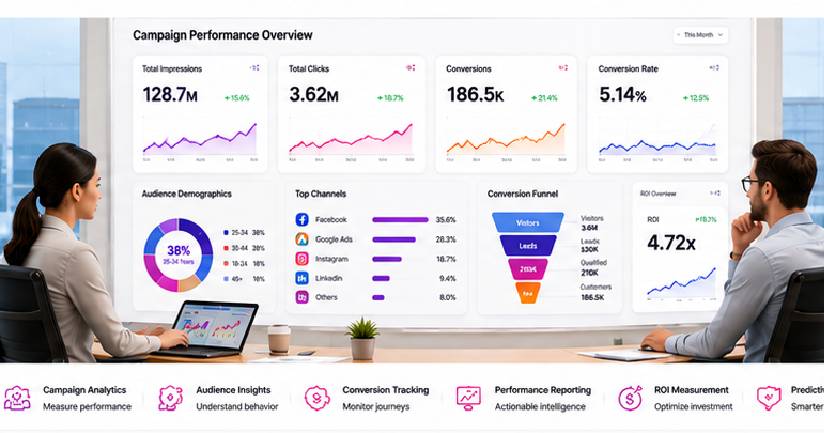
Funnel Dashboard
A Brand Messenger Funnel Dashboard can include:
Funnel Overview
TOFU → MOFU → BOFU
Stage Performance
Volume • Conversion • Drop-Off
Lead Funnel
Lead → MQL → SQL
Pipeline
Opportunities • Value • Stage • Velocity
Channels
Search • Social • Programmatic • Email • Other Sources
Revenue
Customers • Revenue • CAC
Customer Value
Retention • Repeat Purchase • CLV
Executive Funnel Reporting
Leadership can receive a simplified view focused on:
Funnel Volume
Stage Conversion
Major Drop-Off
Lead Quality
Pipeline
Customers
Revenue
Funnel Trends
This connects with Brand Messenger's Marketing Dashboard & KPI Reporting service.
AI Funnel Intelligence
Use AI to Discover Patterns Across Funnel Performance
AI can help analyze:
Stage Conversion
Lead Patterns
Funnel Drop-Off
Pipeline Movement
Segment Differences
Campaign Differences
Historical Trends
The architecture becomes:
Funnel Data → AI Analysis → Pattern Discovery → Human Interpretation → Optimization Decision
AI Funnel Segmentation
AI can identify clusters of prospects following similar progression patterns.
Examples might include:
Fast-Progressing Leads
Research-Heavy Leads
Repeated Visitors
High-Abandonment Groups
These groups should be defined by measurable behavior rather than unsupported assumptions about motivation.
Predictive Funnel Intelligence
Historical information can support estimates around:
Lead Progression
Conversion Propensity
Pipeline Progression
Drop-Off Risk
These remain probabilistic estimates—not guaranteed future outcomes.
Funnel Anomaly Detection
AI-assisted monitoring can identify unusual changes such as:
Sudden Lead Decline
MQL Conversion Change
Unexpected BOFU Drop-Off
Pipeline Slowdown
An anomaly indicates something worth investigating; it does not automatically identify the cause.
Funnel Optimization Framework
Brand Messenger can apply a continuous framework:
Measure → Identify Drop-Off → Investigate → Prioritize → Design Improvement → Test → Measure → Learn → Optimize
The principle becomes:
Do Not Guess Where the Funnel Is Broken. Measure It. Investigate It. Test the Improvement.
Funnel Data Quality
Funnel Decisions Depend on Reliable Stage Definitions and Data
Common problems include:
Duplicate Leads
Missing CRM Updates
Inconsistent MQL Definitions
Incorrect Conversion Tracking
Offline Sales Not Recorded
Different Marketing and Sales Definitions
Brand Messenger can help establish consistent funnel data.
Funnel Stage Governance
Organizations should define:
What is a Visitor?
What is a Lead?
What is an MQL?
What is an SQL?
What is an Opportunity?
What is a Customer?
Without consistent definitions, funnel reporting becomes unreliable.
Funnel KPI Dictionary
Brand Messenger can establish:
Stage Name → Definition → Entry Condition → Exit Condition → Data Source → Owner → KPI
This creates stronger governance across marketing, sales and analytics teams.
Marketing & Sales Data Alignment
A connected funnel can require integration between:
Marketing Automation
and
CRM
The architecture becomes:
Marketing Engagement → Lead → MQL → CRM → SQL → Opportunity → Customer
This creates end-to-end visibility.
Privacy-Aware Funnel Optimization
Funnel Optimization can involve customer and behavioral data.
Brand Messenger can structure appropriate deployments around:
Data Minimization
Purpose Limitation
Consent / Preference Management
Controlled Access
Security
Retention
Aggregated Analysis where appropriate
Not every anonymous visitor needs to be individually identified to optimize a funnel.
Funnel Optimization Does Not Require Maximum Tracking
Many important questions can be answered through aggregated data:
How many people entered?
How many progressed?
Where did drop-off occur?
How did conversion change?
Individual identity should be introduced only when needed for legitimate customer or operational purposes.
Sensitive Funnel Decisions
Lead scoring and funnel prioritization require additional care in regulated or sensitive areas such as:
Employment
Housing
Financial Services
Healthcare
Education
Public Services
Marketing automation should not use protected or sensitive characteristics to bypass anti-discrimination or eligibility requirements.
Marketing Funnel Optimization Maturity Model
Organizations can develop funnel capabilities progressively.
Level 01 — Basic Funnel
Traffic → Lead → Customer
Level 02 — TOFU / MOFU / BOFU
Awareness → Consideration → Conversion
Level 03 — Connected Marketing & Sales Funnel
Lead → MQL → SQL → Opportunity → Customer
Level 04 — Data-Driven Funnel
CRM + CDP + Automation + Funnel Analytics + CRO
Level 05 — AI-Assisted Funnel
Predictive Scoring + Funnel Intelligence + Journey Orchestration + Personalization
Level 06 — Enterprise Revenue Funnel
Audience + Marketing + Sales + Revenue + Retention + CLV + AI + Executive BI
The objective is not to make the funnel unnecessarily complicated.
It is to create clear visibility and effective progression from market opportunity to customer value.
Complete Brand Messenger Marketing Funnel Optimization Process
A comprehensive engagement can follow:
Business & Revenue Objective → Audience Definition → Existing Funnel Audit → TOFU Strategy → MOFU Strategy → BOFU Strategy → Funnel Stage Definition → Customer Touchpoint Mapping → Lead Capture Architecture → CRM / CDP Integration → Marketing Automation → Lead Scoring & Qualification → MQL / SQL Definition → Marketing-to-Sales Handoff → Pipeline Architecture → Funnel Analytics → Drop-Off Analysis → Conversion Path Analysis → Funnel Velocity Analysis → Customer Journey Analytics → Conversion Optimization → A/B Testing → AI Funnel Intelligence → Revenue & CLV Integration → Executive Funnel Dashboard → Continuous Optimization
The lifecycle becomes:
Attract → Engage → Capture → Nurture → Qualify → Convert → Retain → Grow → Measure → Optimize
Across the Brand Messenger Marketing & Revenue Funnel Ecosystem
Marketing Funnel Optimization connects Brand Messenger's wider capabilities:
Audience Segmentation
Define Relevant Audiences → TOFU
Branding + Content + SEO + Paid Media + Programmatic + Social
Build Awareness & Discovery → MOFU
Content + Retargeting + Lead Capture + CRM + Marketing Automation
Develop Interest & Consideration → BOFU
Conversion Experiences + Lead Qualification + Sales Enablement
Support Decision & Conversion → Lead Management
Lead → MQL → SQL
↓
Pipeline Optimization
SQL → Opportunity → Customer
↓
Customer Journey Analytics
Understand the Actual Paths Between Stages → Conversion & Experience Optimization
Reduce Friction → Customer Lifetime Value Optimization
Extend Value Beyond Acquisition → AI Marketing Intelligence
Discover Funnel Patterns & Opportunities → Marketing Dashboard & KPI Reporting
Monitor Funnel, Pipeline & Revenue Performance
The complete growth architecture becomes:
Market → Audience → TOFU → MOFU → BOFU → Lead → MQL → SQL → Opportunity → Customer → Revenue → Retention → Lifetime Value
Industries & Business Models We Serve
Brand Messenger Marketing Funnel Optimization can support appropriate applications across:
Enterprise Organizations
B2B
SaaS
Technology
E-Commerce
Retail
Financial Services
Telecommunications
Professional Services
Real Estate
Automotive
Hospitality
Travel
Education
Healthcare
Media
Entertainment
Events
Consumer Brands
Subscription Businesses
Membership Organizations
Multi-Location Businesses
Lead Generation Businesses
Sales-Led Organizations
Marketing-Led Organizations
The appropriate funnel architecture should reflect the actual customer decision process.
Benefits of Marketing Funnel Optimization
Brand Messenger can help organizations:
Build a structured TOFU strategy
Improve audience awareness
Develop MOFU engagement
Strengthen lead nurturing
Improve BOFU conversion experiences
Connect marketing with sales
Define funnel stages clearly
Measure stage conversion
Identify funnel drop-off
Detect funnel leakage
Analyze funnel velocity
Improve lead capture
Improve MQL and SQL management
Strengthen lead qualification
Improve sales handoff
Optimize pipeline progression
Connect CRM and marketing automation
Analyze customer conversion paths
Connect Funnel Analytics with Customer Journey Analytics
Integrate CRO and A/B testing
Use AI-assisted funnel intelligence
Connect paid media with funnel stages
Align advertising budgets with funnel objectives
Connect acquisition with revenue
Extend measurement into retention and CLV
Build executive funnel dashboards
Create a more connected marketing-to-revenue growth system
Why Choose Brand Messenger?
Brand Messenger combines TOFU, MOFU, BOFU, Funnel Analysis, Pipeline Optimization, Audience Segmentation, Lead Management, CRM, CDP, Marketing Automation, Customer Journey Analytics, Conversion Optimization, Paid Media, Programmatic Advertising, AI Marketing Intelligence, Customer Lifetime Value and Executive KPI Reporting within one connected growth ecosystem.
We do not approach Funnel Optimization as:
Generate Traffic → Collect Leads → Send Them to Sales.
We approach it as:
Understand the Audience → Create Awareness → Build Interest → Develop Consideration → Capture Demand → Nurture the Relationship → Qualify the Opportunity → Support the Decision → Convert → Measure → Retain → Grow.
The distinction matters.
TOFU creates awareness and relevant market attention.
MOFU develops engagement, education and consideration.
BOFU supports evaluation and conversion.
Funnel Analysis measures progression and identifies where prospects stop moving forward.
Pipeline Optimization connects qualified marketing demand with sales opportunities and revenue.
Customer Journey Analytics reveals the actual paths prospects take between funnel stages.
CRM and CDP connect customer and prospect information.
Marketing Automation helps manage appropriate progression at scale.
Conversion Optimization investigates and tests friction points.
AI Marketing Intelligence identifies patterns and potential opportunities.
Customer Lifetime Value Optimization extends the funnel beyond acquisition into long-term customer economics.
And Marketing Dashboard & KPI Reporting gives management visibility across the complete funnel.
The result is not simply a bigger funnel.
It is a more connected, measurable and continuously improving customer-growth system.
Build Awareness. Develop Interest. Strengthen Consideration. Improve Conversion. Optimize the Pipeline. Grow Customer Value.
TOFU. MOFU. BOFU. Funnel Analysis. Pipeline Optimization. One Connected Marketing-to-Revenue Growth Ecosystem.